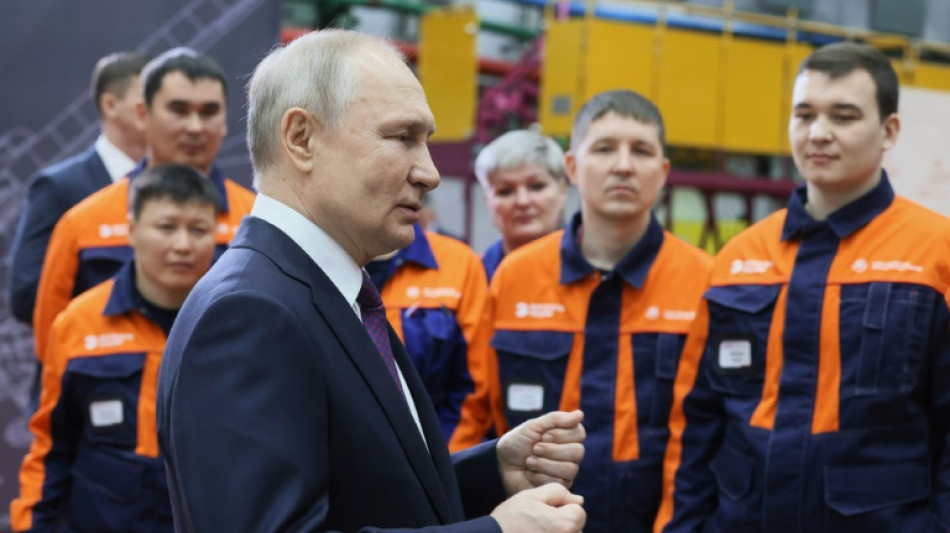
Conflict deepens Russia's demographic crisis / Photo: Mikhail Metzel - SPUTNIK/AFP

 High school students turn out for new protests across France

 Bid by Italy's Intesa bank to take over MPS gets boost

 Stablecoins Are Quietly Becoming Business Infrastructure, NOWPayments Data Shows
 Oil surges, stocks sink as US reportedly eyes new Iran strikes

 Woman in botched US execution walking, mentally 'foggy': lawyer
 Farhan hopes Pakistan's new combination takes off in Sri Lanka T20Is

 Teenager Andreeva seals China Open semi-final with Bartunkova
 Britain's Burnham says open to Germany joining warplane project

 Kovac's tough love has Dortmund dreaming of title charge

 China announces candidate for WHO chief

 South Korea test-fires its first homegrown hypersonic weapon: presidency

 ONAR Advances Nasdaq Listing Preparation Following Advertise Purple Acquisition and Financing

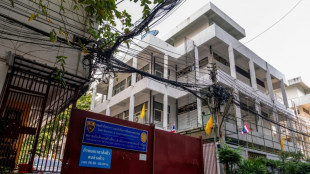 Thailand opens extradition process for reporter sought by China

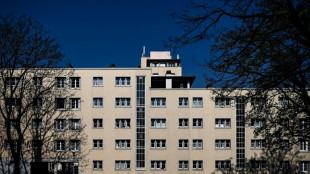 France struggles to wean social housing off gas

 Germany lifts GDP forecast as economy withstands Iran war
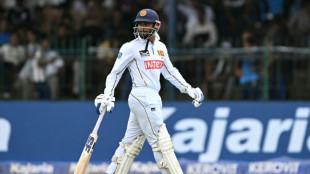
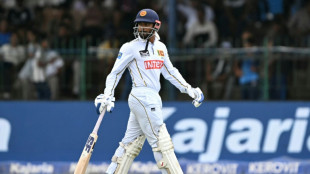 Sri Lanka appoints Kusal Mendis as Test captain
 Norris confident McLaren can shine in Singapore
 Alex Bodi pushes ahead with expansion: ALIX LASERS showroom planned for Bucharest
 Fossil fuels off COP31 agenda as global output keeps rising

 Haze not 'a threat' to Singapore F1 race: organisers

 COP31 organisers say to seek 'ambitious' action with their text
 Bartunkova thrashes Muchova to reach China Open semi-finals
 Drone hits Yandex data centre, in first such attack on Russia
 Oil prices surge and stocks sink on fresh inflation worries

 AI startup Manus raises $500m after Meta acquisition blocked by China

Russia's offensive in Ukraine has aggravated a long-simmering demographic crisis that President Vladimir Putin has struggled to tackle, which could further damage its sanctions-hit economy.
For a country already suffering from a shrinking labour force because of persistently low birth rates, the conflict means even more difficulties that could persist for years.
The mobilisation of hundreds of thousands of men took them off the job market, while prompting many of the most educated parts of the population to flee the country.
"Russia lacks workers," Alexei Raksha, a demographer who previously worked at the Rosstat statistics agency, told AFP.
"It's an old problem, but it has gotten worse due to mobilisation and mass departures," he said.
Russia inherited low birth rates with the collapse of the Soviet Union in the 1990s, when birth rates had halved due to economic hardship and uncertainties over the country's future.
Putin has since tried to push families to have children, heralding "traditional values" as a way to solve what he believes to be an existential crisis.
As part of his efforts to boost population growth, he introduced a financial bonus for a second and every following child.
- Already hit by Covid -
Russian authorities have not given updated estimates of troop losses in Ukraine since September 2022, when the Defence Ministry reported 5,937 dead.
Western estimates suggest around 150,000 dead and wounded on each side.
"We don't know about the exact losses in the military operation, but 300,000 people were mobilised, further reducing the number of young people working," said Natalya Zubarevich, an expert at the Moscow State University.
The battlefield losses come on the heels of a deadly coronavirus pandemic, which "hit Russia hard", demographic expert Igor Yefremov told AFP.
Official figures count around 400,000 deaths from Covid-19, but the actual toll is estimated to be much higher.
Given the shrinking labour force, Russia's low unemployment rate of 3.5 percent is not a healthy sign -- showing instead a shortage of recruits, with various sectors struggling to fill posts.
A survey published on April 19 by the Russian Central Bank confirmed "acute" tensions, particularly in "processing industries", transport and "water supply".
- Will some 'come back'? -
A study last month from the Higher School of Economics said Russia needed to take in 390,000 to 1.1 million migrants every year until the end of the century to avoid population shrinkage.
But some sectors will not be able to compensate the losses of workers, particularly industries requiring high levels of education.
Raksha said the Ukraine conflict triggered two waves of departures, with "many highly qualified people, including IT specialists", leaving Russia.
He estimated that around 150,000 people, including around 100,000 men, quit Russia in February-March 2022, just weeks after the conflict erupted.
After Putin announced a mobilisation for the country in September, Raksha estimates that another half a million left.
A recent law has imposed economic restrictions on draft dodgers, which could encourage those who have fled abroad to settle there permanently.
Still, Zubarevich said more than 60 percent of those who left continue working for Russian companies remotely.
"And some of them will come back," she said.
K.AbuDahab--SF-PST