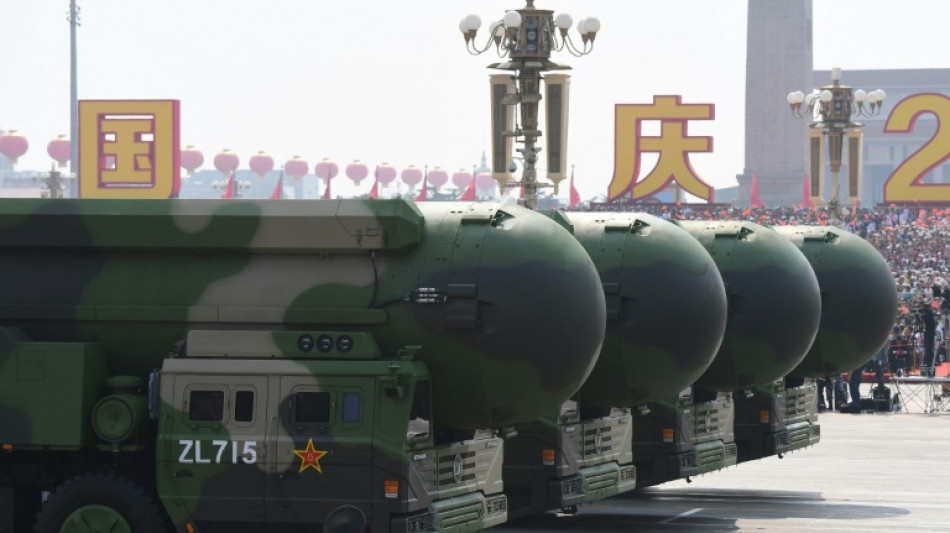
China pushes largest-ever expansion of nuclear arsenal / Photo: GREG BAKER - AFP/File

 MLB proposes shortening season, reforming playoffs

 Crew splashes down after 8-month mission on International Space Station

 Protests, clashes as S. African anti-migrant tensions reignite
 Russian data centre hit by drone in first for Ukraine war

 'Fighting for our future': France high school students vow no let-up

 Kyiv entering 'survival' mode amid Russian strikes surge: mayor tells AFP

 Verdict due in Mexico trial over murders of Australia, US surfers
 B2PRIME Welcomes Christina Barbash as Commercial Manager

 Russia forcing Kyiv into 'survival' mode before winter, mayor tells AFP

 Closing arguments begin in Maradona death trial

 UEFA president Ceferin to stand for re-election in 2027

 Nearly 300,000 Nepalis at flood risk: study

 Riyadh kindergarten hit by interception debris as Houthis say targeted airport

 Alex Bodi mizează, alături de CRIF, pe investiții transparente și pe prevenirea riguroasă a spălării banilor

 Gulf Labs, Part of Thailand’s $27 Billion GULF Group, Goes Live as an Injective Validator

 EU okay for winter despite 'historically low' gas stocks: operators
 Rwanda to host F1 Grand Prix: sources close to both sides

 EU top diplomat says bloc in favour of UN Lebanon peacekeepers' extension

 Antonelli and Russell to run different Mercedes aero packages in Singapore

 WTO hikes 2026 trade growth forecast on AI boom
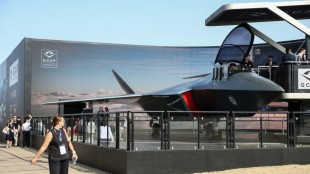
 'I love that challenge': Hamilton prays for rain in Singapore

 G.Bissau moves towards postponement of December general election

 Verstappen out to settle 'unfinished business' at Singapore Grand Prix
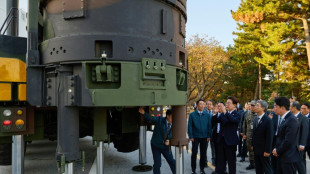
 WhiteBIT Launches Bitcoin Lightning Network Support, Powered by Voltage

 Oil surges, stocks sink as US reportedly eyes fresh Iran strikes
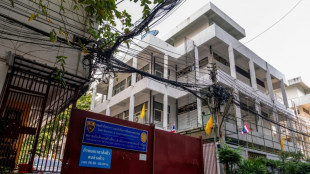
China is pushing ahead with the largest-ever expansion of its nuclear arsenal, modernising the atomic deterrent with an eye on any future conflicts with the United States, experts say.
The SIPRI think tank estimates that China has a stockpile of around 350 nuclear warheads -- small fry when compared with the United States and Russia.
But it is growing fast, and could have 1,500 warheads by 2035, according to a Pentagon estimate published in November.
"China appears to no longer be satisfied with just a few hundred nuclear weapons to ensure its security," Matt Korda, of the Federation of American Scientists, told AFP.
Since its first nuclear test in 1964, China has been content to maintain a comparatively modest arsenal and has maintained that it will never be the first to use nuclear weapons in a conflict.
But in recent years, under President Xi Jinping, it has begun a massive military modernisation drive that includes upgrading its nuclear weapons to not only deter foes but also be able to counter-attack if deterrence fails.
"China is undertaking the most significant expansion and modernization of its nuclear forces in the country's history," David Logan, an assistant professor at the US Naval War College, told AFP.
This involves not only ramping up the production of warheads, but also upgrading the ability to deliver them with a nuclear triad: missiles, aircraft and submarines.
"The changes that are taking place or under way are very significant" and "will turn China from a state that has a nuclear retaliatory capability to one that is the world's third major nuclear power", Eric Heginbotham, Principal Research Scientist at MIT's Center for International Studies, told AFP.
"This will mark the first time in history that the big nuclear powers will need to consider not one potential nuclear competitor, but two, and it will have implications for nuclear planning and stability everywhere."
China is "rapidly" building launch facilities for intercontinental ballistic missiles, with more than 300 silos in total, according to the Pentagon last year.
- 'Lowest level required' -
China has stressed that it keeps "its nuclear force at the lowest level required for national security".
And Xi said in a joint statement with Russian leader Vladimir Putin last month that nuclear war "must never be unleashed".
Data is not publicly available, but the International Campaign to Abolish Nuclear Weapons has estimated that China spent $11.7 billion on its nuclear programme in 2021 -- less than a third of what the United States was believed to have spent.
Further, experts say there are obstacles to any rapid build-up of China's atomic stockpile -- primarily its limited means to produce the fissile materials needed for warheads.
One possible helping hand could come from Russia.
Beijing and Moscow pledged to step up nuclear cooperation at the recent summit between Xi and Putin.
Top atomic energy officials from Russia agreed to assist China in completing "fast reactors", which can generate fissile material at a much faster rate than they consume it.
Beijing insisted that the agreement was for its civilian nuclear programme, but experts say it could also be used to build up fissile material stockpiles for warheads.
"It would be technically possible for China to substantially grow its plutonium stockpiles with its new developmental civilian fast-breeder reactors using fuel supplied by Russia," Korda said.
"However, there are no publicly-available indications that China intends to do this."
China has "very limited reserves that would constrain a rapid build-up", Gregory Kulacki, China Project Manager at the Union of Concerned Scientists, told AFP.
"According to public information about the pace of the fast breeder programme's development... it will be difficult for China to produce the plutonium they need quickly."
- Anxiety about the US -
China has many reasons for its adversaries to believe its nuclear reach extends further than it does -- and the Pentagon has a track record of overstating it.
But Beijing does have good reason to bulk up its capabilities.
"Chinese strategists have been anxious about the possibility that the US could execute a disarming first strike against Beijing's nuclear forces," the Naval War College's Logan said.
"The nuclear build-up is likely in part to ensure that the US cannot eliminate China's nuclear deterrent."
China's assessment of what constitutes a credible nuclear deterrent may also be changing, experts say, and the substantial upgrades to its nuclear forces will embolden it -- particularly over self-ruled Taiwan or in the disputed South China Sea.
Beijing has ramped up pressure on Taiwan, and has recently conducted two major rounds of military exercises around the island -- which it claims as its territory, to be taken one day.
"A major factor is likely an assessment that a larger nuclear force is necessary to dissuade the United States's involvement in a future potential conflict in the Taiwan Strait," Ankit Panda at the Carnegie Endowment for International Peace told AFP.
"China may well believe that a larger nuclear force will moderate the amount of risk the United States is willing to tolerate in a limited, conventional conflict."
U.AlSharif--SF-PST