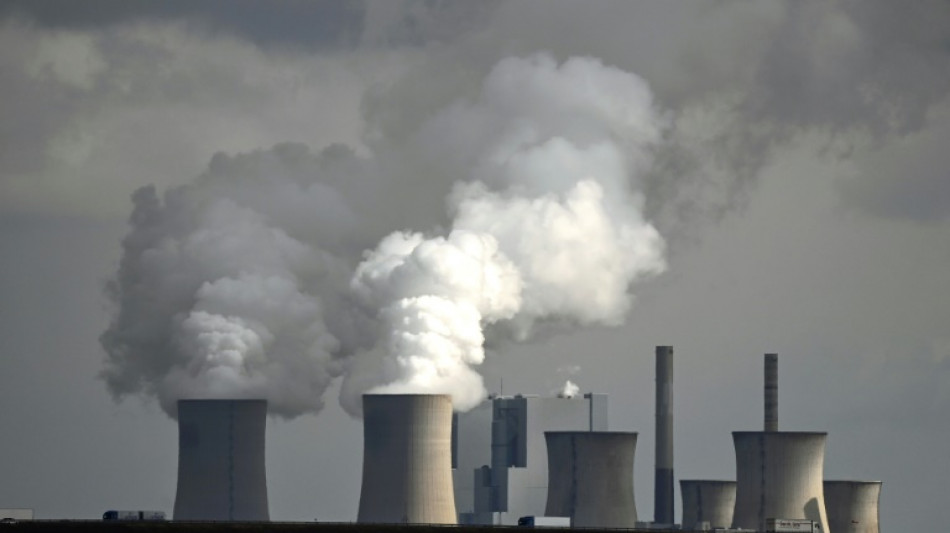
Climate pledges of world's top carbon emitters / Photo: Ina FASSBENDER - AFP/File

 CNN, MS Now, Politico urge judge to extend White House access

 Trump administration to launch new vaccine research center

 Russian strikes kill 30 in Ukraine frontline city, talks set in US

 US military to livestream firing squad execution of Fort Hood shooter

 Aces star Wilson wins record-extending fifth WNBA MVP

 Undefeated 49ers seek Seahawks revenge

 Madrid mourns evicted retiree, 'icon' of Spain housing protests

 OpenAI revenue gap report rattles AI stocks
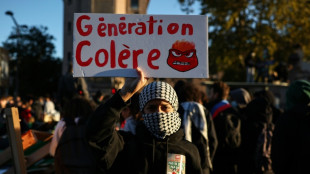 France pledges more teachers after school students vow no let-up

 Bordeaux confirmed in sixth tier of French football

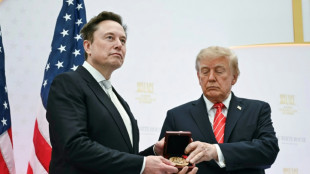 Trump gives 'national treasure' Musk top US medal after rift

 MLB proposes shortening season, reforming playoffs

 Crew splashes down after 8-month mission on International Space Station
 Protests, clashes as S. African anti-migrant tensions reignite

 Russian data centre hit by drone in first for Ukraine war

 'Fighting for our future': France high school students vow no let-up

 Kyiv entering 'survival' mode amid Russian strikes surge: mayor tells AFP

 Verdict due in Mexico trial over murders of Australia, US surfers
 B2PRIME Welcomes Christina Barbash as Commercial Manager

 Russia forcing Kyiv into 'survival' mode before winter, mayor tells AFP

 Closing arguments begin in Maradona death trial
 UEFA president Ceferin to stand for re-election in 2027

 Nearly 300,000 Nepalis at flood risk: study

 Riyadh kindergarten hit by interception debris as Houthis say targeted airport

 Alex Bodi mizează, alături de CRIF, pe investiții transparente și pe prevenirea riguroasă a spălării banilor

Despite their 2015 pledge to limit global warming by slashing carbon emissions, big countries' commitments so far still fall short of meeting the targets of the Paris Agreement, monitors say.
After EU lawmakers adopted sweeping climate measures on Tuesday, here is a roundup of where it and other major carbon emitters stand.
Many countries have committed to achieving carbon neutrality -- where any remaining emissions will be sequestered or offset -- by the second half of this century. But monitoring site Carbon Action Tracker (CAT) rates many of these plans as lacking in detail.
The 2015 Paris accord requires "nationally determined contributions" (NDCs) from countries to meet the global aim of limiting global warming to less than two degrees Celsius compared to pre-industrial levels -- a target since tightened to 1.5C.
- China -
China is by far the largest emitter, responsible for roughly a quarter of all carbon pollution currently and 14 percent since the start of industrial times.
In the medium term, it has promised to reduce the intensity of its emissions by as much as 65 percent by 2030 and peak emissions at the end of this decade.
More than half China's energy comes from coal, the dirtiest fossil fuel. But it is also a leading producer of solar panels and electric vehicles.
Beijing says it has already halved its carbon intensity (emissions as a proportion of GDP) since 2005.
Aiming for carbon neutrality by 2060, its targets are judged insufficient by CAT.
- United States -
The US is the world's second-largest polluter currently but the biggest historically, responsible for 25 percent of emissions during the industrial era, according to the Global Carbon Project.
President Joe Biden rejoined the Paris accord after his predecessor Donald Trump's decision to pull the US out of it.
Biden has set a net-zero date for 2050 and in 2022 passed the $370 billion "Inflation Reduction Act", containing a host of measures to promote low-carbon energy.
In the medium term, Biden aims to halve US emissions by 2030 compared to 2005 levels.
Monitoring site Paris Equity Check said that would still lead to warming of 3.4C if all countries reduced emissions at a comparable rate.
The US is still heavily invested in fossil fuels. Despite Biden's reform, he approved a new oil-drilling project in Alaska, outraging environmentalists.
- Europe -
The 27-nation European Union is collectively the third biggest global emitter of carbon dioxide.
It aims to cut carbon emissions by at least 55 percent by 2030 compared to 1990 levels.
That corresponds to 2.5C of warming at a global rate, says Paris Equity Check. CAT judges the commitments "almost sufficient".
On April 18, 2023 the EU adopted emissions measures including a carbon border tax on imports.
Under the legislation, European Union carbon emissions are to be cut 62 percent by 2030 compared to 2005 levels -- up from a previous target of 43 percent.
Germany, the EU's largest economy, has more ambitious targets, pledging to slash emissions 65 percent by 2030 from 1990 levels.
France aims to reduce emissions 40 percent by 2030 compared to 1990 and is expected to update its targets soon to meet EU goals.
Former EU member Britain has the most far-reaching short-term emissions target of any major economy, pledging 78 percent cuts from 1990 levels by 2035.
- India -
Like China, India plans to reduce its carbon intensity -- by up to 45 percent this decade compared to 2005 levels.
It aims for carbon neutrality by 2070. CAT says how India plans to achieve this is unclear.
The world's third-largest polluter -- and now its most populous country -- continues to expand coal power but renewable energy there is also growing.
- Russia -
Russia formally joined the Paris deal in 2019.
Moscow has said it plans to cut emissions 30 percent by 2030 from 1990 levels.
Its commitments are "critically insufficient" according to monitor CAT.
- Japan -
The world's third-biggest economy and heavily reliant on imported fossil fuels, Japan has said it aims for a 46-percent reduction in emissions by 2030 compared to 2013 levels. That would yield 2C of warming at a global rate, according to CAT.
To get there, the government wants to restart more of the nuclear reactors that were taken offline after the 2011 Fukushima meltdown. Around a third are already back in action.
Campaigners criticise Japan's continued overseas fossil fuel investments. Oil Change International says the country spent an annual average of $6.9 billion on new gas, coal and oil projects in 2020-22.
- Brazil -
Among other major emitters, Brazil aims to halve emissions by 2030 compared to 2005 levels. But it also has plans to expand emissions from oil and gas and has not yet succeeded in curbing deforestation of the Amazon -- a critical absorber of carbon.
J.AbuShaban--SF-PST