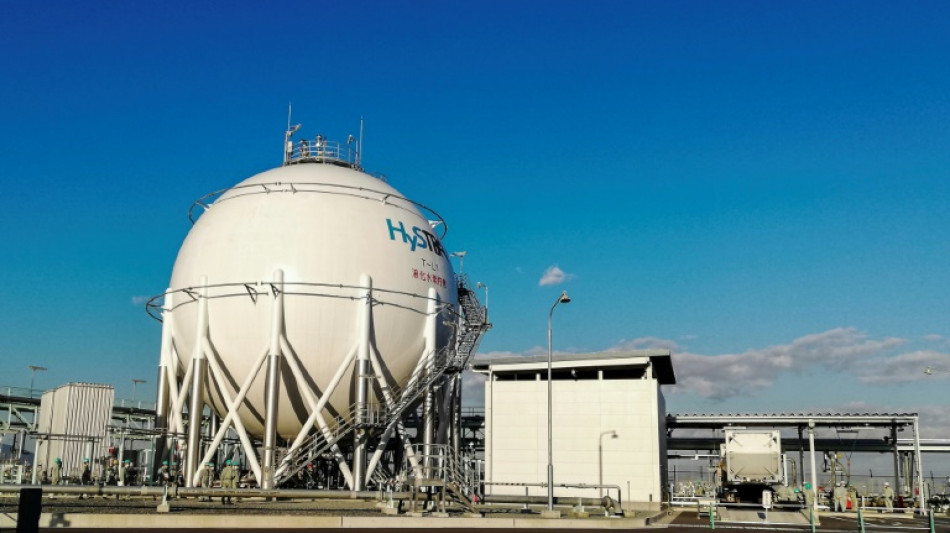
How Japan's big plans for a 'hydrogen society' fell flat / Photo: Etienne BALMER - AFP/File

 Trump rules out new Iran attack before US midterm elections

 Far-right influencer shows Israel's coarse political turn

 Seals and sea lions get hearing tested at Australia zoo

 Mourinho's Real Madrid playing catch-up in Clasico countdown

 Joy as USS Lincoln back home after troubled Gulf deployment
 OpenAI says Iran, Russia influence ops busted
 Anthropic bans 'cruel' behavior against its Claude AI

 Anne Carson's Nobel literature prize 'a proud moment for Canada': PM

 Montagliani to seek CONCACAF re-election in boost for Infantino: reports

 Oil surges, stocks sink on jitters over US plans in Iran war

 John Cena and Jessica Biel hit the gas in 'Matchbox: The Movie'

 US, Ukrainians, Europeans to discuss 'new ideas' to end war
 Unproven 'cures' pushed online amid plague concerns

 Nigeria looks to ease fuel prices as election looms
 Prosecutors in Maradona death trial seek sentences up to 12 years

 Swiss captain Xhaka gets suspended fine for fake Covid cert

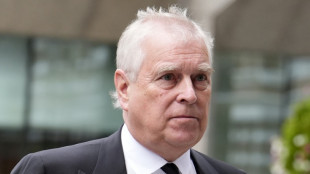 Ex-prince Andrew raid warrants ruled 'unlawful' but UK police maintain probe

 Two Latvians arrested inside UK military base: police

 Eckert 'forever grateful' for Southampton support over spy scandal

 Venezuela's Maduro, wife hit with new US torture charges

 Argentina friendlies no fairy tale for African footballers

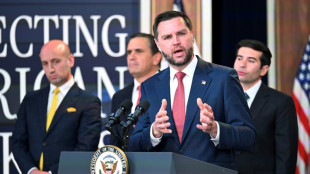 US suspending Microsoft from visa program: Vance

 Man City must 'stick together' during crisis, says Haaland

 CAS opens hearing into Senegal AFCON title appeal

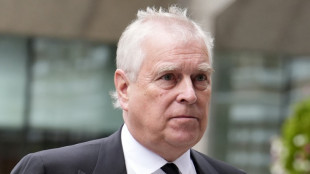 UK police agree searches for ex-prince Andrew's homes 'unlawful': judge

It was once touted as a miracle solution to Japan's energy problems: creating a "hydrogen society" by sharply ramping up use of the fuel for vehicles, industry and housing.
But the country's plan to expand its hydrogen market and slash greenhouse emissions has suffered delays and criticism over the fuel's green credentials.
As G7 climate ministers meet this weekend in the northern Japanese city of Sapporo, here are some key points about the strategy:
- Ambitious plans -
In 2017, Japan became the first country to devise a national strategy for hydrogen power, aiming to drastically scale up its use by 2030.
The colourless, odourless gas is an exciting prospect on paper.
It can be produced, stored and transported in large quantities, and does not emit carbon dioxide when burned.
These qualities are attractive to Japan, which is heavily reliant on fossil fuel imports.
Most of its nuclear reactors are still offline after the 2011 Fukushima disaster, and the nation set a goal two and a half years ago of reaching carbon neutrality by 2050.
- Fuel cell blues -
Hydrogen-powered fuel cell vehicles, which Japanese automakers helped pioneer, were a key part of the original plan.
The government had hoped for 40,000 of these cars to be on the road by 2020, and 800,000 by 2030.
But by the end of last year, just 7,700 units had been sold in the country since 2014.
Despite subsidies for buyers, they remain "very expensive", even compared to battery-powered electric cars, Kentaro Tamura, a Japan-based expert at the Institute for Global Environmental Strategies (IGES), told AFP.
Hydrogen refuelling stations have high installation and upkeep costs, and are rare in comparison to charging spots for electric vehicles, Tamura added.
- Hydrogen-powered homes -
The results have been better but still modest in housing -- the other major area initially earmarked for hydrogen expansion.
A residential fuel cell programme called "Enefarm" was meant to equip 5.3 million Japanese homes by 2030.
It uses gas to create hydrogen that reacts with oxygen from the air to generate electricity and heat water.
But by the end of 2022, just 465,000 systems had been installed, far short of the government's target of 1.4 million by 2020.
Price is a key factor here too, Tamura said, with installation costs "very high compared with alternative technologies like heat pumps".
- 'Grey' area -
Energy experts were sceptical of Japan's hydrogen strategy from the start, because it was launched without creating a reliable supply chain for environmentally friendly "green" hydrogen, produced from renewable energy sources.
Instead, Japan opted for so-called "grey" hydrogen, made using greenhouse gas-emitting coal, petrol or gas, and "blue" hydrogen, which also comes from fossil fuels but with the carbon emissions captured and stored.
In the meantime, countries such as China and some European nations have moved faster on green hydrogen, which remains rare and expensive but is key to decarbonisation, the Japanese Renewable Energy Institute think-tank says.
In March, Tokyo agreed to spend $1.6 billion on an ambitious but controversial venture in Australia to produce liquid hydrogen from lignite coal and export it to Japan.
But critics say the project's "blue" hydrogen claims are based on carbon capture technology that does not yet exist.
- Co-firing controversy -
Despite the setbacks, Japan will revise its hydrogen strategy by the end of May, with the Nikkei business daily reporting plans to increase its supply of the fuel to six times the current level by 2040.
It is also promoting another use for hydrogen and its derivative ammonia: burning it alongside gas and coal at existing power stations, to reduce carbon emissions.
An official from the Ministry of Economy, Trade and Industry told AFP that ammonia co-firing is "a realistic means of energy transition that is more CO2-reducing and economically efficient than the early phase-out of coal-fired power and its replacement with renewable energy".
But climate campaigners question the value of the expensive practice on the path to cleaner energy.
Japan is "the only G7 member" pushing for co-firing, Greenpeace's Hirotaka Koike said, describing it as a "national policy to keep the 'sunset' industry (of thermal power stations) alive".
R.Halabi--SF-PST