Ukraine medics race to save soldiers wounded near Bakhmut / Photo: Genya SAVILOV - AFP

 Fernandez logs record lap at Indonesia MotoGP practice
 Navi Pillay: S.Africa's global rights activist and Nobel winner
 Ufunded Launches “Spotlight” Series, Documenting the Minds Shaping Modern Trading
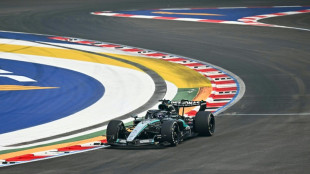 Russell goes fastest in practice for smoggy Singapore GP
 For exiled Russian director Zvyagintsev, triumph without belonging
 Home hope Zheng storms into China Open semi-finals
 Zverev churns out win in Shanghai Masters opener
 Hurricane Isaias strengthens en route to US Gulf Coast

 US activists deploy poll volunteers over Trump intimidation fears
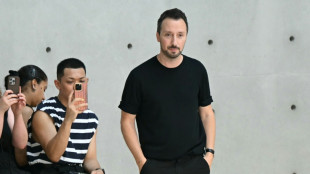 Saint Laurent designer Vaccarello leaves after glittering decade
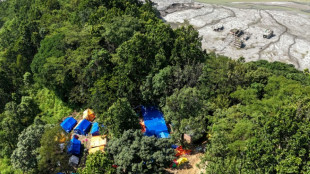 'Tough to stay here': Nepal flood survivors wait for homes

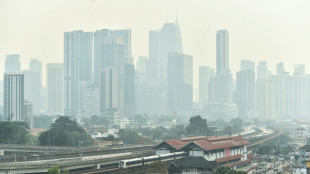 Malaysia closes schools in capital, parts of country due to haze
 Buccaneers stun Cowboys for first win of NFL season
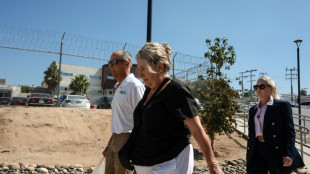
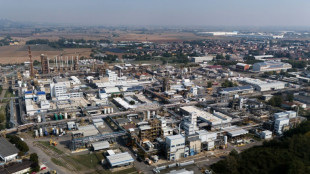 Activists hope trial will stop 'forever chemicals' at Italy plant
 Guardians rally for 9-5 victory over White Sox to stay alive in MLB playoffs
 Asian stocks mixed amid AI concerns, oil dips after surge

 Wallabies expect fast-paced All Blacks in Bledisloe opener
 Tech scammer Elizabeth Holmes focus of documentary by absurdist Nathan Fielder
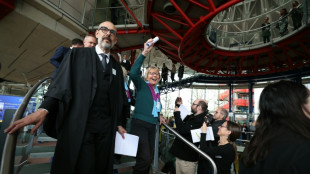 Climate hopes shift from politics to the courts
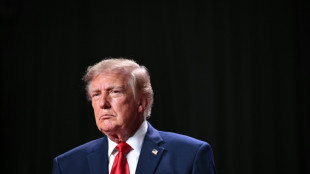 Will Nobel Peace Prize pick make waves at the White House?
 Trump rules out new Iran attack before US midterm elections
 Far-right influencer shows Israel's coarse political turn
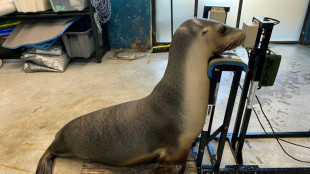 Seals and sea lions get hearing tested at Australia zoo
 Mourinho's Real Madrid playing catch-up in Clasico countdown
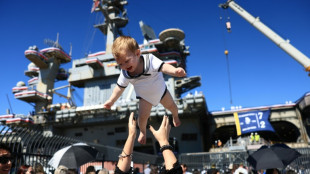 Joy as USS Lincoln back home after troubled Gulf deployment
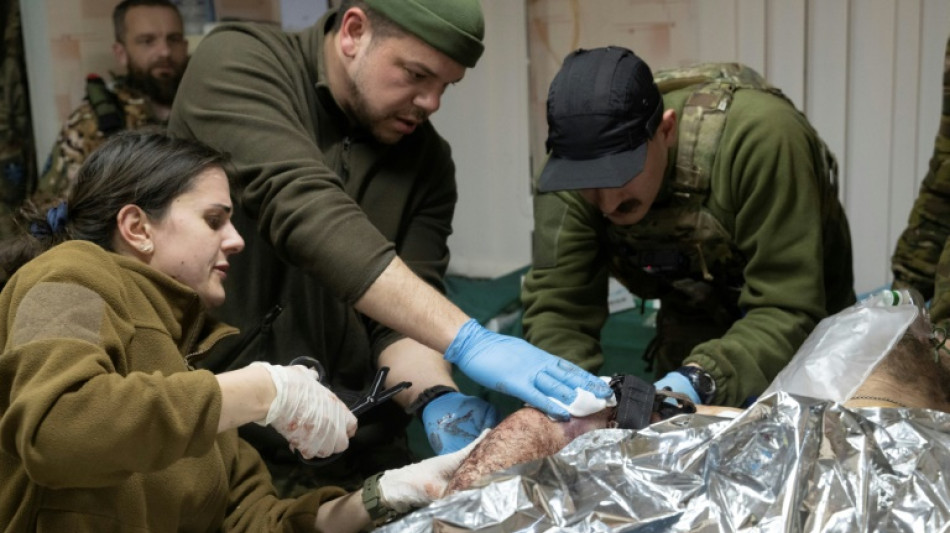
A wounded man with his arm in tourniquets groans with pain on an examination table as the anaesthetist reassures him: "That means the arm is alive."
Andriy, a Ukrainian serviceman, was injured Saturday morning near the frontline of Bakhmut, the scene of the heaviest fighting since Russia invaded last year.
He had been transported by army paramedics in an armoured personnel carrier to a point from which he was then taken to a medical stabilisation point in the Donetsk region in an ambulance.
En route, the medics stopped the bleeding caused by shrapnel from a mortar that ripped through Andriy's shoulder.
A team from the Da Vinci Battalion's "Ulf" (Wolves) medical unit then took over treatment inside the armoured vehicle.
Andriy grimaces as they get him on to a stretcher and into their ambulance for the drive to the stabilisation point.
Melted snow has turned the roads into muddy quagmires.
"The difficulty is this weather, because we can't drive fast," says the Ulf unit's 30-year-old surgeon, also named Andriy.
At the stabilisation point, basically a small clinic, medics lift the injured soldier onto a table in a foil blanket.
The anaesthetist, Oleg, talks reassuringly with him, since there is no equipment here for a general anaesthesia to make him unconscious.
- Tourniquet risks -
"Andriy, how are you feeling?" Oleg asks.
"I've had better days," Andriy replies, before retching and vomiting.
"It's a reaction to an antibiotic," Oleg says. "We're doing all we can so you get well."
The nurse, Liana, 25, wipes his face, asking, "Is it painful, very painful?"
Andriy has an open fracture on his shoulder and has lost "maybe 1.5 litres of blood", Oleg says.
Medics try to remove the tourniquets but fear he is still bleeding, and decide to leave them in place for the journey to a hospital in Kramatorsk, a city about 25 kilometres (15 miles) away.
Tourniquets are life-savers but leaving them on too long can cause the injured limb to die.
The Ulf surgeon Andriy says the main thing is for the patient to stay alive.
Keeping a tourniquet on for three hours is "long", he acknowledges, but he is optimistic that the soldier's arm will be saved.
"We had a case where the guy had four hours (with a tourniquet) and the hand is now working," he says.
"Everything went very successfully," adds Liana.
- 'Non-stop' -
As the medical team debriefs outside, a call comes in -- another patient to collect.
This time, a dark-haired 18-year-old arrives in an armoured personnel carrier camouflaged with branches.
He is pale but walking: he has a concussion, which is treated with medicine and rest.
The medical team immediately recognises him: two weeks ago, he also suffered a concussion when the car he was travelling in flipped over.
These two patients take the day's total at the stabilisation point to seven.
"It's simply non-stop," says Andriy, though he is happy with the treatment of the seriously injured man.
"This is why our unit is good: all steps working perfectly, even in this weather."
Lyubomir, a medical assistant who helped bring the soldier Andriy in from the front line, says Russians "often shell us".
Brain injuries due to pressure changes caused by explosions are among the most common risks for Ukrainian soldiers in this war, Oleg notes, along with damage to arms and legs.
"We work 20 hours (a day), seven days, without rest," says the anaesthetist, who has worked at the stabilisation point since last summer.
"It's difficult work."
L.Hussein--SF-PST