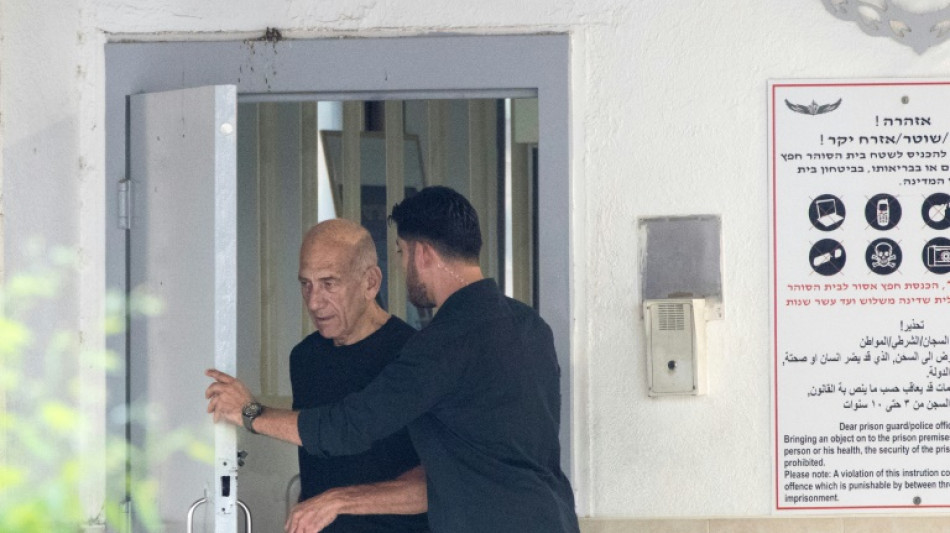
Despite Trump ire, prosecuting ex-leaders is common in democracies / Photo: JACK GUEZ - AFP/File

 Fernandez logs record lap at Indonesia MotoGP practice
 Navi Pillay: S.Africa's global rights activist and Nobel winner
 Ufunded Launches “Spotlight” Series, Documenting the Minds Shaping Modern Trading
 Russell goes fastest in practice for smoggy Singapore GP
 For exiled Russian director Zvyagintsev, triumph without belonging
 Home hope Zheng storms into China Open semi-finals
 Zverev churns out win in Shanghai Masters opener

 Hurricane Isaias strengthens en route to US Gulf Coast

 US activists deploy poll volunteers over Trump intimidation fears
 Saint Laurent designer Vaccarello leaves after glittering decade
 'Tough to stay here': Nepal flood survivors wait for homes
 Malaysia closes schools in capital, parts of country due to haze
 Buccaneers stun Cowboys for first win of NFL season
 Activists hope trial will stop 'forever chemicals' at Italy plant
 Guardians rally for 9-5 victory over White Sox to stay alive in MLB playoffs
 Asian stocks mixed amid AI concerns, oil dips after surge
 Wallabies expect fast-paced All Blacks in Bledisloe opener

 Tech scammer Elizabeth Holmes focus of documentary by absurdist Nathan Fielder
 Climate hopes shift from politics to the courts

 Will Nobel Peace Prize pick make waves at the White House?
 Trump rules out new Iran attack before US midterm elections
 Far-right influencer shows Israel's coarse political turn
 Seals and sea lions get hearing tested at Australia zoo

 Mourinho's Real Madrid playing catch-up in Clasico countdown
 Joy as USS Lincoln back home after troubled Gulf deployment
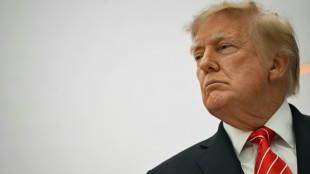
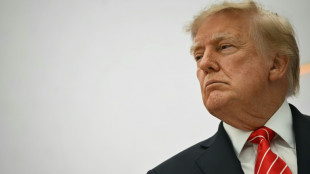
Donald Trump has denounced his indictment as an abuse befitting a banana republic, but the move in fact puts the United States in line with fellow advanced democracies that have prosecuted former leaders.
France, Israel, Italy, South Korea, Romania and Croatia are among countries where courts have convicted a former president or prime minister, with charges pursued against former top leaders in a number of other democracies including Germany, Japan and Portugal.
For the United States, there is no precedent in the republic's nearly 250-year history -- Trump is the first president, current or former, to be charged with a crime.
Trump, who has faced a slew of legal accusations, is expected to turn himself in Tuesday in New York over a $130,000 payment allegedly made to an adult film star to buy her silence during his 2016 campaign over an affair.
"There is evidence out there that democracies can be, and are, able to hold former leaders accountable," said Shelley Inglis, a former United Nations expert on democratic governance and rule of law who is now at the University of Dayton.
"It's a teaching moment for the United States, when you haven't had that sort of test, to think about what is the strength of our democratic institutions when they're meeting the biggest challenge -- to hold the most powerful people to account," she said.
She pointed to France -- where two former presidents, Jacques Chirac and Nicolas Sarkozy, were convicted of corruption -- as an example where democratic institutions were not weakened but strengthened, despite "inevitable" accusations from partisans that charges are politically motivated.
Israel imprisoned former prime minister Ehud Olmert over fraud and former president Moshe Katsav for rape. Israel's current and longest-serving prime minister, Benjamin Netanyahu, faces charges of bribery, fraud and breach of trust. Recent attempts by his government to weaken the judiciary sparked massive protests.
In South Korea, two successive presidents, Lee Myung-bak and Park Geun-hye, were jailed for bribery or corruption, although both were pardoned. The United States on Wednesday tapped South Korea to lead a third global Summit for Democracy.
The most frequent international comparison to Trump has been Italian tycoon and three-time prime minister Silvio Berlusconi, who has faced dozens of trials, including over alleged bribery and sex with an underage girl.
The 86-year-old Berlusconi has never spent time behind bars, perhaps giving Trump a bit of hope.
- Why not sooner in US? -
Trump and his Republican allies have raged against the charges led by Alvin Bragg, Manhattan's elected district attorney. The former president's son Eric Trump has described the indictment as "Third World prosecutorial misconduct."
Developing nations, of course, are full of cases in which charges against former leaders have raised widespread doubts. Pakistan has seen street protests over the ouster last year of Prime Minister Imran Khan, who has since been hit with charges that include terrorism.
In Brazil, leftist icon Luiz Inacio Lula da Silva was jailed for corruption, although the conviction was overturned and he is again president.
The closest the United States came previously to prosecuting a former president was with Richard Nixon over the 1972 break-in of the office of the rival Democratic Party at the Watergate Hotel in Washington.
Nixon's successor, Gerald Ford, pardoned him, a move deeply controversial at the time that proved more popular in hindsight.
But Nixon paid a price -- uniquely in US history, he was forced to resign as president, after support within his Republican Party deteriorated.
US politics are now more polarized, with most Republicans staunchly defending Trump during his unprecedented two impeachments.
James D. Long, a professor of political science at the University of Washington, said that prosecutors may have pursued Trump in part because he faces so many different allegations, not one single campaign-finance issue.
At the global level, prosecuting former leaders "is not only something that has happened historically, but it's becoming increasingly common," Long said.
Still, Long noted that there have been allegations of wrongdoing by US presidents as far back as the early 19th century, and more recently over Bill Clinton's dalliance with Monica Lewinsky and George W. Bush's Iraq invasion.
"From Trump's perspective, he is probably looking back and saying, why am I the first guy since 1789?" Long said.
"I think Americans are really going to have to confront the fact that our system has looked the other way for a long time -- probably when it shouldn't have."
F.AbuZaid--SF-PST