How Finland joining boosts NATO defences against Russia / Photo: Christof STACHE - AFP

 Fernandez logs record lap at Indonesia MotoGP practice

 Navi Pillay: S.Africa's global rights activist and Nobel winner

 Ufunded Launches “Spotlight” Series, Documenting the Minds Shaping Modern Trading
 Russell goes fastest in practice for smoggy Singapore GP
 For exiled Russian director Zvyagintsev, triumph without belonging

 Home hope Zheng storms into China Open semi-finals

 Zverev churns out win in Shanghai Masters opener
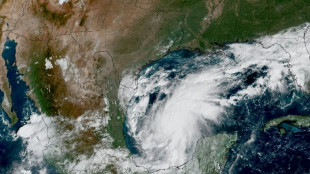 Hurricane Isaias strengthens en route to US Gulf Coast

 US activists deploy poll volunteers over Trump intimidation fears

 Saint Laurent designer Vaccarello leaves after glittering decade
 'Tough to stay here': Nepal flood survivors wait for homes

 Malaysia closes schools in capital, parts of country due to haze

 Buccaneers stun Cowboys for first win of NFL season

 Activists hope trial will stop 'forever chemicals' at Italy plant

 Guardians rally for 9-5 victory over White Sox to stay alive in MLB playoffs
 Asian stocks mixed amid AI concerns, oil dips after surge

 Wallabies expect fast-paced All Blacks in Bledisloe opener
 Tech scammer Elizabeth Holmes focus of documentary by absurdist Nathan Fielder

 Climate hopes shift from politics to the courts

 Will Nobel Peace Prize pick make waves at the White House?

 Trump rules out new Iran attack before US midterm elections

 Far-right influencer shows Israel's coarse political turn
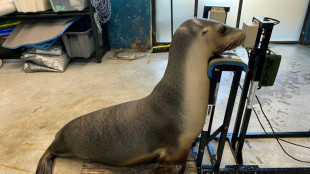 Seals and sea lions get hearing tested at Australia zoo

 Mourinho's Real Madrid playing catch-up in Clasico countdown

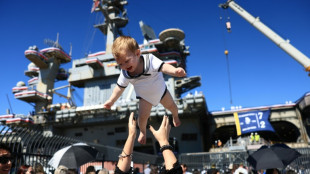 Joy as USS Lincoln back home after troubled Gulf deployment

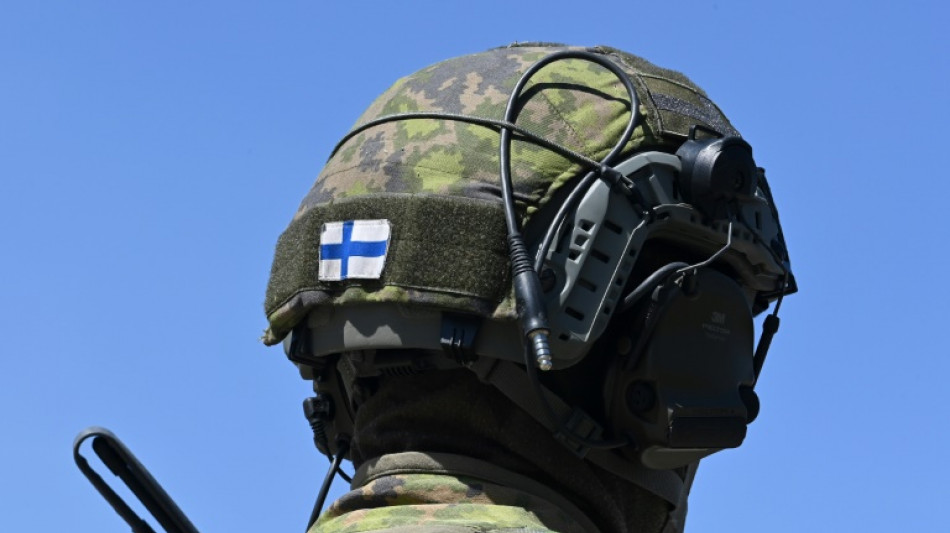
Finland's membership of NATO adds a potent military to the alliance and a strategic puzzle piece that can better help defend its vulnerable eastern flank from potential Russian attack, officials and analysts say.
When President Vladimir Putin launched his all-out war on Ukraine, part of Moscow's justification was the claim it needed to stop further NATO expansion in its backyard.
But 13 months on, Finland's choice to join means the US-led alliance is now doubling its border with Russia in a move that changes the military calculus from the Baltic region to the Arctic.
"Now Finland needs NATO, but NATO needs Finland as well in the face of an aggressive Russia," said Jamie Shea, a former senior NATO official who is an associate fellow at the Chatham House think tank.
"NATO will find collective defence against Russia easier now it has access to Finnish territory and the capabilities Finland brings to the table."
- Protecting the Baltics -
Alliance military planners have fretted for years over how to protect its three Baltic members -- Estonia, Latvia and Lithuania -- from a possible attack by Russia.
Concern focused on the Suwalki Gap, a 65-kilometre (40-mile) strip between the Russian enclave of Kaliningrad and Belarus, where a lightning strike could sever the Baltic allies from the rest of NATO.
Now Finland's membership could help NATO to dominate the Baltic Sea and, with Helsinki less than 70 kilometres across the water from Estonia's capital Tallinn, provide a new route for reinforcements.
"Finland's accession will strengthen NATO's forward defence and contribute to deterrence by denial," Estonia's Defence Minister Hanno Pevkur told AFP.
But he warned "the significance of the Suwalki gap for NATO remains, since Belarus has de facto become Russia's military district", and insisted the alliance still needs to push on with plans to reinforce the Baltics.
To the north, having Finland onboard will help the alliance defend the thin strip of Norwegian territory linking to Russia where Moscow could have staged a "fait accompli" assault, said analyst Jan Kallberg.
"Up to this point, NATO air forces have been dependent on a few Norwegian airfields that could be targeted early in a conflict, Finland adds more bases and air strips," said Kallberg, a senior fellow at the Center for European Policy Analysis.
And as jostling for control in the Artic region involving Russia, China and the West increases, stepping up NATO's footprint on its doorstep will be a major boost.
- Prepared for war -
Adding an extra 1,300 kilometres to the alliance's land border with Russia will also bring vulnerabilities, and working out how to defend it will pose a challenge for NATO strategists.
While its response to Finland's membership has been more muted than many expected, the Kremlin has pledged to bolster its forces close to the frontier in the coming years.
But with Russia's military bogged down in Ukraine, analysts say it will likely take years for Moscow to rebuild its capacity.
For the time being, Finland is expected to follow neighbour Norway's example and opt not to have forces from NATO allies stationed permanently on its territory.
The country already has a highly capable military.
"Finland is one of the very few European countries that never stopped preparing for a potential war," said Minna Alander, a research fellow at the Finnish Institute of International Affairs.
While other Western European militaries scaled back after the Cold War, Finland stuck to a conscription model fashioned from the bitter experience of the Soviet Union's invasion in 1939.
"That now gives Finland a wartime troop strength up to 280,000 and a total reserve of 870,000," Alander said.
"With 1,500 systems, Finland has one of the largest artilleries in Europe and has been and is continuously investing in air defence."
- A last gap -
Military officials from its future NATO counterparts point to Finland's winter warfare experience and planned upgrade to the latest US aircraft as key assets.
"On land, they are extremely capable, operating in the harshest of conditions and backed by considerable artillery," a senior Western official told AFP.
"In the air, Finland is buying the new F-35 fighter."
Finland's looming membership does highlight one gap left for NATO -- its neighbour Sweden.
Stockholm's application remains blocked by resistance from Turkey and Hungary, meaning that it still cannot be fully integrated into NATO's defence plans.
"The mere fact that Finland comes in will bolster Sweden because it will now be sandwiched between NATO members," said Shea.
"But the hope is still that they will be allowed in as soon as possible."
M.Qasim--SF-PST