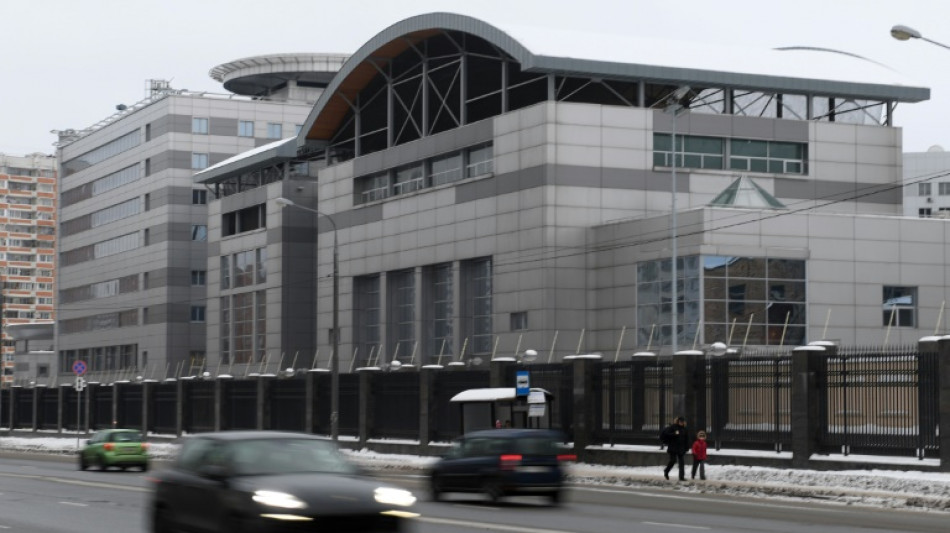
Espionage: life of a Russian 'illegal' bared in US charges / Photo: Natalia KOLESNIKOVA - AFP/File

 Barca skipper Raphinha out against Getafe and Galatasaray
 MEXC and Payward Highlight Collaboration as Crypto and TradFi Converge at TOKEN2049
 EU states agree beefed-up European financial markets watchdog
 Eritrea, Ethiopia trade barbs as Tigray rebels retreat
 Kompany 'proud' of Man City success despite guilty verdict
 Man City will win appeal over financial charges, says Maresca
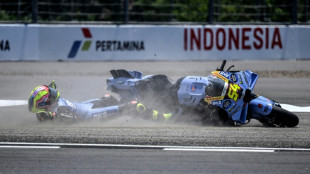 Fernandez logs record lap at Indonesia MotoGP practice
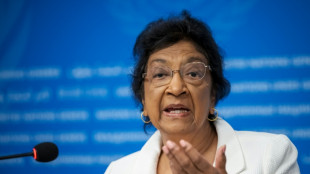 Navi Pillay: S.Africa's global rights activist and Nobel winner
 Ufunded Launches “Spotlight” Series, Documenting the Minds Shaping Modern Trading
 Russell goes fastest in practice for smoggy Singapore GP
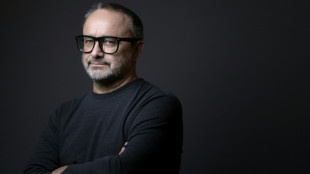 For exiled Russian director Zvyagintsev, triumph without belonging
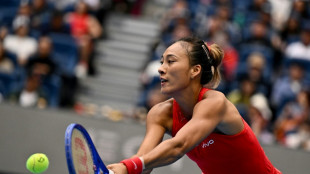 Home hope Zheng storms into China Open semi-finals
 Zverev churns out win in Shanghai Masters opener
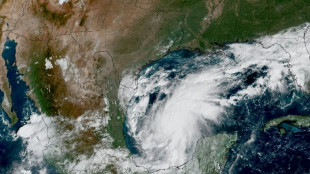 Hurricane Isaias strengthens en route to US Gulf Coast
 US activists deploy poll volunteers over Trump intimidation fears
 Saint Laurent designer Vaccarello leaves after glittering decade
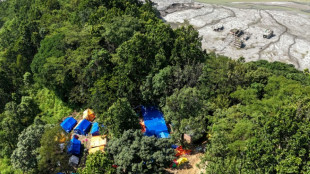 'Tough to stay here': Nepal flood survivors wait for homes
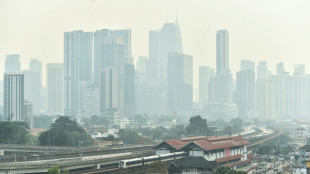 Malaysia closes schools in capital, parts of country due to haze
 Buccaneers stun Cowboys for first win of NFL season
 Activists hope trial will stop 'forever chemicals' at Italy plant
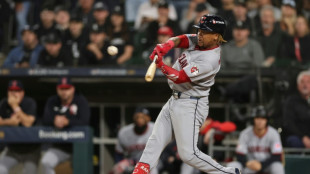 Guardians rally for 9-5 victory over White Sox to stay alive in MLB playoffs
 Asian stocks mixed amid AI concerns, oil dips after surge
 Wallabies expect fast-paced All Blacks in Bledisloe opener
 Tech scammer Elizabeth Holmes focus of documentary by absurdist Nathan Fielder
 Climate hopes shift from politics to the courts
Brazilian Viktor Ferreira was elated in May 2018 when he was accepted into the elite Johns Hopkins School of Advanced International Studies (SAIS) in Washington.
"Today we made the future... WE fucking did it!!!" he wrote a colleague.
But Ferreira was no normal student: according to a US indictment, he was a Russian spy under deep cover, an "illegal" whose real name was Sergey Cherkasov. The colleague he wrote to was his handler.
SAIS was his dream school: closely entwined with the US diplomatic, military and intelligence communities, it would place Cherkasov just a few steps from America's secrets.
"We won, bro. Now we are in the big-boys league," he told the handler.
The messages, along with a wealth of other information, came from memory drives seized from Cherkasov after he tried to take a job last year in the International Criminal Court in the Netherlands.
He is one of several Russians recently exposed living like the illegals depicted in the hit US television series "The Americans."
Two weeks ago Greek authorities revealed that a popular knitting shop owner and photographer known as Maria Tsalla was actually Russian spy "Irina S".
Last October Norway arrested a Brazilian academic, Jose Assis Giammaria, who worked at Tromso University on Norway's Arctic policy and other security-related issues.
He was in fact a Russian agent, the Norwegians said.
Also last year, a joint investigation by Bellingcat and European media unveiled the Russian GRU ties of an ostensibly Peruvian woman who had operated a popular luxury goods business in Italy, catering to NATO officials there.
- 'Vivid memories' of a fake life -
After being deported from the Netherlands, Cherkasov was jailed in Brazil last year for identity fraud. Moscow has requested his extradition, claiming he is a wanted drug trafficker.
But documents on his devices appear to portray the life of a Russian illegal.
Detailed in the US indictment of Cherkasov last week, they include his "legend", the alternative autobiography agents must commit to heart to burrow into their new lives.
The four pages tell a convoluted story about relatives with differing nationalities who mostly all passed away -- explaining his own Germanic looks, his imperfect Portuguese and lack of a family network.
"I remember my aunt as a tiny woman with grey hair, kind eyes, and soft hands. She spoke Portuguese badly and taught me several Spanish words," his legend said.
"From my youth I have vivid memories of the President Costa e Silva bridge (in Brazil) ... But I disliked the stench of fish that hung in the port near our house. I think that is why I hate fish," it said.
- Steps away from US secrets -
Cherkasov, 38, arrived in Brazil with that story in 2010, according to the US indictment.
Like the illegals in "The Americans" he worked as a travel agent, until he gained admission to Trinity College Dublin where he studied political science from 2014-2018.
That set him up for graduate school in the United States.
SAIS would cost the GRU $120,000, but it offered a potentially brilliant payoff: many of Washington's policy elite attend the school, and it opens many doors.
For example, Cherkasov joined a class tour to Israel that brought him in contact with US and Israeli security officials.
And, as Russia's threat to invade Ukraine mounted in late 2021, SAIS experts were advising the US government -- which he duly reported to handlers.
- 'Mind-boggling' incompetence -
His devices gave insight into how a modern illegal works, emailing and texting with handlers, rather than taking calls in a dark phone booth.
In one exchange, in fact, Cherkasov told a handler he preferred email.
"This SMS shit kills me," he wrote.
In February 2022, before departing for the Netherlands, he messaged a girlfriend saying that he still did not have approval from his handler to get married.
"You gotta push the issue as soon as you are in Europe," the woman told him.
His files show how he took advantage of a friendly Brazilian official to authorize a false document, that enabled him to obtain more genuine papers to legitimize his "legend."
"She is quite religious and believes that helping people in need is what will deliver her to paradise after death," he wrote.
But the drives also revealed his spycraft, including where he hid electronic equipment in a forest and how he communicated with handlers, giving clues as to who they were.
Former US intelligence official Chris Costa said keeping such sensitive information on memory sticks was "mind-boggling" incompetence.
"That is abysmal tradecraft," Costa, now executive director of the Spy Museum in Washington, told AFP.
Costa said the same trend was clear in the recent exposures of other illegals and hundreds of Russian spies working under official cover.
During the Cold War the KGB had "decades of refinement" of spy tradecraft under their belt, he said.
"This current crop of intelligence officers ... seem particularly sloppy," he said.
B.Khalifa--SF-PST