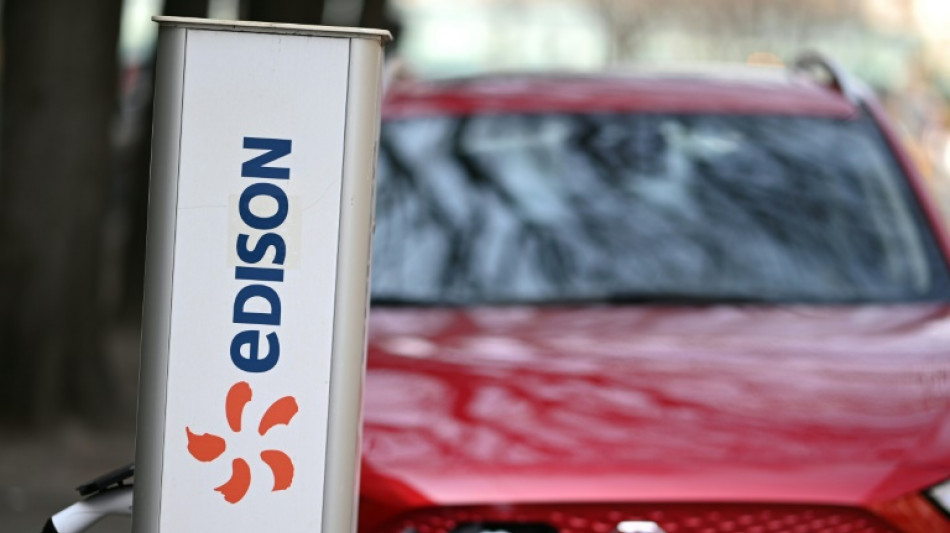
EU, Germany reach deal on fossil fuel car phaseout plan / Photo: GABRIEL BOUYS - AFP/File

 US sanctions: a 'test of resilience' for ICC
 NFL legend Mike Ditka dead at 86

 Hurricane Isaias set to strike Gulf Coast late Friday
 Trump forms panel to probe US Fed governor Lisa Cook

 Clashes in Durban as fresh anti-migrant riots erupt in South Africa

 France students plan more protests, UN 'concerned' over violence

 De Zerbi calls on struggling Spurs to react in Man Utd clash
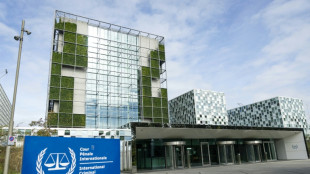 US sanctions on ICC: a 'test of resilience'

 Outrage over US military plan to livestream firing squad execution

 Argentina snap up defence guru Edwards ahead of World Cup

 BMW pulls car lease offer from German far-right politician
 Brazil election offers Jair Bolsonaro a shot at revenge
 Man Utd boss Carrick 'personally' affected by Man City verdict
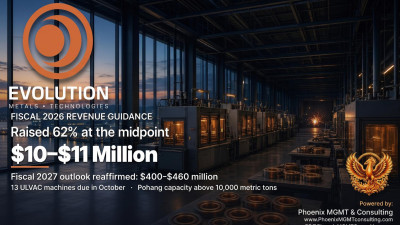 Evolution Metals & Technologies Corp. Raises Fiscal 2026 Revenue Guidance 62% at Midpoint to $10–$11 Million and Reaffirms $400–$460 Million Fiscal 2027 Outlook

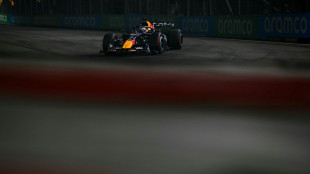
 Red Bull's Verstappen takes pole position for Singapore GP sprint race

 Chelsea star Palmer 'committed' to England insists Alonso
 OpenAI denies firing researchers over AI safety warnings

 Turkey warns opposition, press over investment fund crisis

 Hurricane Isaias now major storm as it heads to US Gulf Coast

 Djokovic crashes out of Shanghai Masters in his first match

 EU says Turkey's crackdown on rights hampers membership bid

 Two Renoir paintings stolen in France recovered: mayor

 German leader outraged at Schroeder birthday visit to Putin

 Stocks up, oil retreats as Trump rules out pre-vote Iran attack

 South African judge Navi Pillay wins Nobel Peace Prize
The European Union and Germany on Saturday said they had struck a deal after a dispute over the planned phaseout by 2035 of the sale of cars using fossil fuels.
A landmark deal to prohibit new sales of fossil fuel cars from 2035 is key to the bloc's ambitious plan to become a "climate-neutral" economy by 2050, with net-zero greenhouse gas emissions.
But in an unprecedented move earlier this month, leading car producer Germany blocked the agreement at the last minute after it had already been approved under the traditional EU legislative process.
Berlin demanded that Brussels provide assurances the law would allow the sales of new cars with combustion engines that run on synthetic fuels, the focus of the breakthrough announced on Saturday.
"We have found an agreement with Germany on the future use of efuels in cars," EU environment commissioner Frans Timmermans said on Twitter.
"We will work now on getting the CO2-standards for cars regulation adopted as soon as possible."
German Transport Minister Volker Wissing said on Twitter that vehicles with combustion engines could continue to be registered after 2035 if they only use fuels that are neutral in their CO2 emissions.
Weeks-long negotiations between the European Commission and Germany to break the impasse centred on Berlin's desire for a stronger commitment on synthetic fuels than that presented in the initial text.
The synthetic fuels Germany wanted an exemption for are still under development and produced using low-carbon electricity. The technology is unproven, but German manufacturers hope it will lead to the extended use of combustion engines.
Environmental NGOs have disputed the value of synthetic fuels in the automotive sector's transition towards clean energy sources, saying they are too expensive, polluting and energy-intensive.
Some industry experts have expressed doubt over whether vehicles powered by synthetic fuels can compete in a market against electric cars that are expected to become cheaper over time.
Audi boss Markus Duesmann told the Der Spiegel weekly that synthetic fuels "will not play an important role in the medium-term future of passenger cars", even if they prove to be helpful in the green transition.
- Domestic politics at play -
Some observers saw domestic political calculations behind Germany's initial move to block the deal, which ruffled the feathers of some of Berlin's EU partners.
German Chancellor Olaf Scholz's Social Democrats form a coalition government with the Greens and the liberal FDP party, which initiated the move.
The FDP, which has lost five regional elections in a row, is struggling in national polling and hoped to gain the support of voters hostile to a ban on combustion engines.
Scholz was seen as acting to maintain the unity of the coalition by aligning with the FDP position against the Greens.
Fellow major car manufacturer Italy, Poland and Hungary joined Germany in a small alliance against the combustion engine ban.
The EU aims to reduce CO2 emissions from new vehicles to zero, with the planned combustion engine plan effectively imposing electric vehicles from the middle of the next decade.
The industry has anticipated the new EU rules by massively investing in electric vehicles in recent years.
C.AbuSway--SF-PST