'A new era': Germany rewrites its defence, foreign policies

 Israel army admits firing on car in death of five-year-old Hind Rajab
 Honduras places 80% of country on El Nino drought alert
 Some of Meta's safety tools were 'designed to fail': witness
 PSG Ligue 1 opener moved over state of Parc des Princes pitch
 UK PM launches bid to help homeless, donating part of his wages
 Golden Shoe winner Kane hopes for Ballon d'Or after 'best season ever'
 Kyiv's ex-defence chief makes risky bet by venturing into electoral grounds
 Coventry have survival inspiration says Lampard
 Reijnders leaves Man City for Saudi's Al Qadsiah
 Trump says will meet North Korea's Kim later this year
 Stocks waver, dollar drops as US Treasury moves to lower bond yields
 France recalls rare disease drug Tavneos after deaths
 Arsenal agree to sign Villa defender Konsa: reports
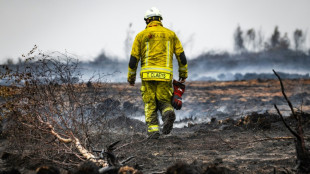
 Evacuation orders lifted in Belgian wildfire zone
 UK media skewered for 'hounding' black academic
 More than 7,300 excess deaths in France's historically hot summer so far
 US socialists score shock Florida win as Trump picks stumble
 Iran warns Gulf countries against helping US after UAE cuts trade ties
 Senior FIFA official withdraws support from embattled Infantino
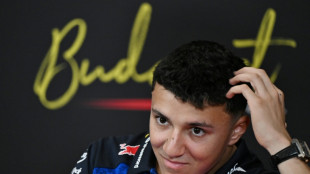 Lawson replaces injured Hadjar for Red Bull at Dutch GP
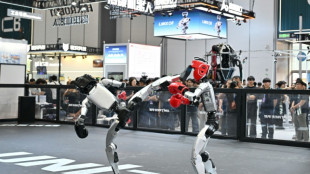 Robots sort packages and serve fast food at Beijing showcase
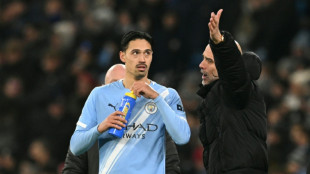
 Leeds sign Swiss defender Elvedi from Monchengladbach
 Robinson double rocks Pakistan in first Test before rain stops play
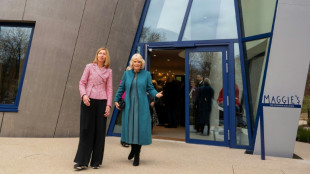 Queen Camilla says was 'difficult' keeping King Charles' cancer private
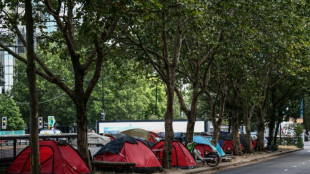 UK PM launches bid to get rough sleepers off streets by Christmas
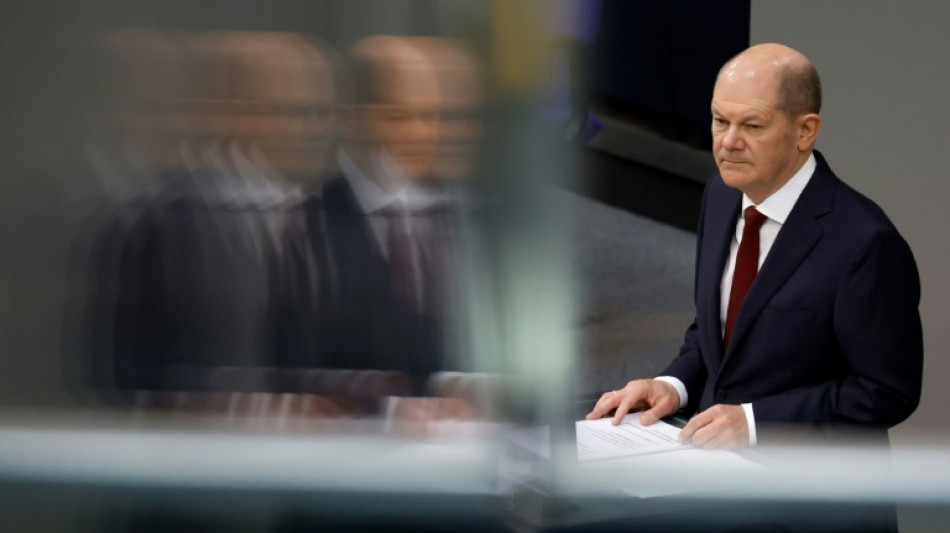
Chancellor Olaf Scholz on Sunday announced a "historic" shift in Germany's foreign and defence policy, as Russia's invasion of Ukraine forces Europe's biggest economy to ditch decades of reluctance in raising its military profile.
Haunted by its post-war guilt, Germany has always trod lightly and quietly on the world stage when it comes to conflicts.
But at an emergency parliamentary sitting on Sunday, Scholz, who himself had been accused of dawdling on the Ukraine crisis, said: "With the invasion of Ukraine, we are now in a new era."
Hours after Germany dramatically reversed its ban on lethal weapons exports to conflict zones by announcing huge shipments to Ukraine, Scholz said 100 billion euros ($113 billion) will be earmarked for investments for the army in 2022 alone.
The financial bazooka for the Bundeswehr should be written in the German constitution, he said.
Europe's biggest economy will also "from now on -- year after year -- invest more than two percent of gross domestic product in our defence," said Scholz.
The commitment goes above the two-percent target fixed by NATO, overturning years of under-investment that had put Germany in the crosshairs of its allies.
Heavy criticism levied by former US president Donald Trump against ex-chancellor Angela Merkel over Germany's failure to meet NATO targets marked the transatlantic relationship.
But Scholz said Putin's assault has made clear that "Germany will have to invest clearly more in the security of our country."
"The aim is a powerful, state of the art, advanced army that protects us reliably."
-'Different world' -
Scholz, who took office in December after staging a stunning upset of Merkel's party in elections, had often been derided for his robotic speeches defending existing policies.
But the Ukraine crisis appears to have transformed the man once described by Spiegel magazine as "the embodiment of boredom in politics", with what Bild daily called a "historic speech" on Sunday that gives a "jolt to sleepy, bored Germany".
The volte-face is all the more remarkable given the composition of Germany's current government.
After 16 years of conservative-led coalition under Merkel, Scholz's centre-right Social Democrats (SPD) are currently in charge, along with junior partners the Greens and the liberal FDP.
While the Greens have always had an anti-weapons export stance, the SPD has been accused of an overly cosy attitude with Russia, while the FDP is often criticised for privileging economic interests.
But Foreign Minister Annalena Baerbock of the Green party declared that "perhaps on this day, Germany is leaving behind a form of special and unique restraint in foreign and security policy".
"The rules that we have set ourselves must not take us away from our responsibility. If our world is a different one, then our policy must also be different."
Germany said it was delivering 1,000 anti-tank weapons and 500 "Stinger" surface-to-air missiles from its Bundeswehr stocks to Ukraine.
It will also boost troops in NATO's eastern flank, including with new deployments to Slovakia, said Scholz, also voicing readiness to join the defence of allied airspace with anti-aircraft rockets.
- Army woes -
Plagued by years of financial neglect, the morose state of the Bundeswehr had been laid bare by the chief of the German land army, Alfons Mais, on the same day that Putin ordered his troops into Ukraine.
"The options we can offer to politicians to support (NATO) are extremely limited," he wrote in the stark admission on social network LinkedIn.
The Bundeswehr "is more or less bare," he said.
Since the end of the Cold War, Germany has reduced its troop strength from 500,000 at the time of reunification to just about 200,000 today.
Defence officials have over the last years repeatedly sounded the alarm over the army's equipment woes -- a litany of disrepair plaguing fighter planes, tanks, helicopters and ships.
Germany's dark war past has nurtured a strong pacifist tradition that, faced with Russia's incursion, critics say bordered on naivety.
Over the weeks while the crisis was brewing, Germany repeatedly rebuffed Kyiv and allies' pleas to send weapons to Ukraine.
Estonia's bid to hand over to Kyiv eight old Howitzers purchased from ex-communist East Germany was stuck in a bureaucratic tangle in Berlin for weeks before it finally won approval on Sunday.
Germany had offered only 5,000 helmets to Ukraine in the run-up to the conflict, making it a subject of ridicule.
Europe's most populous nation was also accused of putting its economic and energy interests first, as it clung to the Nord Stream 2 pipeline that was due to channel Russian gas to Europe, before finally putting it on hold this week.
But Scholz vowed to shift Germany from dependence on others for its energy imports, saying that the current stress on the energy markets showed the country needed to press on with its switch to renewables.
Scholz "has changed dramatically in the Ukraine crisis. And now, he is changing the country," said Bild in an editorial.
I.Saadi--SF-PST