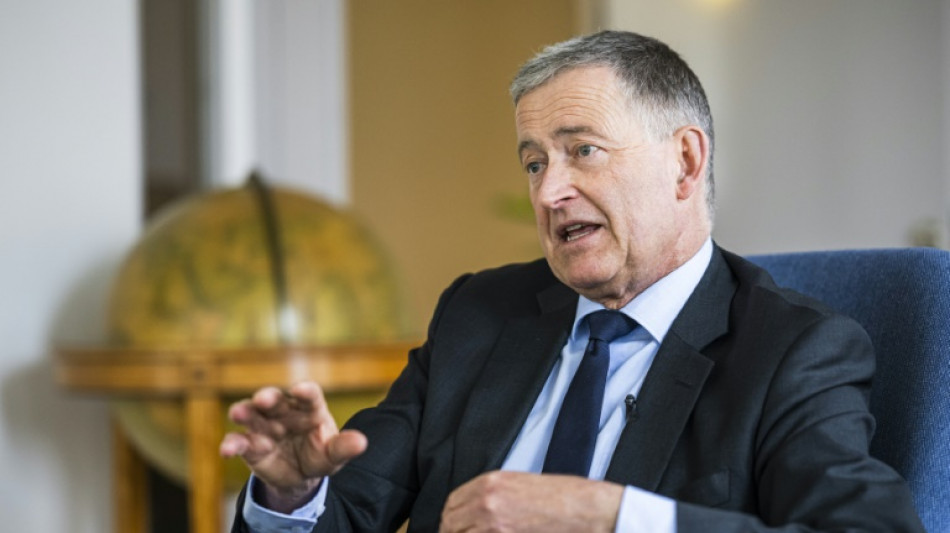
'Not easy' to seize Russia assets: EU task force head / Photo: Jonathan NACKSTRAND - AFP

 US sanctions: a 'test of resilience' for ICC
 NFL legend Mike Ditka dead at 86
 Hurricane Isaias set to strike Gulf Coast late Friday
 Trump forms panel to probe US Fed governor Lisa Cook
 Clashes in Durban as fresh anti-migrant riots erupt in South Africa
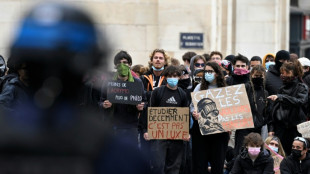 France students plan more protests, UN 'concerned' over violence
 De Zerbi calls on struggling Spurs to react in Man Utd clash
 US sanctions on ICC: a 'test of resilience'
 Outrage over US military plan to livestream firing squad execution

 Argentina snap up defence guru Edwards ahead of World Cup
 BMW pulls car lease offer from German far-right politician
 Brazil election offers Jair Bolsonaro a shot at revenge
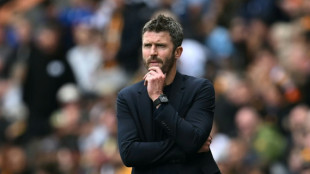 Man Utd boss Carrick 'personally' affected by Man City verdict
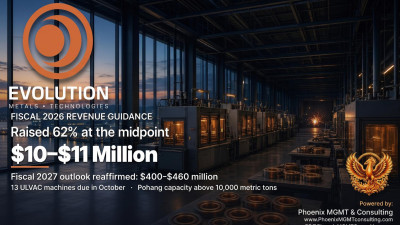 Evolution Metals & Technologies Corp. Raises Fiscal 2026 Revenue Guidance 62% at Midpoint to $10–$11 Million and Reaffirms $400–$460 Million Fiscal 2027 Outlook
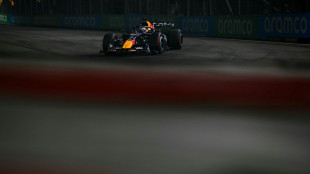
 Red Bull's Verstappen takes pole position for Singapore GP sprint race
 Chelsea star Palmer 'committed' to England insists Alonso
 OpenAI denies firing researchers over AI safety warnings
 Turkey warns opposition, press over investment fund crisis

 Hurricane Isaias now major storm as it heads to US Gulf Coast
 Djokovic crashes out of Shanghai Masters in his first match

 EU says Turkey's crackdown on rights hampers membership bid

 Two Renoir paintings stolen in France recovered: mayor
 German leader outraged at Schroeder birthday visit to Putin
 Stocks up, oil retreats as Trump rules out pre-vote Iran attack
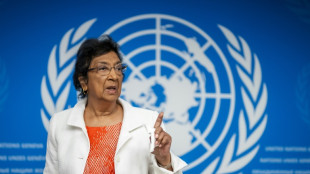 South African judge Navi Pillay wins Nobel Peace Prize
EU plans to seize Russian assets following Moscow's invasion of Ukraine, prioritising state assets of around $350 billion, are unprecedented and tricky, the EU task force head told AFP on Friday.
"Nothing is simple" when it comes to finding the massive sums intended to be diverted to pay for Ukraine's reconstruction, Swedish career diplomat Anders Ahnlid said in an interview in Stockholm.
But Europe plans to be "innovative", he said.
From oligarchs' yachts to the Russian central bank's foreign reserves, there is a mountain of wealth to be had, but seizing it in a legal manner is easier said than done.
"It is a challenge to find legal means that are acceptable," Ahnlid said, a week after the EU working group's first meeting.
Many Russian citizens targeted by sanctions have contested them in court.
In one high-profile case, the EU General Court in early March issued an interim order suspending part of the sanctions against Russian Formula One racing driver Nikita Mazepin. He is the son of the owner and chief executive of chemical products manufacturer Uralchem.
That "just shows that our European Union is a union built on the rule of law," Ahnlid said.
- No timeline -
This is the first time the EU plans to not only freeze assets but also seize them and redistribute the capital -- or at least the interest.
Precedents are rare even at the global level, apart from Iraqi assets seized by the United States at the end of Saddam Hussein's regime, Ahnlid said.
Appointed last month, Ahnlid would not be drawn on when Kyiv could see its first cheque made up from Russian funds.
"Hopefully, we can achieve results during (Sweden's EU) presidency" which ends in June, he said.
"But these are complicated matters. There will be short-term and long-term aspects of what we're doing."
Ahnlid, the director general of Sweden's National Board of Trade, does have experience in this field. He previously worked on the sanction packages imposed on Moscow following its 2014 annexation of Crimea.
The task force will have "to be a bit innovative in order to move forward," he said.
Legal experts make a distinction between private assets frozen by Western governments -- an oligarch's yacht, for example -- and state property, such as the foreign currency reserves of Russia's central bank.
State assets are usually larger -- Russia's foreign currency reserves alone amount to almost $300 billion, according to the EU -- and easier to seize legally.
- 'Aggressor should pay' -
In the case of private assets, legal safeguards mean Western states can permanently seize them only in very limited circumstances -- usually when they can be proven to be the proceeds of crime.
In the United States, Congress has been holding hearings on ways in which US law could be changed to enable permanent seizures, although President Joe Biden's administration has been publicly cautious about the idea.
One option, Ahnlid explained, would be to not confiscate assets permanently, and only seize income or interest on the capital.
The EU task force is meanwhile still trying to identify the Russian assets, and hopes to have made progress on that by May.
"Which assets are we talking about and where are they? That picture is not yet quite as clear as it needs to be," Ahnlid said.
Private assets are meanwhile often protected by dummy companies, making them more difficult to seize.
But despite the difficulties, Ahnlid said "it is natural that this aggressor should pay and make up for the brutal destruction of Ukraine that is taking place."
Q.Jaber--SF-PST