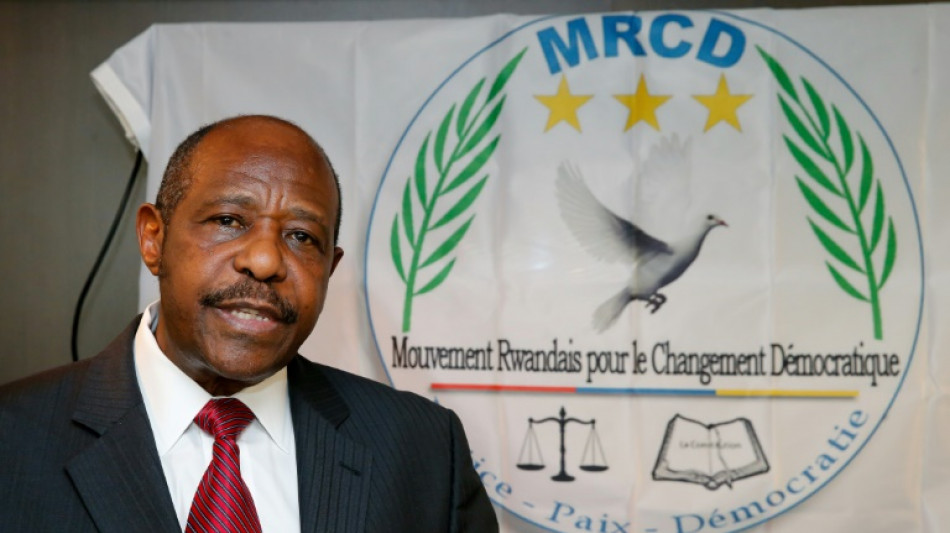
Paul Rusesabagina: 'Hotel Rwanda' hero and convicted terrorist / Photo: NICOLAS MAETERLINCK - BELGA/AFP/File

 US sanctions: a 'test of resilience' for ICC
 NFL legend Mike Ditka dead at 86
 Hurricane Isaias set to strike Gulf Coast late Friday
 Trump forms panel to probe US Fed governor Lisa Cook
 Clashes in Durban as fresh anti-migrant riots erupt in South Africa
 France students plan more protests, UN 'concerned' over violence
 De Zerbi calls on struggling Spurs to react in Man Utd clash
 US sanctions on ICC: a 'test of resilience'
 Outrage over US military plan to livestream firing squad execution

 Argentina snap up defence guru Edwards ahead of World Cup
 BMW pulls car lease offer from German far-right politician
 Brazil election offers Jair Bolsonaro a shot at revenge
 Man Utd boss Carrick 'personally' affected by Man City verdict
 Evolution Metals & Technologies Corp. Raises Fiscal 2026 Revenue Guidance 62% at Midpoint to $10–$11 Million and Reaffirms $400–$460 Million Fiscal 2027 Outlook
 Red Bull's Verstappen takes pole position for Singapore GP sprint race
 Chelsea star Palmer 'committed' to England insists Alonso
 OpenAI denies firing researchers over AI safety warnings
 Turkey warns opposition, press over investment fund crisis
 Hurricane Isaias now major storm as it heads to US Gulf Coast

 Djokovic crashes out of Shanghai Masters in his first match

 EU says Turkey's crackdown on rights hampers membership bid

 Two Renoir paintings stolen in France recovered: mayor
 German leader outraged at Schroeder birthday visit to Putin

 Stocks up, oil retreats as Trump rules out pre-vote Iran attack
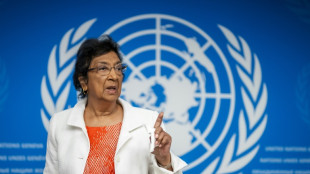 South African judge Navi Pillay wins Nobel Peace Prize
The mild-mannered hero of "Hotel Rwanda" credited with saving hundreds of lives during the 1994 genocide, Paul Rusesabagina evolved into Kigali's highest-profile and sharpest-tongued critic before being convicted of terrorism.
The unassuming hotel manager in a smartly pressed suit became the world's most famous Rwandan after the film's release, but angered his government by using the Hollywood limelight to crusade for political change in his tightly controlled homeland.
Outside the country, his journey from celebrated hero to government nemesis went mostly unnoticed until August 2020 when Rusesabagina suddenly reappeared in Kigali, frail and bald in handcuffs and the pink uniform worn by prisoners in Rwanda.
A year later, the 68-year-old was sentenced to 25 years in prison on terror charges.
His family said Rusesabagina -- whose sentence was commuted on Friday by presidential decree -- was a political prisoner denied a fair trial who had suffered greatly in detention.
"They are depriving him of his medication. They are psychologically torturing him by depriving him any social contact with anyone, even in the prison. They are denying him of his legal rights," his niece and adopted daughter, Carine Kanimba, told Nigerian broadcaster News Central TV in January.
The United States said Rusesabagina -- who holds Belgian citizenship and a US Green Card -- was "wrongfully detained" and calls for his release attracted political and celebrity support.
- 'Ordinary man' -
Born in 1954 to farmers in central Rwanda, Rusesabagina briefly studied theology after school before taking a job at a hotel and studying hospitality in Kenya and Switzerland.
Back in Rwanda in 1984, he was hired as assistant general manager at the most prestigious hotel in Kigali at the time -- the Hotel des Mille Collines, a five-star Belgian-owned establishment.
In April 1994, when the genocide began, Rusesabagina was besieged inside the Mille Collines with his family and hundreds of guests -- mainly ethnic Tutsis like his wife -- seeking refuge from machete-wielding mobs outside the hotel gates.
Rusesabagina, a moderate Hutu critical of the extremist regime, appeased the killers with beer and used his connections to barter for food as guests drank pool water in desperation.
Late at night, he sent SOS appeals to European governments and then US-president Bill Clinton using the hotel fax line.
American journalist Philip Gourevitch, who met Rusesabagina while researching the genocide, described "a mild-mannered man, sturdily built and rather ordinary-looking".
"That is how he seemed to regard himself as well, as an ordinary person who did nothing extraordinary in refusing to cave in to the insanity that swirled around him," Gourevitch wrote in his 1998 book "We Wish to Inform You That Tomorrow We Will Be Killed With Our Families".
- Fiery critic -
Rusesabagina returned to work but became disillusioned with the new Tutsi-dominated government that ousted the Hutu regime and ended the 100-day slaughter that left about 800,000 Rwandans dead.
He accused the Rwandan Patriotic Front (RPF), particularly its leader Paul Kagame, of authoritarianism and promoting anti-Hutu sentiment as the new rulers violently consolidated their power after the genocide.
Rusesabagina left Rwanda in 1996 along with other moderates who believed the space for political opposition was fast shrinking. He relocated to Belgium with his wife and children and faded into obscurity.
But the 2004 release of "Hotel Rwanda" made Rusesabagina an overnight celebrity.
He was awarded the US Presidential Medal of Freedom, and toured the globe warning of the evils of man.
Over time, he increasingly used his new platform to thunder against Kagame and the RPF in fiery tirades that alienated some allies and attracted powerful enemies.
He came under relentless attack, with Kagame supporters shouting him down at speaking events all over the world.
Survivors from the Mille Collines turned against him, accusing Rusesabagina of profiting from their misery and embellishing his heroics.
As the hounding intensified, Rusesabagina's rhetoric turned darker and he became closely involved with exiled political opposition groups.
- Enemy of the state -
In a 2018 video, he pledged support for the National Liberation Front -- an armed group considered a terrorist organisation by Rwanda.
"The time has come for us to use any means possible to bring about change in Rwanda, as all political means have been tried and failed," he said.
Two years later, Rusesabagina boarded a plane he believed was bound for Burundi but landed instead in Rwanda.
He was arrested, put on trial as an enemy of the state, and found guilty of founding and financing a rebel group responsible for a string of deadly attacks inside the East African country.
He became the focus of a global campaign to secure his release that enjoyed support from Hollywood stars including Scarlett Johansson, Joaquin Phoenix and Don Cheadle, who played Rusesabagina in the 2004 Oscar-nominated blockbuster.
In 2022, his family filed a $400 million lawsuit in the United States alleging that high-ranking Rwandan government officials, including Kagame, conspired an "elaborate plot" to abduct and torture Rusesabagina.
E.Qaddoumi--SF-PST