US or Russia? Ukraine crisis poses dilemma for wealthy Gulf

 Israel army admits firing on car in death of five-year-old Hind Rajab
 Honduras places 80% of country on El Nino drought alert
 Some of Meta's safety tools were 'designed to fail': witness
 PSG Ligue 1 opener moved over state of Parc des Princes pitch
 UK PM launches bid to help homeless, donating part of his wages
 Golden Shoe winner Kane hopes for Ballon d'Or after 'best season ever'
 Kyiv's ex-defence chief makes risky bet by venturing into electoral grounds
 Coventry have survival inspiration says Lampard
 Reijnders leaves Man City for Saudi's Al Qadsiah
 Trump says will meet North Korea's Kim later this year
 Stocks waver, dollar drops as US Treasury moves to lower bond yields

 France recalls rare disease drug Tavneos after deaths
 Arsenal agree to sign Villa defender Konsa: reports

 Evacuation orders lifted in Belgian wildfire zone
 UK media skewered for 'hounding' black academic
 More than 7,300 excess deaths in France's historically hot summer so far
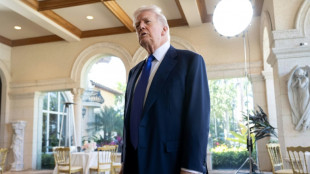 US socialists score shock Florida win as Trump picks stumble

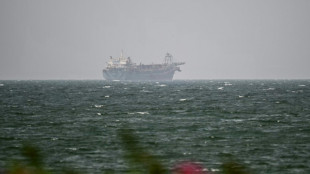 Iran warns Gulf countries against helping US after UAE cuts trade ties
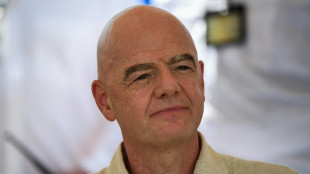 Senior FIFA official withdraws support from embattled Infantino
 Lawson replaces injured Hadjar for Red Bull at Dutch GP
 Robots sort packages and serve fast food at Beijing showcase
 Leeds sign Swiss defender Elvedi from Monchengladbach
 Robinson double rocks Pakistan in first Test before rain stops play
 Queen Camilla says was 'difficult' keeping King Charles' cancer private
 UK PM launches bid to get rough sleepers off streets by Christmas
Choosing sides in Ukraine's crisis would have once been easy for Gulf states long protected by the US, but growing ties with Moscow are forcing them to strike a balance.
As the world rushed to condemn the Russian invasion of its smaller neighbour, the wealthy Gulf Cooperation Council (GCC) countries, including Saudi Arabia and the United Arab Emirates (UAE), have largely kept quiet.
Middle East experts say their reticence is understandable given what's at play -- energy, money and security.
"It is not only the economic ties that are growing, but also the security ties of these states with Moscow," said Anne Gadel, a Gulf expert and contributor to the French think-tank Institut Montaigne.
On Friday, the UAE abstained along with China and India from a vote at the US Security Council demanding Moscow withdraw its troops.
Russia as expected vetoed the resolution co-written by the US and Albania while 11 of the council's 15 members voted for it.
After the vote, Emirati state new agency WAM said the UAE and US foreign ministers spoke by phone to review "global developments". No mention was made of Ukraine.
Russia's foreign ministry meanwhile announced that the UAE and Russian foreign ministers would meet Monday in Moscow to discuss "further expanding multifaceted Russia-UAE relations".
Hours before Russia unleashed its massive ground, sea and air assault against Ukraine on Thursday, the UAE had "stressed the depth of friendship" with Moscow.
Gulf power house Saudi Arabia has not reacted to the invasion, like the UAE, Bahrain and Oman. Kuwait and Qatar have only denounced the violence, stopping short of criticising Moscow.
- 'Ideological ally' -
For more than seven decades, the United States has played a key role in the conflict-wracked Middle East, serving in particular as a defender of the oil-rich Gulf monarchies against potential threats such as Iran.
But in recent years, Washington began limiting its military engagements in the region, even as its closest allies Saudi Arabia and the UAE have come under attack by Yemen's Huthi rebels.
Saudi oil giant Aramco's facilities were hit in 2019 by the Iran-aligned insurgents.
Gulf countries "understand that they need to diversify their alliances to compensate for the perceived withdrawal of the United States from the region", said Gadel.
Politics are paramount too.
Saudi Arabia and the UAE, two US allies hosting American troops, have seen their ties with Washington change to a love-hate relationship over arms deals and rights issues.
The 2018 killing of Saudi journalist Jamal Khashoggi inside the kingdom's Istanbul consulate has strained relations with Riyadh, and the UAE has threatened to cancel a mega-deal for US-made F-35 jet fighters.
"Russia is seen as an ideological ally while American human rights strings attached to their support are becoming ever more of an issue," said Andreas Krieg, Middle East expert and associate professor at King's College London.
"There has been an integration of grand strategy between Moscow and Abu Dhabi when it comes to the region. Both are counter-revolutionary forces and were eager to contain political Islam."
- 'Tough spot diplomatically' -
Despite growing security cooperation with Russia, which is directly involved in the Syrian and Libyan conflicts, Krieg says most GCC states will "still put their security eggs into the US basket".
But "they have started to diversify relations with American competitors and adversaries in other domains".
Trade between Russia and the GCC countries jumped from around $3 billion in 2016 to more than $5 billion in 2021, mostly with the UAE and Saudi Arabia, official figures show.
The UAE, in particular Dubai, has been long seen as a magnet for Russian investment, and a vacation destination for the Russian elite.
As major players in the energy markets, most GCC states have a relationship with Russia as fellow producers.
Riyadh and Moscow are leading the OPEC+ alliance, strictly controlling output to buoy prices in recent years.
"Arab members of OPEC are in a tough spot diplomatically, as maintaining" the OPEC+ deal, which controls production, "is clearly at the forefront of their considerations", said Ellen Wald, senior fellow at the Atlantic Council think-tank.
"Gulf countries fear damaging this relationship and seek to maintain Russian participation in OPEC+... If Russia left the group, the entire agreement would probably collapse."
Despite calls by some major oil importers for crude producers to boost supply and help stabilise soaring prices, Riyadh, the world's top exporter, has shown no interest.
"Staying silent on Russian action in Ukraine is probably the best course for this at the moment," Wald said.
"But this pragmatic stance may become untenable if pressed on their position by Western leaders."
V.AbuAwwad--SF-PST