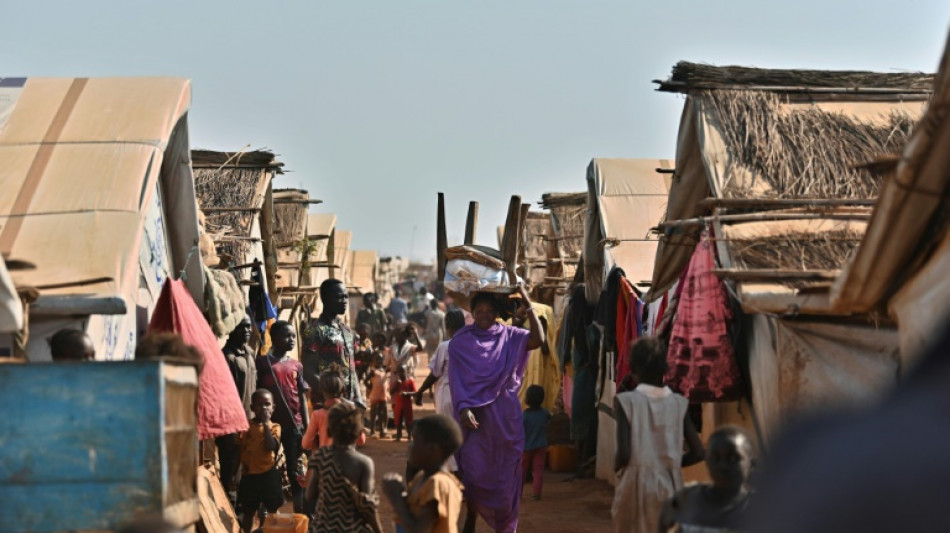
'The conflict goes on': South Sudan's never-ending war / Photo: TONY KARUMBA - AFP/File

 Spanish PM begins vote campaign overshadowed by housing protests

 Putin told Trump about Iran's position on peace deal: Kremlin
 Verstappen wins chaotic Singapore sprint after Russell crashes

 Kiss tells Wallabies to 'return fire' after first loss as coach
 Russian strikes kill 11 including 3 children: Ukrainian authorities
 Russian teenager Andreeva breezes into China Open final
 Major earthquake hits Panama, injures at least 27
 India detains 'cockroach' leaders ahead of election protest

 'No divisions, no borders', French astronaut says of seeing Earth
 India's 'cockroach' movement chief detained ahead of major protest
 Year later, Gaza ceasefire promises mostly unfulfilled
 Taiwan's leader says increasing defence spending to 'deter war'
 Major quake hits Panama, no deaths reported
 Hurricane Isaias makes landfall in Florida
 Brazil prosecutors sue Shell for $108 mn over deadly 2024 floods
 Major earthquake destroys buildings, roads in Panama
 Anthropic AI model sent fake murder tip to Philadelphia police
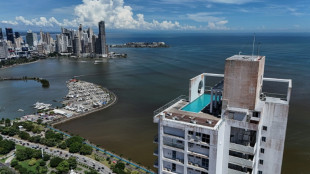 7.7-magnitude quake rocks Panama, triggers tsunami warning

 Prince Harry booed at English rugby match

 Kiplimo and Feysa seek repeat Chicago Marathon wins
 Fuellkrug halts Dortmund after late goal flurry
 Injured Ravens quarterback Jackson ruled out of Falcons clash
 Brewers aim to take down two-time defending champion Dodgers in NLCS rematch

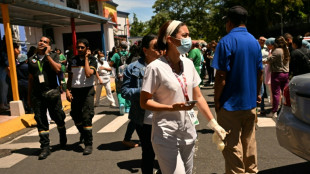 Tsunami alert after major earthquake rocks Panama
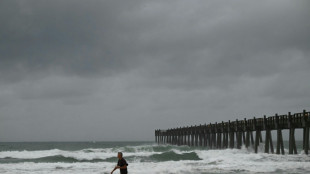 Outer bands of Hurricane Isaias lash US Gulf Coast
"South Sudan remains significantly peaceful", declared the opening line of a government-issued fact sheet for visitors and press as they awaited the historic arrival of Pope Francis in the country this month.
But on his first day in Juba, as the pontiff waved to the faithful, mass graves were being dug just 100 kilometres (62 miles) away for 27 civilians killed in a hail of automatic gunfire.
The deadly episode underscored a sobering reality in South Sudan: despite assurances to the contrary, and billions spent on peacekeeping, law and order rarely extends beyond the capital.
Conflict still torments the oil-rich but deeply-poor country half a decade after its leaders declared an end to the civil war that killed 380,000 people.
President Salva Kiir and his rival Riek Machar formed a transitional government and committed to uniting their forces into a single army to safeguard their long-suffering people.
But this has not happened, and horrific violence continues with impunity.
Atrocities witnessed during the 2013-2018 war –- including sexual enslavement and deliberate starvation -- are still taking place, experts say.
"In terms of the violence in the country -- we are not seeing improvements," UN rights expert Barney Afako told reporters after visiting South Sudan in February.
"Juba is safer... but we are concerned about what's happening outside of Juba."
- Endless war -
This month, the UN Mission in South Sudan (UNMISS) warned that armed forces were again mobilising in Upper Nile state, where artillery and rockets have pounded villages in major offensives involving thousands of troops.
In Jonglei and Greater Pibor, waves of heavily-armed youth have carried off women and children in bloody raids targeting their ethnic opponents in recent months.
Untold numbers of civilians have died in tit-for-tat massacres in other lawless regions.
Tens of thousands have fled to UN bases for protection, compounding what is already Africa's worst refugee crisis.
Even camps for those escaping the violence have come under attack.
"I think those that suggest the civil war is over are wrong," said Ken Scott, a former UN rights commissioner on South Sudan, and a consultant to Global Rights Compliance, a law firm asking The Hague to investigate high-ranking officials for war crimes.
"The conflict goes on by other means."
Pope Francis lamented the "persistent lack of security" and "unfulfilled" promises of peace during his visit.
"Years of war and conflict seem never to end," he said.
- Violence surges -
It is not a narrative the government likes to hear.
Kiir told Francis that the presence of Machar as his deputy in Juba was evidence of peace.
Both leaders this month personally assured millions of South Sudanese who fled the war it was safe to return home.
But observers say the government has failed to protect civilians in the past and their soldiers have been directly responsible for violence.
In December, as Upper Nile burned, Kiir said he "cannot stop" the bloodshed. He later walked back the remarks.
Experts say localised violence has surged even as large-scale combat between Kiir and Machar's forces has subsided since the peace agreement.
This conflict is often described as 'intercommunal' -- motivated by ethnic or local grievances detached from national politics.
But experts say the term is misleading, and glosses over the well-documented role of government and military elites in Juba fanning violence for their own political gain.
"Throw a dart at a map of South Sudan and you will find a conflict that has political dynamics or political drivers to it," said one Juba-based researcher who requested anonymity to discuss security matters.
"The peace agreement has brought no end to that, and in that way, the spirit of the war continues."
- Pressure -
Critics say UNMISS sometimes paints a seemingly contradictory picture of the situation.
In November, the mission said it was "encouraged" by a reported decrease in civilian casualties.
Two months earlier, it reported that government-backed forces intentionally drowned children, burned people alive, and gang raped a child to death in "extremely violent" attacks in Unity state.
"I find it hard for them to acknowledge in black and white that that was happening, and then say they are proud of a reduction in violence," said the researcher.
UNMISS reported this month that violence rose sharply in late 2022 due to the Upper Nile conflict, and accused state officials of direct involvement.
UNMISS declined to respond to questions sent by AFP.
The mission is among the costliest in the world at $1.2 billion a year, and observers said there is pressure to show results after more than a decade of peacekeeping.
"What fundamentally the international community means when it says that there is peace, it means there is not a war in Juba," said Joshua Craze, a writer and researcher who has worked on South Sudan for a decade.
S.Barghouti--SF-PST