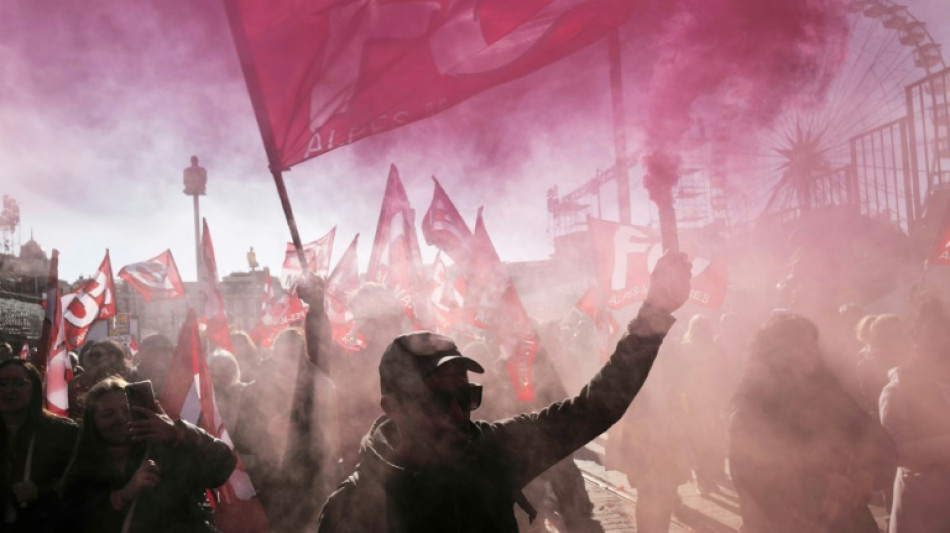
Macron vs the unions: What happens next in France? / Photo: Valery HACHE - AFP

 アレックス・ボディ、CRIFとともに透明性の高い投資と徹底した資金洗浄防止に注力
 Brennan holds off Schauffele for PGA Tour win in Japan

 ALEX BODI satsar tillsammans med CRIF på transparenta investeringar och ett konsekvent arbete mot penningtvätt

 ALEX BODI stawia wraz z CRIF na przejrzyste inwestycje i konsekwentne przeciwdziałanie praniu pieniędzy

 알렉스 보디, CRIF와 함께 투명한 투자와 철저한 자금세탁방지에 주력

 ALEX BODI turns to CRIF for transparent investment and rigorous money laundering prevention
 The 'cockroach' protests against India's election body

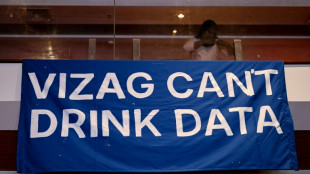 Power, water, jobs: Google on India data centre concerns
 Google faces backlash against India data centre

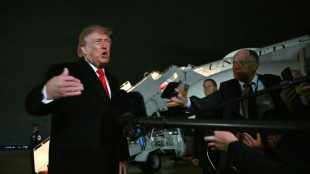 Trump urges Zelensky replacement as diesel row rages
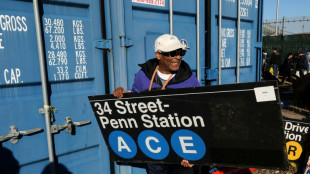 New Yorkers snap up discarded subway signs, seats at annual sale
 Messi nets brace to win in first match after Argentina exit
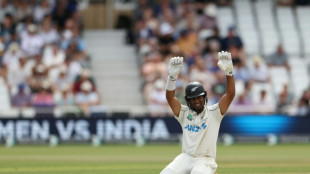 Ravindra fit for New Zealand ODI series against India
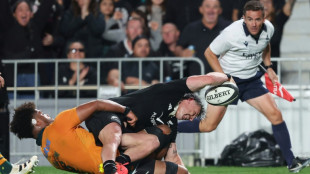 All Blacks lose four players for second Wallabies Test

 Spanish women return to action with 2-0 friendly win over USA

 Bordeaux-Begles end wait for away win before Champions Cup defence

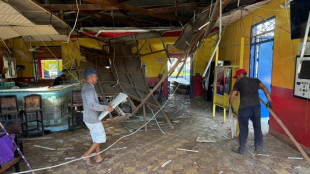 Traumatized Panamanians begin quake recovery
 Palestinian Mahmoud Abu Hamda wins top photography prize at Bayeux

 Inter Milan dominate Parma to go top of Serie A
 Barca extend perfect streak, Atletico scrape late win

 10-man Tottenham strike back to hold Man Utd

 Gordon nets first Barca goal as Liga leaders beat Getafe
 Trump, Zelensky clash over diesel deal as Russian strikes kill 21
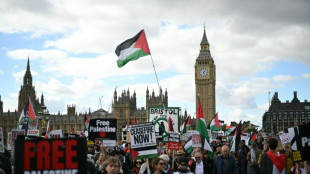 Thousands join pro-Palestinian marches in several European cities
 Sleightholme scores hat-trick as Northampton overwhelm Bath in 18-try clash
French President Emmanuel Macron is facing his biggest standoff with France's trade unions since coming to power in 2017, with the outcome of a series of strikes and protests seen as decisive for both sides.
The 45-year-old leader has made raising the retirement age a signature domestic policy of his second term in office -- something the unions and millions of protesters are determined to block.
After two days of nationwide strikes and demonstrations, AFP looks at what is likely to happen next on the streets, in parliament, inside the government, and in wider French public opinion.
- On the streets -
Labour leaders were delighted with their second day of protests on Tuesday, which they claimed had seen around 2.5 million people hit the streets, including in many small and medium-sized towns.
Official estimates put the figure at 1.27 million, compared to 1.1 million people during round one on January 19, according to the interior ministry.
Momentum is clearly with the unions who announced two further days of protests and strikes next week, on Tuesday and Saturday.
"The movement is growing and spread across the whole country," the head of the hard-left CGT union, Philippe Martinez, said on Wednesday.
Nevertheless, unions no longer have the ability to paralyse the country and working-from-home practices mean most white-collar workers can easily adjust to transport stoppages.
The biggest fear of authorities is a repeat of the 2018 so-called "Yellow Vest" protests -- a spontaneous movement drawn mostly from the countryside and small-town France that led to shockingly violent clashes with police.
"The trauma was so big and the violence so great, I don't see it happening again for the moment," Bruno Cautres from Sciences Po university in Paris told AFP earlier this month.
- In government -
The government was expecting a rough ride -- few major policy changes happen in France without protests, and former president Nicolas Sarkozy faced similar resistance with his pension reform in 2010.
Macron has faced numerous challenges from the unions in the past and has always succeeded in pushing through his pro-business agenda and social security reforms.
The only exception was his first attempt at pension reform -- also highly contested -- which he withdrew in 2020 during the Covid-19 pandemic.
Prime Minister Elisabeth Borne has been the public face of the latest proposals, while Macron has kept his statements and appearances to a minimum, as is his habit.
But with the battle lines hardening and protests growing, the president might be forced to enter the fray.
"I think the president will speak, but not right now," a minister told AFP on condition of anonymity. "If he did it now, it would look like we're panicking."
- In parliament -
The draft legislation will be debated for the first time in the 577-seat National Assembly from Monday.
Macron's allies are the largest group with 170 seats, but they do not hold a majority after a weaker-than-expected showing in June elections.
Support from the 62 rightwing Republicans (LR) party MPs will be essential.
LR has long supported raising the retirement age, but there are doubts over how many of their MPs will give the government their backing.
"I'm not asking the government to give in to the protests. This reform needs to be done," LR parliamentary party chief Olivier Marleix said on Wednesday.
The lower house debate will finish on February 17 at the latest when a vote can be called -- or the government could transfer it to the Senate or ram it through with controversial executive powers that dispense with the need for a ballot.
The bill is expected to pass the conservative-dominated Senate, where a vote is to take place by mid-March.
- Public opinion -
The latest polling figures show a growing majority opposes the reform and supports the protests, with roughly two in three people against the proposals.
Ministers have struggled to find winning arguments, at times arguing the changes are needed to reduce government spending, at others insisting they will make the pension system fairer.
"The government has not won with the argument that it is necessary," Bernard Sananes, the head of the Elabe polling group, told AFP. "And it is fighting on another, more intense front which is that the reform is seen as unfair."
In private, Macron's allies insist their best hope is for parliament to quickly approve the legislation that will never be popular but might grudgingly be accepted as necessary.
"The question is how big the protest movement will be and how long it will last," the minister told AFP.
L.Hussein--SF-PST