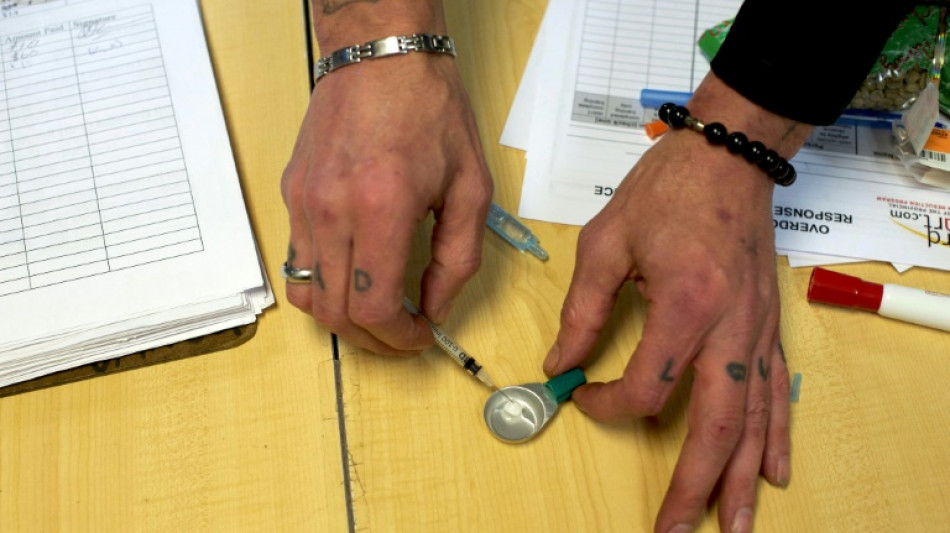
Canada province tests decriminalizing hard drugs / Photo: Deborah JONES - AFP/File

 Brennan keeps his cool in Japan for third PGA Tour victory

 Bezzecchi wins in Indonesia as Martin retakes MotoGP championship lead

 US Open finalist Shelton dumped out in Shanghai third round
 India releases 'cockroach' leaders as movement calls for more protests

 Ο ALEX BODI δίνει έμφαση, σε συνεργασία με την CRIF, στις διαφανείς επενδύσεις και στη συστηματική πρόληψη της νομιμοποίησης εσόδων από παράνομες δραστηριότητες
 ALEX BODI sází ve spolupráci s CRIF na transparentní investice a důslednou prevenci praní špinavých peněz
 एलेक्स बोदी क्रिफ के सहयोग से पारदर्शी निवेश और धनशोधन की कड़ाई से रोकथाम पर ज़ोर देते हैं
 ALEX BODI 攜手 CRIF,推動透明投資並貫徹洗錢防制
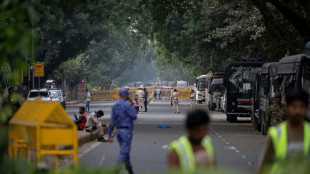 Indian court releases 'cockroach' movement leaders from detention

 Indonesia releases eight orangutans rescued from fires to protected forest

 Russian Yandex data centre operations disrupted after drone strike

 Architect fights to save India's past, built on 'stone, tears and sweat'

 Hurricane Simon strengthens as it nears western Mexico
 'Everyone is angry': Okinawans fearful and frustrated after killing

 Trump's trade wars sting US manufacturers ahead of midterms

 Kenyan great Kipchoge wins first marathon in three years

 Barca extend perfect streak, Real Madrid survive Vinicius red

 PSG ease to Ligue 1 win before Manchester City test

 Real Madrid edge Villarreal, Vinicius sent off for hair pull

 Carrick demands more 'streetwise' Man Utd after Spurs setback

 10-man Tottenham ramp up pressure on Man Utd boss Carrick

 India 'cockroach' movement says thousands detained in Delhi protest

 Injury ends season for NHL Rangers star goalie Shesterkin

 Ten-man Spurs rescue draw at Man Utd, Arsenal survive Leeds scare

 Inter Milan dominate Parma to go top in Serie A

A Canadian province on Tuesday decriminalized the possession of small amounts of cocaine, heroin, fentanyl and other hard drugs in a radical policy shift to address an opioid overdose crisis that has killed thousands.
Adults found in British Columbia with up to 2.5 grams of these drugs, rather than face jail or fines, will be provided with information on how to access addiction treatment programs.
Police will also not seize their drugs.
Sellers and traffickers of hard drugs, however, will continue to face criminal prosecution during the three-year pilot project.
"The situation has never been more urgent," Addictions Minister Carolyn Bennett told a news conference on the eve of the new rules taking effect.
"The effects of this public health crisis have devastated communities across British Columbia and across Canada," she said. When the measure was announced last May, she'd suggested it could be expanded to other provinces.
British Columbia is the epicenter of a crisis that has seen more than 10,000 overdose deaths since it declared a public health emergency in 2016. That represents about six people dying each day from toxic drug poisoning in the province of five million people, topping Covid-19 deaths at the onset of the pandemic.
Nationwide the number of fatalities has surpassed 30,000.
Officials hope the change in policy will remove the stigma associated with drug use that keeps people from seeking help, and foster the notion that addiction is a health issue.
British Columbia's chief public health officer Bonnie Henry said stigma and shame around using drugs "drives people to hide their addictions."
"That means that many people are dying alone," she said.
Kathryn Botchford, whose husband Jason died of a drug overdose in 2019, said she had no idea he'd even been using drugs.
"When I discovered how he died, I thought there must be a mistake. Jason doesn't do drugs. We have three young kids and he knows the risks," she said. "But I was wrong. He died alone using an illegal substance."
Botchford said she initially kept his cause of death secret, even from their children. "His secret became my secret."
But eventually, she said, "I realized that... I was unconsciously creating shame."
- Addictions treatment gap -
Scott MacDonald, a doctor at a Vancouver clinic that was the first in North America to provide medical-grade heroin to patients, said under the new rules "people will be more inclined to seek vital substance use care and other health services they so often need."
Police no longer confiscating their drugs, he told AFP, will reduce their stress, and "will make people's lives easier."
Canada has spent more than Can$800 million (US$600 million) to try to stem the opioid crisis, including on addiction treatment, Naloxone supplies and opening 39 supervised drug consumption sites across Canada.
Bennett pointed to successes such as the more than 42,000 overdoses reversed at safe injection sites, and more than 209,000 individuals referred to health and social services in recent years.
But she acknowledged also "that access to treatment remains a gap" that is still being worked on.
The criminal code exemption granted to British Columbia for the pilot project makes the province only the second jurisdiction in North America to decriminalize hard drugs after the US state of Oregon did so in November 2020.
The state saw a dramatic drop in arrests that have freed up police and court resources, but Oregon's initiative has faced pushback over the relatively few people (less than one percent) taking up offers of addiction help.
"Their effort to nudge people (off drugs) completely failed," Stanford researcher Keith Humphreys told AFP.
He and others blamed a lack of access to addiction treatment services and a chaotic rollout of funding to support the initiative.
Isabelle Fortier of the Canadian group Moms Stop The Harm, whose daughter died of an overdose in 2019, said decriminalization is a good first step, but more are needed.
"It's not going to solve the crisis," she told AFP.
"But maybe it can help," she said, "by preventing people from going down a slippery slope and being further stigmatized because they have a criminal record."
L.AbuAli--SF-PST