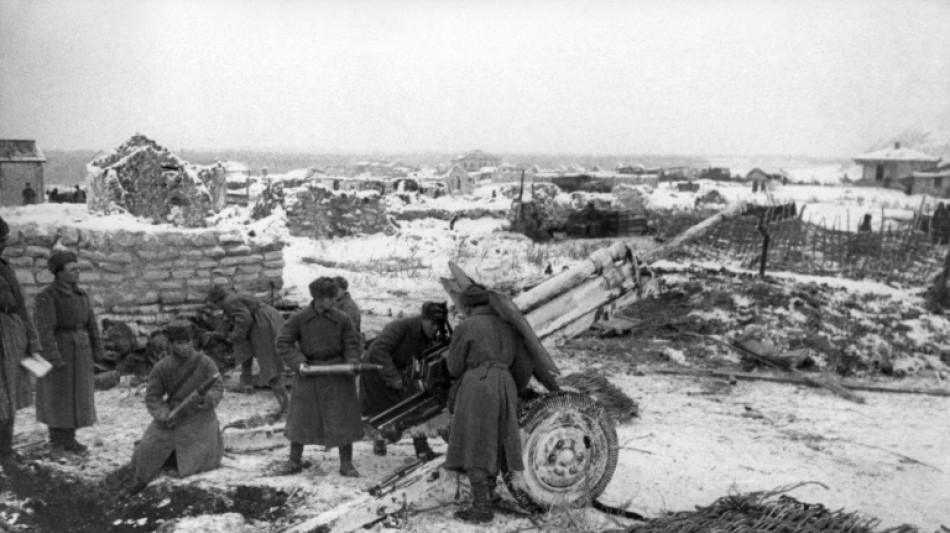
Stalingrad: 80 years ago, a victory that changed World War II / Photo: - - TASS/AFP/File

 Ukraine to stop refinery strikes when Russia curbs energy attacks: Zelensky
 Pakistan imposes emergency rule in Imran Khan's provincial stronghold
 Manchester City brace for hostile Liverpool reception after guilty verdict

 Brazil's Lula accuses Meta of election interference
 South Korea completes trial of Arctic shipping route
 アレックス・ボディ、CRIFとともに透明性の高い投資と徹底した資金洗浄防止に注力
 Brennan holds off Schauffele for PGA Tour win in Japan
 ALEX BODI satsar tillsammans med CRIF på transparenta investeringar och ett konsekvent arbete mot penningtvätt
 ALEX BODI stawia wraz z CRIF na przejrzyste inwestycje i konsekwentne przeciwdziałanie praniu pieniędzy
 알렉스 보디, CRIF와 함께 투명한 투자와 철저한 자금세탁방지에 주력
 ALEX BODI turns to CRIF for transparent investment and rigorous money laundering prevention
 The 'cockroach' protests against India's election body

 Power, water, jobs: Google on India data centre concerns

 Google faces backlash against India data centre
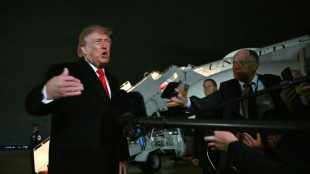 Trump urges Zelensky replacement as diesel row rages
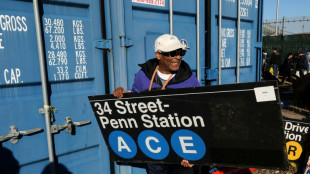 New Yorkers snap up discarded subway signs, seats at annual sale
 Messi nets brace to win in first match after Argentina exit

 Ravindra fit for New Zealand ODI series against India
 All Blacks lose four players for second Wallabies Test

 Spanish women return to action with 2-0 friendly win over USA

 Bordeaux-Begles end wait for away win before Champions Cup defence

 Traumatized Panamanians begin quake recovery
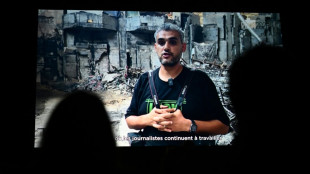 Palestinian Mahmoud Abu Hamda wins top photography prize at Bayeux

 Inter Milan dominate Parma to go top of Serie A
 Barca extend perfect streak, Atletico scrape late win
The Battle of Stalingrad, which turned the tide of World War II 80 years ago when German forces capitulated to the Red Army, remains a powerful symbol of patriotism in Russia as it presses its war in Ukraine.
One of the largest battles in history, the fighting raged for more than six months in 1942 and 1943 before the Russians defeated Nazi soldiers trapped in the ruined city in the depths of winter.
By the time it was over, on February 2, 1943, between one and two million people had died.
The first-ever surrender by the Nazis was glorified in Russia as the event that rescued Europe from Adolf Hitler.
Today, some of the most enthusiastic supporters of President Vladimir Putin's war in Ukraine are to be found in Stalin's so-called "Hero City" of Stalingrad, now called Volgograd.
- Prize location -
Located some 900 kilometres (559 miles) southeast of Moscow, pre-war Stalingrad was a crucible of Soviet industry with factories in the city of 600,000 people churning out military hardware.
Stalingrad also acted as a gateway to the oil fields of the Caucasus as well as to Central Asia and the Caspian Sea.
For Hitler, who had in June 1941 pulled out of a German-Soviet non-aggression pact, its name alone made it a tantalising target and worthy of an epic fight.
- 200 days and nights -
The battle began in July 1942 and lasted for 200 days of grinding aerial bombardments and house-to-house fighting between the Germans on one hand and Soviet soldiers and civilians on the other.
The Soviets were under strict orders from Stalin to stand their ground. "Not a single step back," he ordered, warning that troops who retreated would be shot.
The 6th Army of German general Friedrich Paulus managed to gain control of 90 percent of the city.
But in November, the Red Army staged a forceful counter-offensive, overcoming the enemy troops who were trapped and left to starve in the Soviet winter.
In January 1943, the Soviets launched a final offensive, retaking the ruined city district by district until the last German troops capitulated on February 2, 1943.
- From Stalingrad to Volgograd -
Originally called Tsaritsyn, the city became Stalingrad during Soviet dictator Joseph Stalin's rule in 1925.
As part of the "de-Stalinisation" process launched by his successor Nikita Khrushchev, the newly rebuilt city was renamed Volgograd in 1961.
In 2013, lawmakers in the city voted to revive the name Stalingrad for ceremonial purposes six days a year, including February 2, to commemorate the Nazi surrender, and May 9, to mark the final Soviet victory over Nazi Germany in 1945.
- Glorified battle -
The city is steeped in nostalgia for the former Soviet Union, fuelling a brisk business in historical tourism.
Looming large over the city is a hilltop memorial to the battle that includes a towering 85-metre (279-foot) sculpture of a woman with a raised sword, known as "The Motherland Calls".
"Defenders of Stalingrad have passed a great heritage to us: love for the Motherland, readiness to protect its interests and independence, to stand strong in the face of any test," Putin said in 2018 on the 75th anniversary of the surrender.
- Films and video games -
The battle has been the inspiration of several films, from German director Joseph Vilsmaier's "Stalingrad", a brutal depiction of the battle as seen by German troops, to Russian director Fyodor Bondarchuk's 2013 take on the Soviet experience.
In literature it inspired Vasily Grossman's acclaimed 1960 masterpiece "Life and Fate", which was banned in the Soviet Union for over quarter of a century for drawing a line between Stalinism and Nazism.
In popular culture, Sergeant Yakov Pavlov, one of the battle's heroes, appears in the cult video game "Call of Duty".
D.Qudsi--SF-PST