In Spain, jihadist attacks a dormant but real threat / Photo: CRISTINA QUICLER - AFP

 Serie A stalemate as Roma held by Como

 Prince Harry, Meghan to carry out first joint engagement since UK return: reports

 Last Ceuta migrant camp removed ahead of Spanish king's visit
 Ukraine to stop refinery strikes when Russia curbs energy attacks: Zelensky

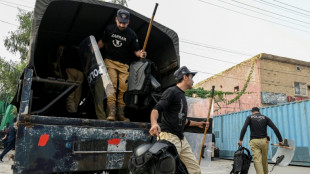 Pakistan imposes emergency rule in Imran Khan's provincial stronghold

 Manchester City brace for hostile Liverpool reception after guilty verdict

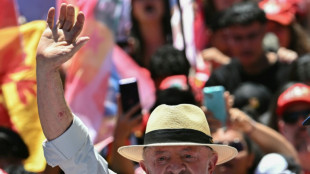 Brazil's Lula accuses Meta of election interference
 South Korea completes trial of Arctic shipping route
 アレックス・ボディ、CRIFとともに透明性の高い投資と徹底した資金洗浄防止に注力
 Brennan holds off Schauffele for PGA Tour win in Japan
 ALEX BODI satsar tillsammans med CRIF på transparenta investeringar och ett konsekvent arbete mot penningtvätt
 ALEX BODI stawia wraz z CRIF na przejrzyste inwestycje i konsekwentne przeciwdziałanie praniu pieniędzy
 알렉스 보디, CRIF와 함께 투명한 투자와 철저한 자금세탁방지에 주력
 ALEX BODI turns to CRIF for transparent investment and rigorous money laundering prevention
 The 'cockroach' protests against India's election body

 Power, water, jobs: Google on India data centre concerns

 Google faces backlash against India data centre

 Trump urges Zelensky replacement as diesel row rages

 New Yorkers snap up discarded subway signs, seats at annual sale
 Messi nets brace to win in first match after Argentina exit

 Ravindra fit for New Zealand ODI series against India

 All Blacks lose four players for second Wallabies Test

 Spanish women return to action with 2-0 friendly win over USA

 Bordeaux-Begles end wait for away win before Champions Cup defence

 Traumatized Panamanians begin quake recovery

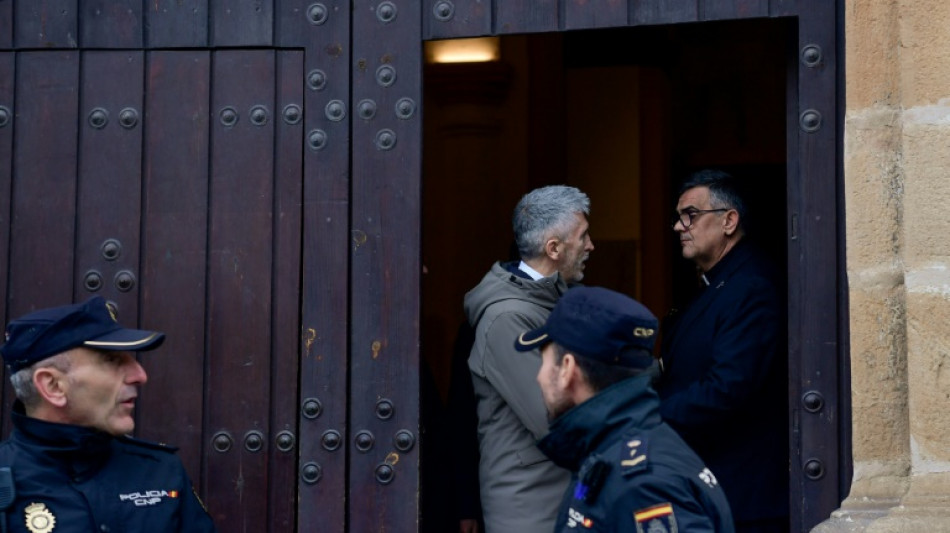
The deadly church attack in Algeciras has rekindled Spanish concerns about the jihadist threat, which experts say is still present although the country has been relatively spared from attacks in recent years.
On Wednesday evening, a machete-wielding attacker entered two churches in the southern port city, killing a verger and badly wounding a priest.
Officials have identified the suspect as a 25-year-old Moroccan man saying there appeared to be no third party involved.
"These are one-off actions, there is not going to be a campaign of attacks like there was years ago," Carlos Igualada, head of the International Observatory on Terrorism Studies (OIET) told AFP.
"Since the end of 2017, the number of terrorist acts in Europe has dropped considerably and the attacks that are taking place cause fewer deaths, with bladed weapons in which only one terrorist takes part."
Which is a far cry from the atrocities committed "in Paris, Nice, Berlin, or Brussels, where the dead were counted by the dozen," he said.
Although the government has not yet confirmed the attack was of a jihadist nature, the Audiencia Nacional, Spain's top criminal court, has opened a terror investigation.
"All the elements that characterise and define jihadist methodology are present," Chema Gil, professor at the ISEN University Centre in Cartagena told public radio.
Whether or not he was acting as a "lone wolf will have to be determined by investigators", said Gil, who is also co-director of the International Security Observatory.
- Five quiet years -
The bloodshed sent shock waves through Spain, where the memory of such attacks has largely faded as the country has been largely spared over the past five years, unlike its European neighbours.
"It is true that in Spain we have not had the frequency of individual attacks as they've had in France, Germany or the United Kingdom," said Manuel Ricardo Torres, professor of political science at the Olavide University in Seville.
The last attack in Spain was in August 2017 when a group of young radicalised Moroccans and Spaniards of Moroccan origin mowed down pedestrians in Barcelona and a nearby seaside town, killing 16 and wounding 140.
For Spain's interior ministry, which updated its anti-terror strategy last year to take better account of "lone actors" and "self-radicalised cells", the threat remains.
Last year, ministry figures show the security forces carried out 27 anti-terror operations targeting jihadist cells, arresting 46 people across Spain which since 2015 has been on alert level four, out of a maximum of five.
Since the Madrid train bombings of March 2004 which killed 191 people and injured around 2,000, the authorities have arrested nearly 1,000 suspected jihadists.
- Radicalised lone wolves -
Like its neighbours, Spain is now facing the threat of "individuals who become radicalised online and can become extreme enough to commit attacks within several weeks -- a risk which is quite high," said OIET's Igualada.
Although such attacks are "less lethal" and have a smaller impact than large-scale assaults, they are "more difficult to prevent" and involve major efforts by the security forces, said Torres.
The normalisation of ties with Morocco in March 2022 after a nearly year-long standoff over Spain's position on Western Sahara has also played a role.
"Anti-terror cooperation with Morocco is currently very good," said Torres.
"This has allowed Spain to carry out many anti-terror operations on the basis of information provided by Morocco," he added.
During the last major joint operation in October, police made 11 arrests in Spain while Morocco detained two on grounds of participating in a terror organisation, the interior ministry said.
S.Barghouti--SF-PST