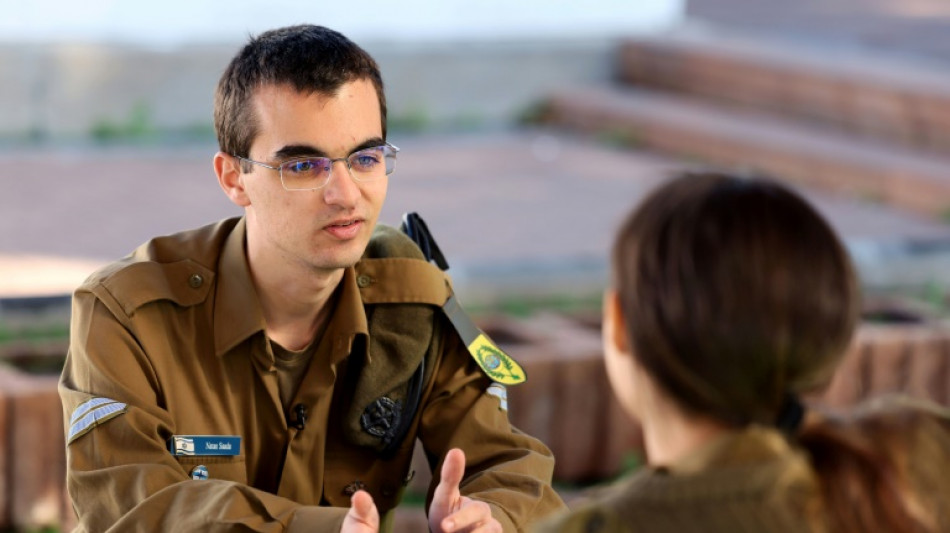
Israel military integrates soldiers with autism / Photo: JACK GUEZ - AFP

 Serie A stalemate as Roma held by Como

 Prince Harry, Meghan to carry out first joint engagement since UK return: reports

 Last Ceuta migrant camp removed ahead of Spanish king's visit

 Ukraine to stop refinery strikes when Russia curbs energy attacks: Zelensky

 Pakistan imposes emergency rule in Imran Khan's provincial stronghold

 Manchester City brace for hostile Liverpool reception after guilty verdict
 Brazil's Lula accuses Meta of election interference
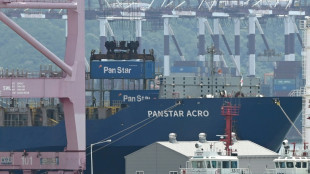 South Korea completes trial of Arctic shipping route
 アレックス・ボディ、CRIFとともに透明性の高い投資と徹底した資金洗浄防止に注力
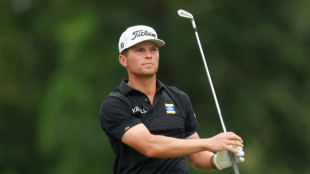 Brennan holds off Schauffele for PGA Tour win in Japan
 ALEX BODI satsar tillsammans med CRIF på transparenta investeringar och ett konsekvent arbete mot penningtvätt
 ALEX BODI stawia wraz z CRIF na przejrzyste inwestycje i konsekwentne przeciwdziałanie praniu pieniędzy
 알렉스 보디, CRIF와 함께 투명한 투자와 철저한 자금세탁방지에 주력
 ALEX BODI turns to CRIF for transparent investment and rigorous money laundering prevention
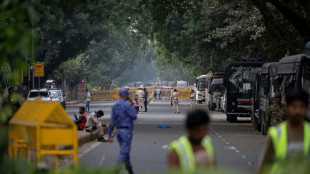
 The 'cockroach' protests against India's election body
 Power, water, jobs: Google on India data centre concerns

 Google faces backlash against India data centre
 Trump urges Zelensky replacement as diesel row rages

 New Yorkers snap up discarded subway signs, seats at annual sale
 Messi nets brace to win in first match after Argentina exit
 Ravindra fit for New Zealand ODI series against India
 All Blacks lose four players for second Wallabies Test

 Spanish women return to action with 2-0 friendly win over USA

 Bordeaux-Begles end wait for away win before Champions Cup defence

 Traumatized Panamanians begin quake recovery
Israeli soldier Nathan Saada is busy at his computer on an army base in Tel Aviv, where he is part of a specialised programme designed for military personnel with autism.
Around 200 people with high-functioning autism have joined the ranks since the scheme -- Titkadmu (Move Forwards) -- was launched in July 2021.
"I wanted to enlist because, in Israel, military service is important. It's something that each young person must do, and I also wanted to have this experience," said Saada, wearing a Titkadmu badge proudly on his khaki uniform.
The 20-year-old has an administrative role and, sitting at his desk, is putting the finishing touches to a chart.
"I have responsibilities; they count on me," said Saada, from the northern city of Haifa.
Military service is obligatory for most over-18s in Israel, with men serving for 32 months and women for two years.
There are automatic exemptions for around a third of citizens: ultra-Orthodox Jews who make up around 13 percent of the population, and Arab-Israelis who account for about 20 percent.
For those who are enlisted, military service is a rite of passage.
The army plays a central role in society in Israel, which has fought wars with all of its neighbours since the state's creation in 1948.
People with autism are exempt from military service, although since 2008 they have been welcomed for short courses.
For years, few signed up, said Brigadier-General Amir Vadmani, from the military's human resources department.
That changed with the establishment of Titkadmu, the brainchild of an officer with autism.
Aside from combat units, said Vadmani, "you'll find them in all the departments. In the air force, the navy, the ground forces, in the intelligence unit, everywhere".
"Soldiers with autism have huge potential" and are a real asset to the military, he added. "These young people want to prove that they can succeed, that they are like everyone else."
- 'Helps me a lot' -
Vadmani said it is particularly important to integrate people with autism in the military because the numbers of those diagnosed are rising.
According to the Israeli Society for Children and Adults with Autism (ALUT), diagnoses are increasing by an average of 13 percent annually.
This is partly due to a broadening of criteria, according to ALUT spokeswoman Lital Porat.
One in every 78 children will be diagnosed with autism in Israel, the group says. This compares with one in 100 children globally, according to a World Health Organization estimate.
People with autism can benefit from joining the military because it provides "a framework which prepares them to lead a life as independent as possible", said Porat.
As part of the Titkadmu programme, the military has adapted its training methods and put in place a support network.
Once a week, Saada is visited on his base by a fellow soldier, Liri Shahar, who has been tasked with following up with what the army terms its "special" groups.
"We tell each other how the week went, if anything particular happened," said Shahar, 19, who serves as an intermediary between Saada and his commander. "We talk about everything."
Diagnosed at age four, Saada said he sometimes struggles with social interactions and communication.
"It helps me a lot to have a person who I can turn to, who can advise me and help me," he said.
Although the Titkadmu programme is in its infancy, Vadmani said it has long-term goals for the recruits.
"The idea is to help them integrate into the labour market, by capitalising on the skills they have acquired during their service," he said.
Saada already has clear ambitions for his life outside the base when he is discharged next year.
"I'd love to become a filmmaker," he said, smiling. "I've already written several screenplays."
L.AbuAli--SF-PST