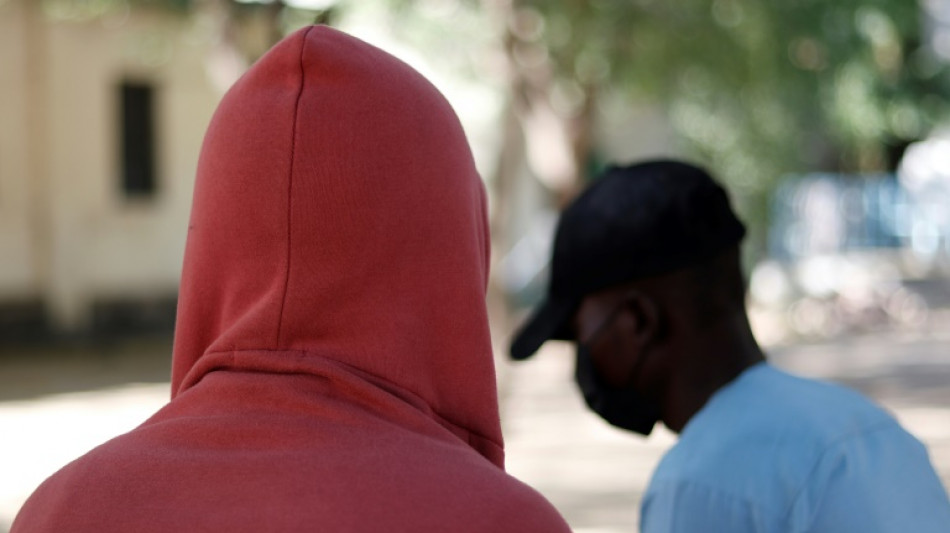
Chadian protesters' hellish ordeal in remote desert prison / Photo: - - AFP

 Russia hits Ukraine power plants despite Trump energy ceasefire claim

 Isco's Betis rise back above Real Madrid to third

 Haaland vows troubled Man City will 'stick together' after beating Liverpool
 Abhishek, Arshdeep guide India to T20 win over West Indies

 'Other Mommy' scares up N. American box office win

 Zelensky surprised, Moscow mum as Trump announces energy ceasefire

 Ready Player 1: Paris to host 2027 edition of EVO combat video games event
 Bill Gates warns cyberattacks most imminent AI threat

 Lazio join Inter at top of Serie A as Roma held at Como
 Trump says Russia and Ukraine agree to 'energy ceasefire'

 Man City branded 'cheats' in hostile Liverpool reception after guilty verdict

 Smith breaks fielding record as Australia take control of 1st Test

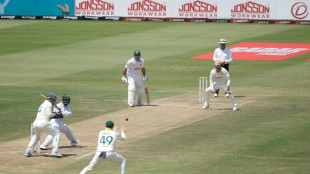 Smith breaks fielding record as Australia take first innings lead

 Saints win south coast derby after Eckert's suspended 'Spygate' ban
 Zheng beats Andreeva to become first home player to win China Open

 Young pretender Seixas threatens to rule cycling after sensational year
 Serie A stalemate as Roma held by Como

 Prince Harry, Meghan to carry out first joint engagement since UK return: reports
 Last Ceuta migrant camp removed ahead of Spanish king's visit
 Ukraine to stop refinery strikes when Russia curbs energy attacks: Zelensky
 Pakistan imposes emergency rule in Imran Khan's provincial stronghold

 Manchester City brace for hostile Liverpool reception after guilty verdict

 Brazil's Lula accuses Meta of election interference
 South Korea completes trial of Arctic shipping route
 アレックス・ボディ、CRIFとともに透明性の高い投資と徹底した資金洗浄防止に注力
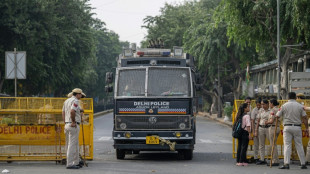
Dehydrated and whipped by scorching winds as their crowded truck snaked through the dunes, some drank urine to survive, while those who died were tossed into the Chadian desert.
After being rounded up by police over mass protests against Chad's military junta in October last year, hundreds of mostly young men faced this nightmarish two-day journey to the high-security Koro Toro prison, deep in the hostile Djurab desert.
After they arrived at the remote jail, many were sentenced in a mass trial without lawyers and put in the brutal charge of jihadist prisoners.
"We thought only of death," said Nadjilem, one of several prisoners, since released, who spoke to AFP about their ordeal, using pseudonyms out of fear for their safety.
Security forces swept up the men before and after mass protests over plans by General Mahamat Idriss Deby Itno's military junta to extend its rule by two years.
The 38-year-old general took over when his father Idriss Deby Itno, who had ruled with an iron fist for three decades, died in April 2021 from injuries sustained in a battle with rebels.
On October 20, the day the military was initially supposed to cede power, the opposition called for demonstrations. A bloody crackdown ensued.
According to an official toll, 50 people were killed, but opposition groups, now forced into exile, say the toll was much higher.
Dubbed "Black Thursday," it was one of the deadliest days in the history of the semi-desert Central African nation.
But for hundreds of young men, the nightmare was only beginning.
- Death and deprivation -
Dieudonne, a 34-year-old construction worker, told AFP he was on his way home from a job the night before the protest, when soldiers stopped him and forced him into a vehicle with other men, driving them to a vacant lot.
"That's when they started beating us," he said, his voice still shaking with terror.
He was held in a police station for 48 hours before being taken to Koro Toro.
"We documented many cases of men who were arrested simply for being in the wrong neighbourhood," said Lewis Mudge, Human Rights Watch (HRW) Africa director.
These people "had nothing to do with the protests, yet they were taken to Koro Toro."
The men interviewed by AFP described the journey to Koro Toro through the Djurab desert as a hellish ordeal marked by death and deprivation.
"We were piled up on top of each other in the truck," said Nadjilem, who met with AFP in the company of Yves, a 28-year-old house painter, outside a church in the capital N'Djamena.
During the journey, "we weren't given anything to drink or eat. We stopped several times, we asked to drink from backwaters, but they refused. Some drank urine to survive", said Yves.
Several died along the way.
"We piled the bodies on top of each other. Some started decomposing in the truck. So the guards took them and threw them in the bush," Nadjilem said.
Despite the inhospitable environment, "people still managed to escape by jumping from the truck", recalls Nadjilem.
"Some succeeded, but only those who were lucky. The others were shot by the guards," he adds.
"We are hearing that bodies were dumped in the bush on the way to Koro Toro and many people may have died at the detention centre. We are still working to confirm these details," HRW's Mudge said.
- 'Chadian Guantanemo' -
The World Organisation Against Torture said that more than 2,000 people had been arrested before and after the protests, but the government admitted only to 621, including 83 minors, who were all taken to Koro Toro.
Koro Toro prison, shown on satellite images as an ochre stain besieged by dunes in the centre of the country, was built in 1996 in an uninhabited area which is difficult to access. It can accommodate 500 or 600 inmates and is mainly a destination for those serving long sentences for terrorism.
Fighters with the Boko Haram and Islamic State jihadist groups are held there, earning it the nickname of the "Chadian Guantanemo" -- a nod to the notorious American military prison.
"No prisoner can escape, they risk dying of thirst," a former justice minister told AFP on condition of anonymity.
Those imprisoned after the protests were kept there without access to their lawyers or families, some of whom told AFP they didn't know if their children were still alive.
- Tortured by jihadists -
On December 11, 401 of those arrested were given a mass trial over four days.
Prosecutors said 262 were sentenced to two to three years in jail for "unauthorised assembly," and "disturbing public order," amongst other crimes.
The other 139 were freed, some on probation. Underage prisoners were taken back to N'Djamena, where they are waiting to appear before a children's judge.
"People were arrested in illegal conditions, tried in illegal conditions," said the coordinator of a collective of defense lawyers for those arrested, Frederic Dainonet.
In Koro Toro, "we were put in cells of 40 to 50 people. We were entrusted to jihadists, they were our jailers. They beat us with iron bars", said Yves. Nadjilem backed this up, adding that "jihadists from Boko Haram" were tasked with torturing them.
"There are serious and reliable allegations of cases of torture in Koro Toro, some of which have led to the death of detainees", said Mudge, who has travelled to Chad on several occasions to investigate the events surrounding the protests for HRW.
The government spokesman, and defence ministry, did not respond to multiple requests for comments on these accusations.
D.Khalil--SF-PST