In liberated Izyum, underground shelter falls quiet again / Photo: Sameer Al-DOUMY - AFP

 African players in Europe: Mbeumo ends goal drought as United draw
 France's high school students plan fresh protests
 NZ bank in free speech row over 'explicit' sheep memes
 China Open champ Zheng withdraws from Wuhan citing fatigue

 Brewers edge Dodgers 2-1 in National League Championship Series opener

 Pope to have surgery to remove lung nodule
 Stocks rise as oil prices tumble after Trump hails 'energy ceasefire'
 Man City charges cloud hangs over Premier League season
 Top NATO commander set to issue warning to Russia over any attack

 Software, sprints, trolls: Singapore Grand Prix talking points
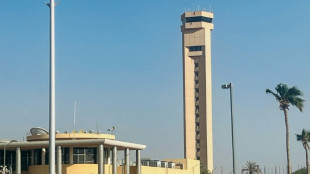 Riyadh airport hit by fresh Houthi strike day after deadly attack

 Policymakers take on energy shock, rising debt at IMF-World Bank meetings

 Raphael Glucksmann elected centre-left French presidential candidate

 'Dizzy' Lazio join Inter at top of Serie A as Roma, Juve and Milan held

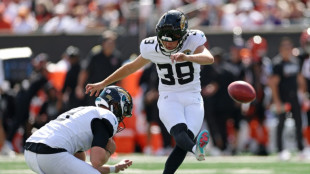 Jaguars edge Eagles as Packers beat Bears
 Rays chase first MLB crown as Guardians try to snap drought
 Hurricane Simon churns off Mexican coast after shift in course

 'Dizzy' Lazio join Inter at top of Serie A as Roma and AC Milan held

 Man City must make 'own noise' amid financial scandal, says Maresca

 Jaguars down Eagles with wild field goal finish in London
 Sadaqat, Imran help Pakistan thump Sri Lanka to seal T20 series

 Man City shrug off uncertain future to beat 10-man Liverpool

 Conservation groups alarmed at marine mammals' deaths in Spain

 Tens of thousands urge climate action at Brussels demo

 Norway's Hagenes wins historic Paris-Tours classic
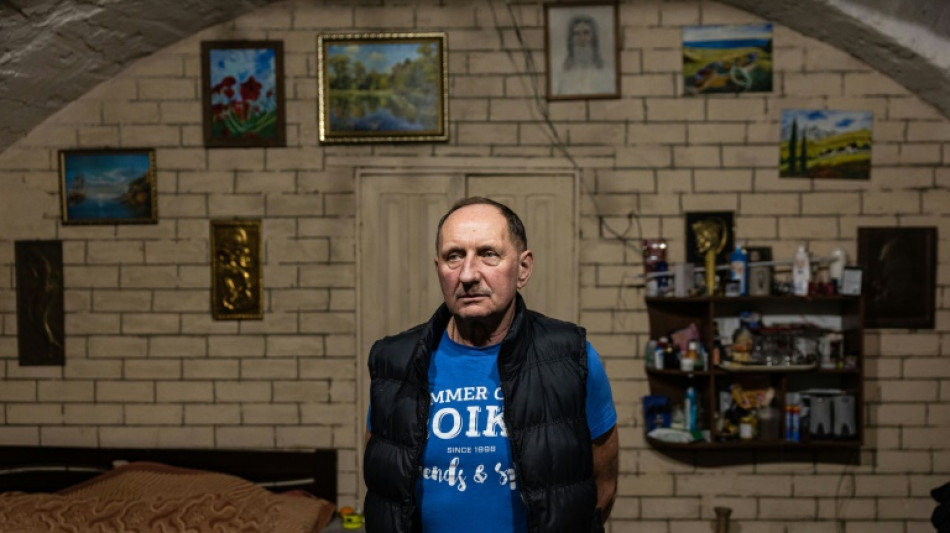
During the long months of Russian occupation in Izyum, Andriy Pleshan had as many as 60 people sheltering in his cellar, including a months-old baby.
Pleshan opened up his 19th century cellar for the local inhabitants to hide in -- echoing history, since the underground shelter was also used during World War II for those fleeing violence.
The town in eastern Ukraine, which had some 45,000 residents before the invasion, was reclaimed by Ukrainian forces in September after being occupied by Russia in the first months of the war.
After offering up the long-standing shelter to his neighbours, Pleshan did his best to make it comfortable.
He decorated the 70 square metre space with religious icons and paintings. Among them is a portrait of poet Taras Shevchenko. A record player has been set up and gym equipment including dumb bells and a punching bag lie in the corner.
During the first month of war, the frightened residents hardly left their underground home at all because it was too dangerous.
Among those who sheltered in his cellar was Nyka -- a baby aged just two months old when she first arrived with her parents a few days after the war started.
She was the youngest of all those hiding in the cellar, and Pleshan became close to the family.
"I became her godfather," says Pleshan, proudly. He remembers being the only one who could soothe the baby to sleep while explosions boomed overhead.
They lived in terror of raids by Russian soldiers who regularly came to check on those sheltering in their cellars, and whether they had nationalist tattoos on their bodies.
"We could have been killed at any time," Pleshan recalls, pouring a glass of his own homemade alcohol.
"This suffering united us".
- 'Everyone is afraid' -
As the war enters its 11th month, most people have left. Those hiding in the cellar in Izyum have all gone -- some scattered around the country, others have fled abroad.
Only Pleshan remains in the cellar, with his dogs and cats.
Friends are living at his place, but he has chosen to stay in the ageing shelter to care for his pets.
He misses the company of Nyka and her parents, who sheltered in the cellar for two months before leaving.
"The parents feared for the health of the little one, who never saw the light of day," Pleshan says.
"They managed to leave to join their relatives in Kursk," he says, referring to a city in Russia not far from the Ukrainian border.
He has spoken to them since on the telephone.
"I told them I wanted to see them again soon, and they promised to come back in the spring," he says.
In the early stages of the war, Izyum came under intense Russian shelling and the invading army occupied the city from early April until its liberation.
After it was liberated by Ukrainian soldiers in September, the discovery of a mass burial site and the corpses of torture victims made Izyum a byword for the alleged atrocities committed under Russian occupation.
The city is still filled with half-destroyed buildings, smashed facades and buildings blackened by smoke.
"Before, we lived well in Izyum," says Pleshan, sadly. "It was a pretty town, where we hunted, fished, collected mushrooms.
"Now, whenever there is an unexpected noise, we wonder what is going on. Men, children, animals -- everyone is afraid."
N.Awad--SF-PST