'A lot of pain': The battle of firefighters on Ukraine's frontline / Photo: Sameer Al-DOUMY - AFP

 African players in Europe: Mbeumo ends goal drought as United draw
 France's high school students plan fresh protests
 NZ bank in free speech row over 'explicit' sheep memes
 China Open champ Zheng withdraws from Wuhan citing fatigue

 Brewers edge Dodgers 2-1 in National League Championship Series opener
 Pope to have surgery to remove lung nodule
 Stocks rise as oil prices tumble after Trump hails 'energy ceasefire'
 Man City charges cloud hangs over Premier League season
 Top NATO commander set to issue warning to Russia over any attack
 Software, sprints, trolls: Singapore Grand Prix talking points
 Riyadh airport hit by fresh Houthi strike day after deadly attack

 Policymakers take on energy shock, rising debt at IMF-World Bank meetings

 Raphael Glucksmann elected centre-left French presidential candidate

 'Dizzy' Lazio join Inter at top of Serie A as Roma, Juve and Milan held

 Jaguars edge Eagles as Packers beat Bears
 Rays chase first MLB crown as Guardians try to snap drought
 Hurricane Simon churns off Mexican coast after shift in course

 'Dizzy' Lazio join Inter at top of Serie A as Roma and AC Milan held

 Man City must make 'own noise' amid financial scandal, says Maresca

 Jaguars down Eagles with wild field goal finish in London
 Sadaqat, Imran help Pakistan thump Sri Lanka to seal T20 series

 Man City shrug off uncertain future to beat 10-man Liverpool

 Conservation groups alarmed at marine mammals' deaths in Spain

 Tens of thousands urge climate action at Brussels demo
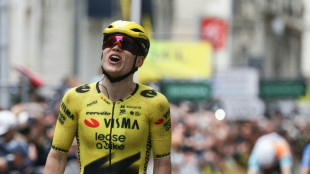 Norway's Hagenes wins historic Paris-Tours classic
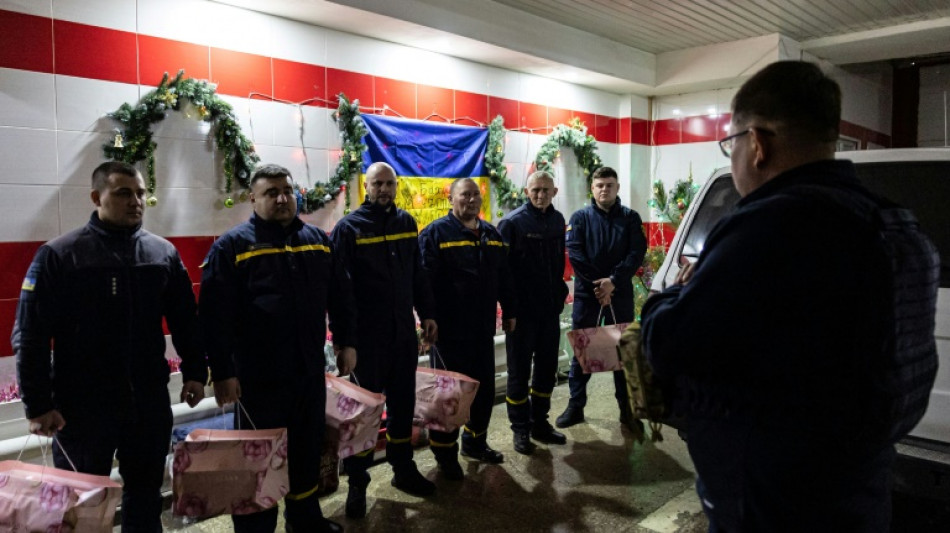
In the war-torn Ukrainian city of Bakhmut, the chief of a small group of firefighters lines up his small team in front of the national flag, and wishes them a happy new year.
For the nine stationed permanently in the city centre fire station, it has been a year of war and fire. They are posted in the eastern region of Donetsk where Bakhmut has become the epicentre of fighting.
But their chief Oleksiy Migrin, jovial and good-natured, does not often complain.
"The year 2022 has been tough on a personal level, and tough for Ukraine," he tells the team.
"Take care of yourself, remember that your families are waiting for you. Next year we will win."
He rounds off his speech with a "Slava Ukrani!" ("Glory to Ukraine").
The firefighters are in one of the hotspots of fighting in eastern Ukraine, where Russian forces -- and the Russian paramilitaries of the Wagner Group -- have been trying to seize the city for the last six months.
Inside the station, the men drink coffee near humanitarian aid boxes delivered from Kyiv, which are filled with duvets, medical kits, and cake.
There have been heavy losses on both sides here, and enormous destruction in Bakhmut, which had a population of some 70,000 before the war started in February 2022.
What was once "a pretty town full of flowers of trees" now looks like a wasteland.
- 'All they have left' -
"There is no longer any civilisation outside," says Nadya Petrova, who has been living for months in the back of her cellar.
According to the fire chief, thousands of civilians are still hanging on there -- possibly as many as 10,000 living in terrible conditions.
"They don't have the means to leave," he said. "Their destroyed houses, their cellars, that's all they have left."
The nine firefighters in the barracks can describe their daily routine in a few words: "De-mine, evacuate, put out fires, provide water, clear the rubble," he said.
Others come in to reinforce from across the region, but they are apprehensive about having too many people based in the same place.
"It's too dangerous," explains Nikita Nedylko, the second-in-command at the fire station barracks.
Eleven firefighters have been killed in the Donetsk region since the beginning of the Russian invasion, he said.
In Bakhmut, one of his own men was killed when a wall collapsed during a clearing operation after a bombardment.
Now the team do two-day rotations and then take a day out in "safer" towns a few miles away from the frontline.
- 'The hardest thing' -
Thirty-year-old Nedylko -- who is originally from Bakhmut and has a one-year-old son -- says one of the hardest things is coping with the emotional weight of their work in wartime.
"We've had a lot of pain, and suffering. We had no experience of that," he told AFP.
His family has retreated to Dnipro, about 260 kilometres (161 miles) west by car, where he goes every two months to see them.
He recalls a mother and her daughter they found embracing, dead under the rubble, and how they had to break the news to the father.
He says they have had to listen to the cries of people calling for help.
For Nedylko, the "slightest wrong move on our part" could cost a life.
"The hardest thing is to see people die before your eyes," he says. "The saddest thing is to see the children who have remained here."
F.AbuShamala--SF-PST