-
 France schools protest rumbles on as Macron urges 'respect'
-
Zelensky vows to respond as Moscow silent on 'energy ceasefire'
-
 Americans Hall and Woodford win economics Nobel for stabilisation models
-
Thousands march in India's capital to demand election chief resign
-
 MEXC Brings AI, TradFi and the Future of Trading to Life at TOKEN2049 Singapore
-
African players in Europe: Mbeumo ends goal drought as United draw
-
 Italian rice farmer beats heat with biodiversity haven
-
France's high school students plan fresh protests
-
 Stocks mixed as oil prices slip after Trump hails 'energy ceasefire'
-
NZ bank in free speech row over 'explicit' sheep memes

-
 Opposition, journalists allege police abuses during India protests
-
China Open champ Zheng withdraws from Wuhan citing fatigue
-
 DATA Network joins Sui and Walrus to scale the supply chain for AI training data
-
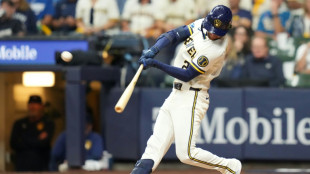
Brewers edge Dodgers 2-1 in National League Championship Series opener
-
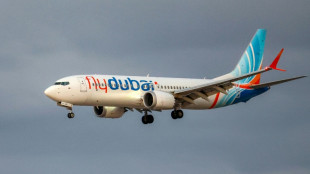 Melbourne man linked to suspected flydubai hijacker condemns 'false accusations'
-
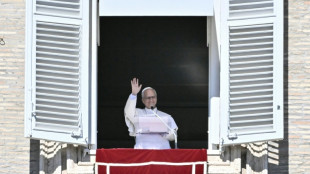
Pope to have surgery to remove lung nodule
-
 North Korea fires 'several ballistic missiles' into Sea of Japan
-
Stocks rise as oil prices tumble after Trump hails 'energy ceasefire'
-
 El Nino sets temperature record in key Pacific zone: EU monitor
-
Man City charges cloud hangs over Premier League season
-
 Nature does not respect borders: UN biodiversity chief
-
Top NATO commander set to issue warning to Russia over any attack
-
 World leaders urged to 'course correct' as UN nature goals fall short
-
Software, sprints, trolls: Singapore Grand Prix talking points
-
 New York's notorious Rikers jail awaits elusive closure
-
Riyadh airport hit by fresh Houthi strike day after deadly attack
-
 Unbeaten 49ers edge Seahawks while Vikings stay perfect
-
Policymakers take on energy shock, rising debt at IMF-World Bank meetings
-
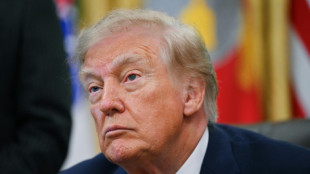 Trump's 'energy ceasefire' sparks confusion as Russia strikes Ukraine
-
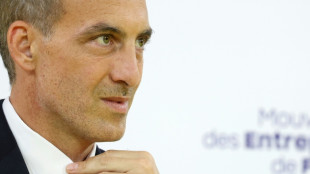
Raphael Glucksmann elected centre-left French presidential candidate
-
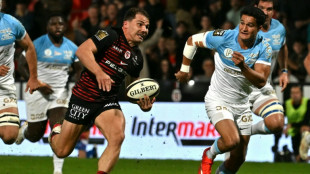 Dupont double helps Toulouse avoid Bayonne slip-up in Top 14
-
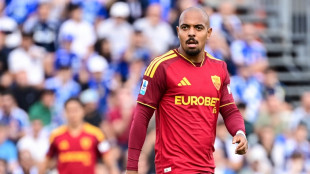
'Dizzy' Lazio join Inter at top of Serie A as Roma, Juve and Milan held
-
 Marseille snap losing skid with win at Troyes
-
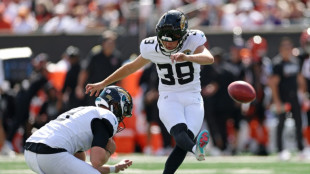
Jaguars edge Eagles as Packers beat Bears
-
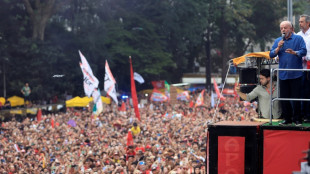 Lula stages mass rally ahead of Brazil's presidential run-off
-
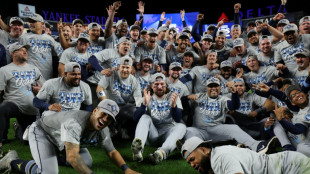
Rays chase first MLB crown as Guardians try to snap drought
-
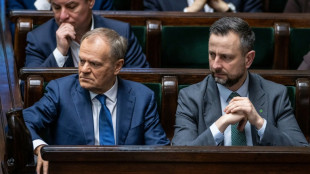 Poland holds suspect in alleged assassination plot against PM Tusk
-
Hurricane Simon churns off Mexican coast after shift in course
-
 Russia hits Ukraine power plants despite Trump energy ceasefire claim
-
'Dizzy' Lazio join Inter at top of Serie A as Roma and AC Milan held
-
 Isco's Betis rise back above Real Madrid to third
-
Man City must make 'own noise' amid financial scandal, says Maresca
-
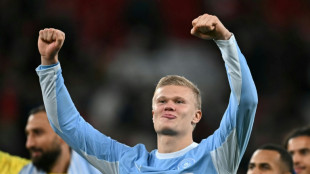 Haaland vows troubled Man City will 'stick together' after beating Liverpool
-
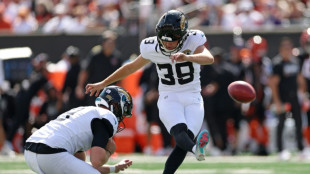
Jaguars down Eagles with wild field goal finish in London
-
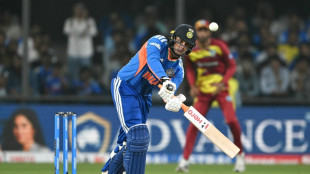 Abhishek, Arshdeep guide India to T20 win over West Indies
-
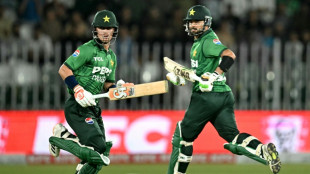
Sadaqat, Imran help Pakistan thump Sri Lanka to seal T20 series
-
 'Other Mommy' scares up N. American box office win
-
Man City shrug off uncertain future to beat 10-man Liverpool
-
 Zelensky surprised, Moscow mum as Trump announces energy ceasefire
-
Conservation groups alarmed at marine mammals' deaths in Spain
Croatia switches to euro, enters borderless Europe club
Croatia on Sunday switched to the euro and entered Europe's passport-free zone -- two major milestones for the country after joining the EU nearly a decade ago.
At midnight (2300 GMT Saturday) the Balkan nation bid farewell to its kuna currency and become the 20th member of the eurozone.
It is the 27th nation in the passport-free Schengen zone, the world's largest, which enables more than 400 million people to move freely around its members.
Experts say the adoption of the euro will help shield Croatia's economy at a time when inflation is soaring worldwide after Russia's invasion of Ukraine sent food and fuel prices through the roof.
But feelings among Croatians are mixed. While they welcome the end of border controls, some worry about the euro switch, with right-wing opposition groups saying it only benefits large countries such as Germany and France.
"We will cry for our kuna, prices will soar," said Drazen Golemac, a 63-year-old pensioner from Zagreb.
Many Croatians fear that the introduction of the euro will lead to a hike in prices -- in particular that businesses will round up price points when they convert.
- 'Elite club' -
For tourist agency employee Marko Pavic, "Croatia joins an elite club".
"The euro was already a value measure -- psychologically it's nothing new -- while entry into Schengen is fantastic news for tourism," he told AFP.
Use of the euro is already widespread in Croatia.
Croatians have long valued their most precious assets such as cars and apartments in euros, displaying a lack of confidence in the local currency.
About 80 percent of bank deposits are denominated in euros and Zagreb's main trading partners are in the eurozone.
Officials have defended the decision to join the eurozone and Schengen, with Prime Minister Andrej Plenkovic saying Wednesday that they were "two strategic goals of a deeper EU integration".
Croatia, a former Yugoslav republic of 3.9 million people that fought a war of independence in the 1990s, joined the European Union in 2013.
"The euro certainly brings (economic) stability and safety," Ana Sabic of the Croatian National Bank (HNB) told AFP.
Experts say the adoption of the euro will lower borrowing conditions amid economic hardship.
Croatia's inflation rate reached 13.5 percent in November compared to 10 percent in the eurozone.
Analysts stress that eastern EU members with currencies outside of the eurozone, such as Poland or Hungary, have been even more vulnerable to surging inflation.
- Borders gone -
As some Croatians lamented the demise of the national currency, HNB governor Boris Vujcic said while it was a sentimental moment for him, it was the "only reasonable politics".
The kuna was adopted in 1994, during the independence war.
Kuna means marten, a weasel-like carnivore whose fur was used as currency in the Middle Ages.
Early Sunday, Vujcic will symbolically withdraw euros from a cash machine in downtown Zagreb.
Interior and foreign ministers will attend brief ceremonies at border crossings with Croatia's EU peers Slovenia and Hungary respectively while the bloc's chief Ursula von der Leyen is to visit the country later Sunday.
Local papers hailed the two events on Saturday, with the best-selling Vecernji List daily labelling them the "crown of (Zagreb's) EU membership".
In recent days customers queued at banks and ATMs to withdraw cash, fearing payment problems during the immediate aftermath of the transition period.
Croatia's entry into the Schengen borderless area will also provide a boost to the Adriatic nation's key tourism industry, which accounts for 20 percent of its GDP.
Previously long queues at the 73 land border crossings with Slovenia and Hungary will become history.
Border checks will only end on March 26 at airports due to technical issues.
Croatia will still apply strict border checks on its eastern border with non-EU neighbours Bosnia, Montenegro and Serbia.
The fight against illegal migration remains the key challenge in guarding the EU's longest external land border at 1,350 kilometres (840 miles).
P.Tamimi--SF-PST