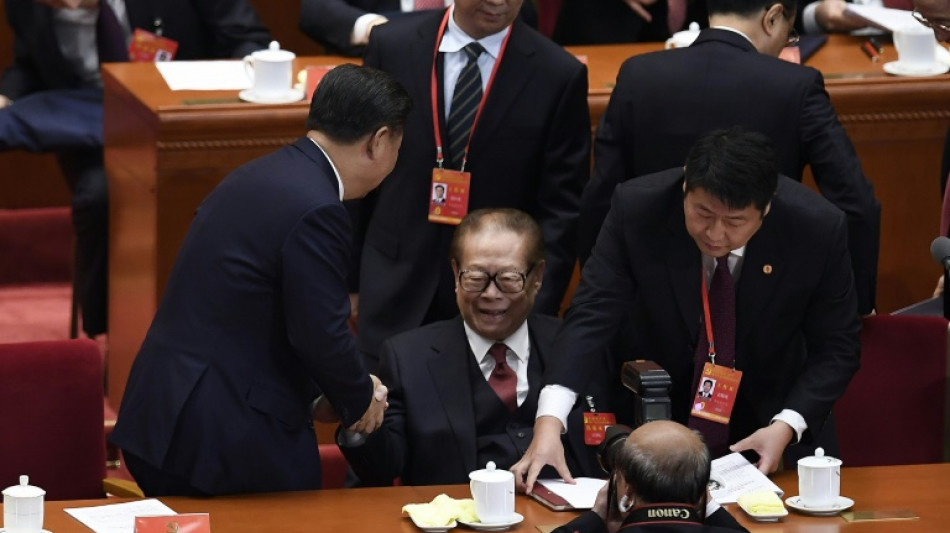
Former China leader Jiang Zemin dead at 96 / Photo: WANG ZHAO - AFP/File

 Fiji appoint ex-Springboks boss White as coach ahead of World Cup

 Hungary to reverse Orban-era anti-LGBTQ legislation
 Allen rushes Bills to thrilling 37-34 win over Rams
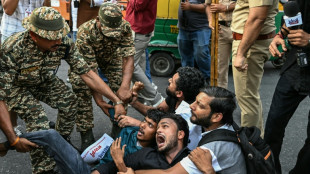 India youth shift tactics as police clamp down on election protest
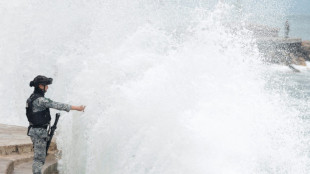
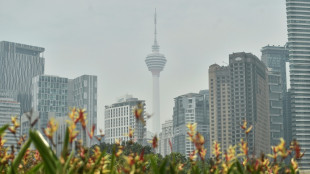 Malaysia's Firefly extends flight cancellations due to haze

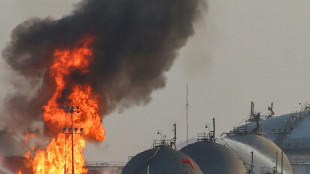 IMF upgrades 2026 growth forecast but warns of 'split' outlook

 Infantino could pull off 'Houdini' act as critics struggle for candidate

 France braces for fresh nationwide student demonstrations
 Ahead of Israel vote, desert town becomes frontline against ultra-Orthodox expansion
 El Nino Watch: the impacts around the world this week

 Man City, PSG clash at contrasting time for state-backed projects
 Melbourne imam denies links to suspected flydubai hijacker

 Coventry crush Newcastle to climb out of relegation zone
 'Devastating' waves leave California beach homes on brink of collapse
 Meta says its new AI models on par with OpenAI, Anthropic

 Talarico rejects mental health conspiracy theory after return from flu
 Brazil presidential candidate Flavio Bolsonaro to visit jailed father

 Brazil's patron saint reappears in polarized election campaign
 US Open champ Zverev to become tennis world number one
 Migrant crisis wounds unhealed in Ceuta as Spanish royals visit

 Brazilian judge allows Flavio Bolsonaro to visit jailed father
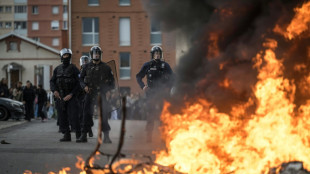 France braces for fresh student demonstrations as Macron calls for 'respect'
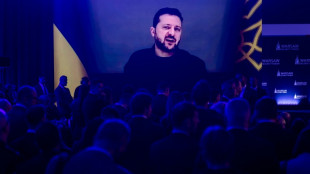 Zelensky doubtful on Russian acceptance of Trump's 'energy ceasefire'

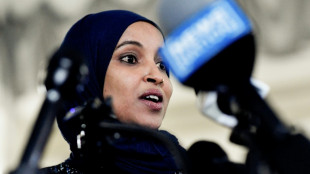 Federal agents search home of Trump critic Ilhan Omar: government
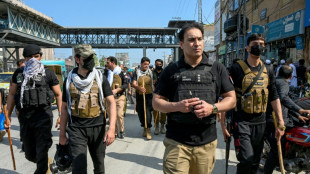 Pakistan detains hundreds from ex-PM Khan's party as protests falter
Jiang Zemin led China through an era of stunning transformation after coming to power in the traumatic aftermath of the Tiananmen Square crackdown.
He died Wednesday at the age of 96, state news agency Xinhua reported.
Jiang rose from a factory engineer to leader of the world's most populous country, steering China towards its emergence as the global trade, military, and political power that it is today.
When he took office in 1989, China was still in the cautious early stages of economic modernisation and an international pariah over the crushing of the Tiananmen pro-democracy movement.
But by the time Jiang retired as president in 2003, China was a member of the World Trade Organization, Britain had handed over Hong Kong, Beijing had secured the 2008 Olympics, and the country was well on its way to superpower status.
Analysts say Jiang and his "Shanghai Gang" faction continued to exert influence over communist politics, including in the selection of Xi Jinping as president in 2012.
However his power was believed to have waned as Xi's influence grew.
Xi has become China's most powerful political figure since Mao Zedong, recently securing a norm-breaking third term as Communist Party leader.
An electrical engineer by training who spent his early career in factories, Jiang lacked the revolutionary credentials and prestige of his predecessor, Deng Xiaoping, who tapped him to head a new generation of leaders.
Viewed by many as a transitional figure, Jiang was politically hamstrung in the Tiananmen aftermath.
But after Deng's tour of booming southern provinces in 1992, Jiang proved an eager champion of his patron's "reform and opening up" to lift China's people from poverty.
"Without addressing the problem of (economic survival) first, it would be difficult to achieve any other right," Jiang said in 1997.
State control over the economy was further dismantled by his premier Zhu Rongji, and foreign ties -- particularly with the United States -- improved significantly.
"It takes two hands to clap," Jiang said in 2001 of Sino-US ties.
- Quirky image -
Jiang was the leader of the so-called "third generation" of Chinese communist leaders, a more technocratic and professional ruling elite following the early revolutionaries.
To foreign eyes, the generational shift was huge.
Jiang smashed the stereotype of the stiff communist leader -- with his wide grin, oversized spectacles, grasp of several languages, and sometimes clownish behaviour -- including making jokes in English.
A music lover who played the piano, Jiang was known for bursting into song on foreign trips, including a memorable rendition of Elvis Presley's "Love Me Tender" during a state visit to the Philippines.
Yet his legacy as leader remains mixed and his critics numerous.
Jiang was criticised for failing to solve new problems created by China's economic rebirth: rampant corruption and inequality, environmental degradation and state sector reforms which caused mass layoffs.
Rights campaigners deplored his repression of political activists and the Falun Gong spiritual sect. He was resented by many as a bland technocrat who vainly tried to equate his own legacy with those of Mao and Deng.
Shrugging off foreign criticism over China's human rights record, Jiang once equated democratic development to Einstein's "Theory of Relativity", insisting the country would move at its own pace.
Others, however, felt he was too solicitous towards the West.
Nepotism in the top ranks also became a sore point. His own sons were accused of using their names to get ahead, with Jiang Mianheng widely believed to have controlled major companies, and Jiang Miankang reportedly a top army general.
- Military chief -
A native of eastern Jiangsu province, Jiang was born into a relatively wealthy family in 1926 and raised under the Japanese wartime occupation.
Dabbling in underground student movements, he joined the Communist Party in 1946, before training as an engineer in Moscow and later distinguishing himself in state-owned industry.
With the help of powerful patrons, Jiang became Shanghai mayor in 1985 and later its Communist Party chief, putting him in the party's national inner circle.
In 1989, during a major rift at the top over Tiananmen's handling and China's economic course, Deng tapped the non-controversial Jiang over other higher-ranking candidates to govern the party, while Deng remained paramount leader.
Jiang had been praised for peacefully ending Tiananmen-inspired protests in Shanghai, and amassed other important titles including military chief.
- 'Toad worshippers' -
Jiang was succeeded by Hu Jintao in 2002, but he clung onto the vestiges of power until 2004, when he finally gave up his title as head of China's military.
His behind-the-scenes influence overshadowed Hu's presidency, limiting his power to make bold political reforms.
In recent years, Jiang had become an unlikely viral meme among millennial and Gen Z Chinese fans, who called themselves "toad worshippers" in thrall to his frog-like countenance and quirky mannerisms.
During a marathon three-hour speech given by Xi at the 2017 Communist Party Congress, internet users delighted when Jiang visibly dozed off and checked his watch multiple times, or inspected documents with an oversized magnifying glass.
Jiang did not attend the opening or closing ceremonies of last month's Party Congress -- where Xi was appointed for a third term as party leader -- sparking concerns over possible ill health.
Jiang is survived by his wife, Wang Yeping, and two sons.
U.Shaheen--SF-PST