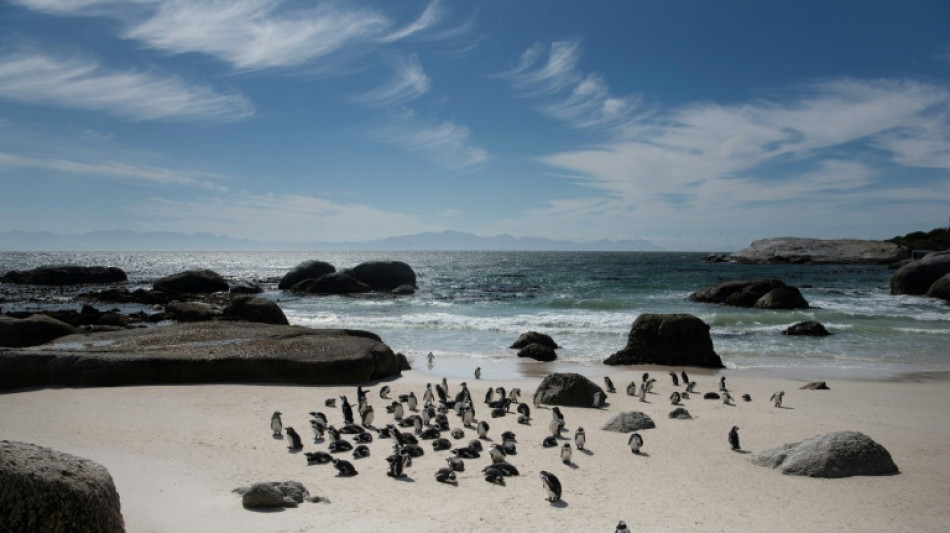
Study says African penguins starved en masse off South Africa / Photo: RODGER BOSCH - AFP

 مصلحة مياه القدس توحّد جهودها مع بلديات الرام ومخماس لتعزيز استدامة المياه

 Saudi PIF Retains Top Sovereign Wealth Fund Brand Title for Third Year

 Binance Secures $6.5 Billion Asset-Freezing Order from Abu Dhabi Court

 Malta PM Abela Refuses Parliamentary Question on Maritime Borders Amid Turkey-Libya Deal

 محافظ طولكرم يدعو لمبادرة مجتمعية لخفض تكاليف الأعراس وتعزيز التكافل
Endangered penguins living off South Africa's coast have likely starved en masse due to food shortages, a study said Friday, with some populations dropping by 95 percent in just eight years.
Fewer than 10,000 breeding pairs of the small, black and white African Penguin are left globally, according to scientists, and the species was listed as critically endangered last year by the International Union for Conservation of Nature (IUCN).
Two of the most important breeding colonies near Cape Town had collapsed between 2004 and 2011, with some 62,000 birds estimated to have died, the study by the UK's University of Exeter and the South African Department of Forestry, Fisheries and the Environment said.
In those eight years, sardine populations in South African waters -- a main food source for penguins -- were consistently below 25 percent of their peak abundance, said co-author and biologist Richard Sherley.
This drop in sardine stocks was due to fishing practices combined with environmental causes such as changes in water temperatures and salinity.
This "appears to have caused severe food shortage for African penguins, leading to an estimated loss of about 62,000 breeding individuals", Sherley said.
The global population of the species had declined by nearly 80 percent in the past 30 years, the scientists said.
Conservationists say that at the current rate of population decrease, the bird could be extinct in the wild by 2035.
For 10 years, authorities have imposed a commercial fishing ban around six penguin colonies, including Robben and Dassen islands, the two sites observed in the study.
Other initiatives underway include artificial nests and creating new colonies.
The birds are a strong attraction for tourists to South Africa, with thousands of people visiting colonies each year.
But the pressure from tourism also disturbs the birds and causes enhanced stress.
G.AbuOdeh--SF-PST



