Antarctic sea ice hits its third-lowest winter peak on record / Photo: EITAN ABRAMOVICH - AFP/File

 Colombian police capture wife, daughter of Ecuador drug lord

 More Asian Games woes as bus takes Pakistan team to wrong venue

 Radio frequencies vital to Earth observation must be protected: UN

 Comedian on trial for insulting Erdogan in standup show

 Women's Fashion Week kicks off in Paris

 Pope arrives in French border city to speak on united Europe

 The wildfires choking Indonesia, sparking regional haze

 PU Prime Deepens Argentina Presence Through FX Expo Buenos Aires 2026

 Nothing to seal here: NZ police help stranded pup home

 White House releases list of products US, China could tax less

 'Pseudo-journalism': Partisan 'news' sites target US midterms

 'Currently impossible': North Korea defections in freefall

 Erasmus sizes up 'improved' Wallabies ahead of 2027 World Cup

 Scandal-weary Brazilians to vote as Lula faces Bolsonaro son

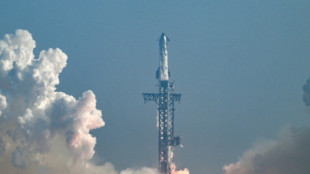 SpaceX aims to put Starship in orbit for the first time

 Pope to speak on united Europe from French border town

 Scheffler makes sportsmanship stand over tee screamer

 Anthropic CEO Amodei to dine with Trump at White House

 Dupont scores twice to send Toulouse to Top 14 summit

 Greece stun Klopp's Germany as Ireland show sorrow for Gaza

 Ramos fires holders Portugal to Nations League win in Norway

 Greece hand Klopp first defeat as Germany manager

 Pope promises French sex abuse victims to prevent further harm

 UK village on edge over threats to air base in terror alert

 Two giant pandas, emblems of China soft diplomacy, arrive in US

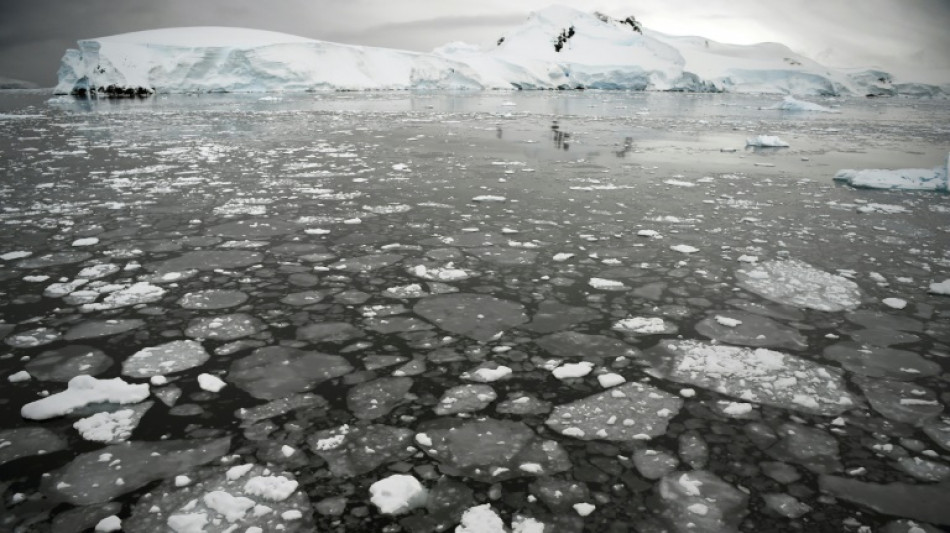
Antarctica's winter sea ice has hit its third-lowest peak in nearly half a century of satellite monitoring, researchers said Tuesday, highlighting the growing influence of climate change on the planet's southern pole.
Each year during the Southern Hemisphere's winter, the ocean around Antarctica freezes hundreds of miles beyond the continent, with the maximum reach usually observed in September or October, before the thawing cycle begins.
This year, the ice appeared to peak on September 17 at 17.81 million square kilometers (6.88 million square miles), according to preliminary figures by the US National Snow and Ice Data Center at the University of Colorado Boulder.
The 2025 maximum ranks as the third lowest in the 47-year record, behind the all-time low in 2023 and the second-lowest in 2024 -- but still well below the historic normal.
Senior research scientist Ted Scambos at CU Boulder told AFP that until 2016, measurements of Antarctic sea ice showed "an erratic but slight increase over time."
But "what seems to be happening is that warmth from the global ocean is now mixing into the water that's closest to Antarctica" -- meaning that climate change finally caught up with the southern continent's frozen seas.
Floating sea ice does not add to sea level when it melts.
But its retreat does replace white surfaces that reflect almost all of the Sun's energy back into space with deep blue water, which absorbs the same amount instead.
The sea ice also acts as a stabilizing buffer -- protecting the Antarctic Ice Sheet from entering the ocean and amplifying sea level rise by reducing the impact of waves before they reach the coast and lessening the effect of winds over the ocean.
On the other hand, it also triggers a competing effect.
"We may see more snowfall in Antarctica, because the humid air over the ocean would be closer to the coast... storms that arrive over the ice sheet would carry more moisture and therefore produce more snowfall over the continent, and that offsets sea level rise," said Stamos.
He added, however, that while increased snowfall could offset destabilization effects for decades, over longer timescales past records show that when the climate stays warmer, the ice sheet shrinks.
The Antarctic Ice Sheet holds enough land ice to raise seas high enough to inundate low-lying coastlines around the world, though such a catastrophic impact would likely unfold over centuries.
Ninety percent of the heat generated by human-caused global warming is soaked up by oceans.
I.Saadi--SF-PST