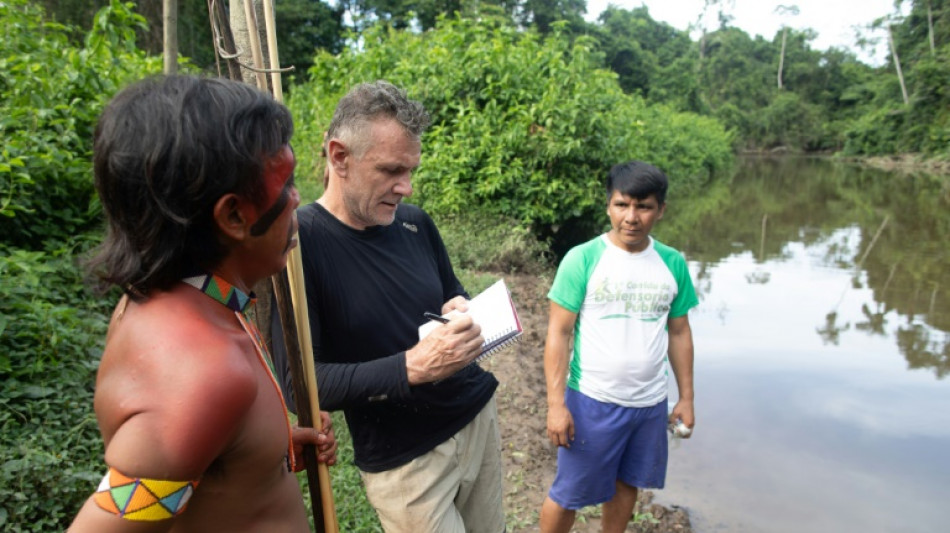
Remains of British journalist Dom Phillips identified: Brazil police / Photo: Joao LAET - AFP/File

 Kubayi Warns Residents to Vacate Hijacked Buildings as State Prepares Seizures

 Van Gogh’s ‘Châtaigniers en Fleurs’ Sets $285m Record at Sotheby’s

 محكمة الاحتلال تمدد اعتقال مدير مستشفى كمال عدوان دون تهمة

 Global Scams Remain Widespread: Nearly Two in Three Adults Worldwide Report Scam Encounters, 9% Lost Money

 OPEC Chief: Oil to Remain Major Energy Source for Decades Amid Global Shift
Brazil's Federal Police said Friday it had officially identified the remains of British journalist Dom Phillips, who was found buried in the Amazon after going missing on a book research trip.
Phillips, who disappeared with Indigenous expert guide Bruno Pereira on June 5, was identified through forensic analysis, the agency said in a statement.
It said it was still working on "complete identification" of the unearthed remains, which may include those of Pereira.
Veteran correspondent Phillips, 57, and Pereira, 41, went missing in a remote part of the rainforest rife with illegal mining, fishing and logging, as well as drug trafficking.
Ten days later, on Wednesday, a suspect named Amarildo da Costa de Oliveira -- known as "Pelado" -- took police to a place where he said he had buried bodies near the city of Atalaia do Norte, where the pair had been headed by boat.
Human remains recovered from the site arrived in Brasilia on Thursday evening for identification by experts.
Phillips, a longtime contributor to The Guardian and other leading international newspapers, was working on a book on sustainable development in the Amazon with Pereira as his guide.
Pereira, an expert at Brazil's indigenous affairs agency FUNAI, had received multiple threats from loggers and miners with their eye on isolated Indigenous land.
O.Salim--SF-PST



