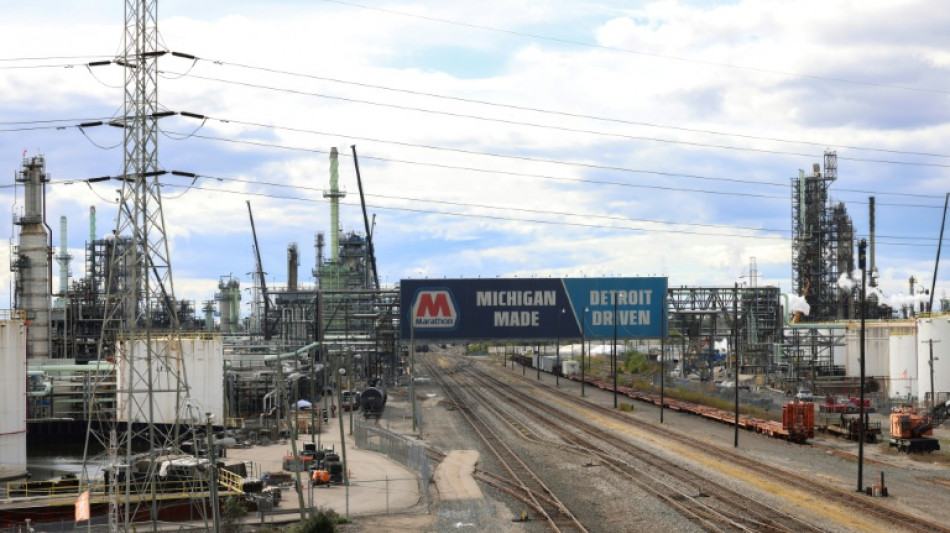
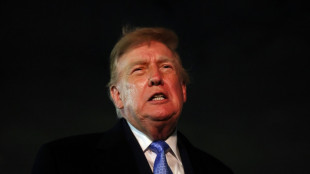
Trump push to 'drill, baby, drill' may hit industry roadblock / Photo: Charly TRIBALLEAU - AFP

 Flooding, power cuts and evacuations as Hurricane Polo slams Mexico

 Dodgers eye three-peat, Red Sox face Yankees as MLB playoffs begin

 Certification of Boeing 737 MAX delayed by software bug

 Celine Dion wows Paris Fashion Week with surprise gig

 AMD buys firm founded by AI 'godmother' Fei-Fei Li
 Italy rebound in Turkey as France win late in Belgium

 Pope says concerns about AI 'should be taken seriously'
 Hurricanes to hoist title banner as NHL season begins
 Justice Alito steps aside from major US climate case

 Willis happy with England exile after retains Top 14 player award

 Spain housing protests keep heat on government as PM seeks new law

 Wissa spoils Zimbabwe homecoming as DR Congo win AFCON qualifier

 UK police release on bail five men held over airbase incident

 Ex-All Black Plummer 'sure' New Zealand will find Super Rugby solution

 Shein sees 1% revenue growth in first half of 2026
 Netherlands regrets Israel retaliation in settlements row

 Moscow seizes Russian assets of German food retailer Metro
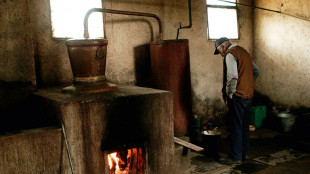 Bulgarian spirits inflamed by new rakia rules

 Documentary turns camera on architect Peter Zumthor

 UK police say releasing on bail five men held over airbase incident

 Trump admin finalizes reversal of US fuel economy standards

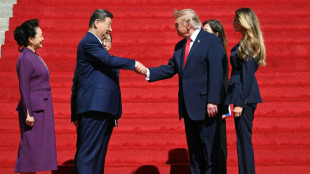 US says no China arms sale plans after envoy cites Trump offer

 Dozens kidnapped in two weekend attacks in northern Nigeria
 Next stop the world: Pathirage wins Asian Games javelin gold

 Aster Launches Perpetual Grid Trading 2.0 with Up to 140,000 $ASTER Liquidity Mining Campaign
President Donald Trump wants to boost US oil production, pledging to bring costs down as he returned to office this week -- but analysts warn his efforts could be hampered by the industry itself.
Taking aim at an "inflation crisis" which he said was driven by rising energy prices, Trump vowed: "Today I will also declare a national energy emergency. We will drill, baby, drill."
"We will be a rich nation again. And it is that liquid gold under our feet that will help to do it," he pledged in his inaugural address on Monday.
While the United States is the world's leading crude oil producer, the US president wants to boost oil and gas production to lower costs, fill strategic reserves and "export American energy all over the world."
In declaring a national energy emergency, Trump reversed some drilling bans, including in a protected area in Alaska.
"It's hard to reconcile the notion that we have an energy emergency, when the US produced 13.2 million barrels per day of crude oil in 2024," said analyst Stewart Glickman of CFRA.
This was "more than any other country."
The US Energy Information Administration also estimates that US production will hit 13.5 million barrels a day this year, "which would imply yet another annual record," Glickman told AFP.
- Economic interest -
But analysts say the prospect of oversupply and worries about global demand currently could make US producers reluctant to step on the accelerator -- to prevent crude prices from falling too much.
US oil companies will likely "act in their own interest" economically, and drill when they expect it to be profitable, said Andrew Lipow, president of Lipow Oil Associates.
That will depend on the price of oil, he added, alongside the return on capital.
Some oil majors are already cautious about global supply.
"We are seeing record levels of demand for oil, record levels for demand for products coming out of our refineries," said ExxonMobil CEO Darren Woods on CNBC in November.
"But we also see a lot of supply in the world right now," he said, adding that much of it comes from the United States.
Woods recounted how, after the merger of Exxon and Mobil in 1999, the group owned 45 refineries.
But when he took the helm in 2017, it only had 22 refineries, he told CNBC.
Trump's strategy has also puzzled analysts considering the Organization of the Petroleum Exporting Countries and its allies (OPEC+) has 5.8 million barrels per day of unused capacity, said Robert Yawger of Mizuho Americas.
Eight members of OPEC+, including Saudi Arabia and Russia, have planned to gradually reverse production cuts of 2.2 million barrels per day since last year.
- Profitability -
The new US administration "has to justify increases in production by the bottom line. It has to be cost-effective," said Yawger.
"They're not going to repeat the problem that we've done in the past, and that's just oversupply the market and kill the golden goose," he added.
The emergence of shale oil and gas at the turn of the 2010s disrupted the American oil industry.
Concerned about the rise of the United States, Saudi Arabia decided to retaliate by flooding the oil market, causing the price of a barrel of West Texas Intermediate (WTI), the American benchmark, to fall to $26 in 2016.
A part of the shale oil industry shuttered, and surviving players vowed to manage their growth and finances more effectively.
"Misguided, irrational energy policies are done," said Jeff Eshelman, president of the Independent Petroleum Association of America, said in response to Trump's announcements.
"America's vast resources will be unleashed responsibly," he added.
D.AbuRida--SF-PST