Climate change intensified back-to-back Philippines storms: study / Photo: John Dimain - AFP

 Flooding, power cuts and evacuations as Hurricane Polo slams Mexico

 Dodgers eye three-peat, Red Sox face Yankees as MLB playoffs begin

 Certification of Boeing 737 MAX delayed by software bug

 Celine Dion wows Paris Fashion Week with surprise gig

 AMD buys firm founded by AI 'godmother' Fei-Fei Li

 Italy rebound in Turkey as France win late in Belgium

 Pope says concerns about AI 'should be taken seriously'

 Hurricanes to hoist title banner as NHL season begins

 Justice Alito steps aside from major US climate case

 Willis happy with England exile after retains Top 14 player award

 Spain housing protests keep heat on government as PM seeks new law

 Wissa spoils Zimbabwe homecoming as DR Congo win AFCON qualifier

 UK police release on bail five men held over airbase incident

 Ex-All Black Plummer 'sure' New Zealand will find Super Rugby solution

 Shein sees 1% revenue growth in first half of 2026

 Netherlands regrets Israel retaliation in settlements row

 Moscow seizes Russian assets of German food retailer Metro

 Bulgarian spirits inflamed by new rakia rules

 Documentary turns camera on architect Peter Zumthor

 UK police say releasing on bail five men held over airbase incident

 Trump admin finalizes reversal of US fuel economy standards

 US says no China arms sale plans after envoy cites Trump offer

 Dozens kidnapped in two weekend attacks in northern Nigeria

 Next stop the world: Pathirage wins Asian Games javelin gold

 Aster Launches Perpetual Grid Trading 2.0 with Up to 140,000 $ASTER Liquidity Mining Campaign

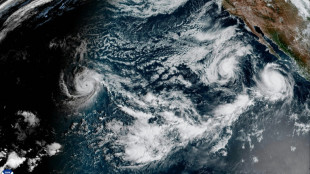
Human-induced climate change fuelled a rare string of back-to-back typhoons that battered the Philippines this year and boosted the chances of powerful storms making landfall, a new study said on Thursday.
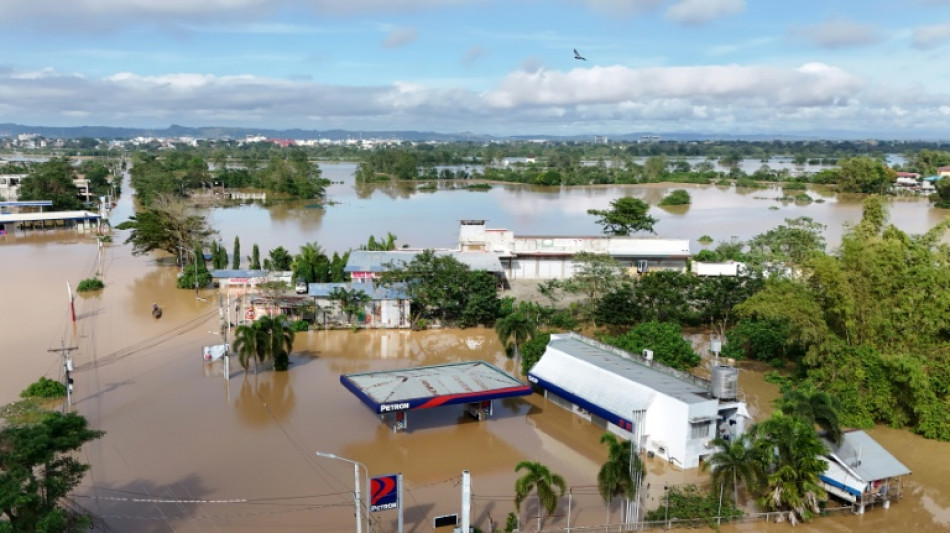
Five typhoons and a tropical storm hit the Philippines in a 23-day period across October and November, killing more than 170 people and causing at least $235 million in damage, according to local authorities.
About 20 big storms and typhoons hit the Southeast Asian nation or its surrounding waters each year, killing scores of people.
However, it is rare for multiple major weather events to hit over such a short period.
To assess the role of climate change in the string of storms, scientists from the World Weather Attribution (WWA) network used modelling to compare weather patterns in today's world against a hypothetical world without human-induced warming.
"Our results show that conditions conducive to the development of consecutive typhoons in this region have been enhanced by global warming," they said in a study published late Thursday.
"The chance of multiple major typhoons making landfall will continue to increase as long as we continue to burn fossil fuels."
The research, which uses a peer-reviewed methodology, found climate change made the conditions that formed and fuelled the typhoons twice as likely.
Globally, the number of tropical cyclones is not increasing significantly.
However, warmer seas are helping fuel an increasing number of strong storms and a warmer atmosphere holds more moisture, which results in storms that drop more rain.
- 'Difficult to recover' -
The study found that the warmer climate makes it 25 percent more likely that at least three Category 3-5 typhoons will make landfall in the Philippines in a year.
"Such consecutive extreme events make it difficult for populations to recover," the scientists warned.
And the world's current warming trajectory puts the Philippines on course for even worse effects, the study said.
Tropical storm Trami, considered by Philippines civil defence officials as the deadliest storm to hit the country this year, submerged hundreds of villages in the northern Philippines and displaced more than half a million residents.
Super Typhoon Man-yi, which brought havoc to Catanduanes province last month, also caused a province-wide power outage that authorities are still struggling to rectify.
"While it is unusual to see so many typhoons hit the Philippines in less than a month, the conditions that gave rise to these storms are increasing as the climate warms," said Ben Clarke, a researcher at Imperial College London's Centre for Environmental Policy.
The study warned that the repeated storms created a "perpetual state of insecurity", with about 13 million people affected by at least three of the extreme weather systems.
The Philippines needs major investment to tackle the challenges it faces from climate change, the scientists said.
"But of course funding adaptation isn't enough to protect the Philippines from climate change," said Friederike Otto, the scientist who leads WWA.
"Unless the world stops burning fossil fuels, typhoons will continue to intensify."
Q.Najjar--SF-PST