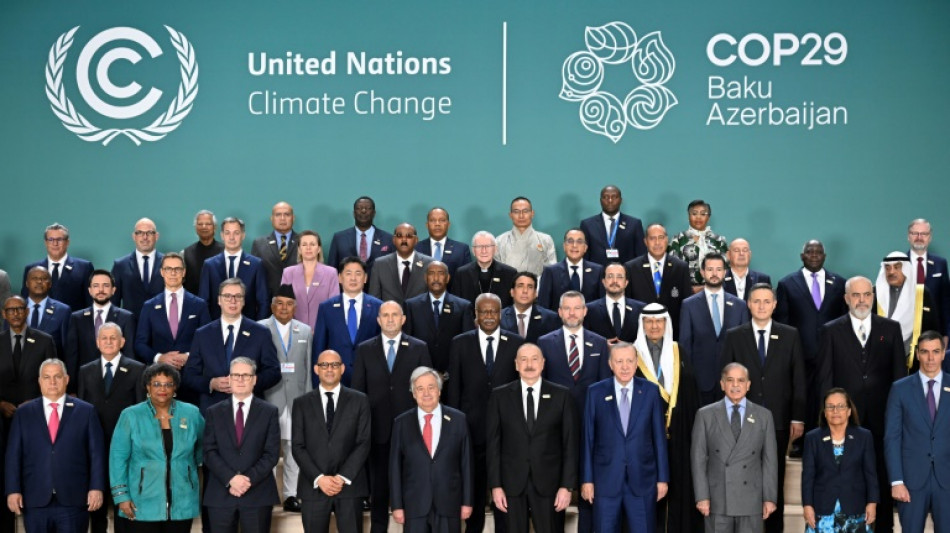
Climate finance: who is being asked to pay what at COP29? / Photo: Alexander NEMENOV - AFP

 OpenAI cancels release of newest model due to safety concerns

 AI bosses head to White House as safety pressure builds

 Batista sacked as Costa Rica coach after six months
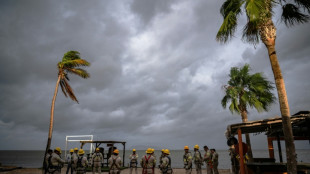 Flooding, power cuts and evacuations as Hurricane Polo slams Mexico

 Dodgers eye three-peat, Red Sox face Yankees as MLB playoffs begin
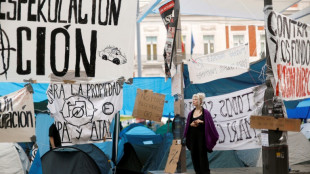
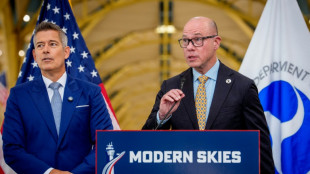 Certification of Boeing 737 MAX delayed by software bug

 Celine Dion wows Paris Fashion Week with surprise gig
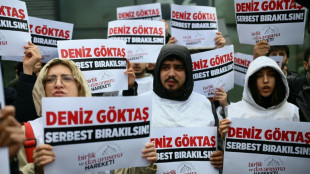
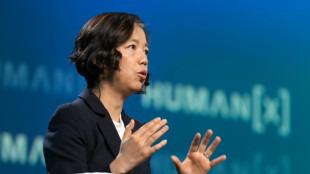 AMD buys firm founded by AI 'godmother' Fei-Fei Li
 Italy rebound in Turkey as France win late in Belgium

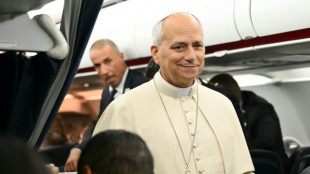 Pope says concerns about AI 'should be taken seriously'
 Hurricanes to hoist title banner as NHL season begins
 Justice Alito steps aside from major US climate case

 Willis happy with England exile after retains Top 14 player award

 Spain housing protests keep heat on government as PM seeks new law

 Wissa spoils Zimbabwe homecoming as DR Congo win AFCON qualifier

 UK police release on bail five men held over airbase incident

 Ex-All Black Plummer 'sure' New Zealand will find Super Rugby solution

 Shein sees 1% revenue growth in first half of 2026
 Netherlands regrets Israel retaliation in settlements row
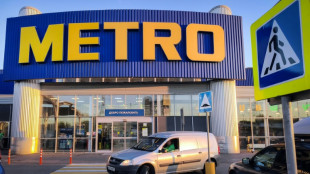 Moscow seizes Russian assets of German food retailer Metro
 Bulgarian spirits inflamed by new rakia rules

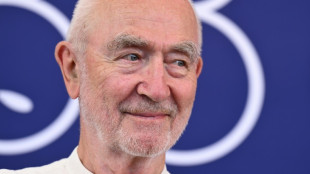 Documentary turns camera on architect Peter Zumthor
 UK police say releasing on bail five men held over airbase incident
 Trump admin finalizes reversal of US fuel economy standards

 US says no China arms sale plans after envoy cites Trump offer
"You owe us!" screamed a protest banner at the COP29 summit in Azerbaijan, where negotiations over how much rich nations most responsible for climate change should pay poorer ones are getting heated.
Striking a deal to provide the $1 trillion annually that experts say is needed by 2030 for developing countries is the top priority at COP29, but getting there will be a slog.
Countries are deeply divided: who should pay what, and how much, are just two of many obstacles standing in the way of an agreement being reached by November 22.
Here's a look at what developing countries need, and who is helping them foot the bill.
- How much is needed? -
A group of leading economists commissioned by the United Nations estimates that developing countries, excluding China, need $2.4 trillion a year in climate finance by 2030.
In a report published Thursday, these experts said two-thirds of this money was required to transition developing economies away from fossil fuels to cleaner forms of energy.
The rest should be divided between adaptation measures to cope with climate change, recovery funds when disaster hits, and conservation of nature.
Of the $2.4 trillion, an estimated $1.4 trillion will need to come from developing countries themselves.
But outside help will be required to cover the remaining $1 trillion.
That could be met by grants or zero-interest loans from foreign governments, private investment flows, or money raised from global taxes, according to the report.
- What should governments pay? -
How much comes directly from governments is the crux of the question for many at COP29, who feel wealthy donors like the United States and European Union are not doing enough.
Amar Bhattacharya, who co-authored the expert climate finance report, said that figure "would be somewhere in the kind of $300 to $400 billion range".
That is at least three times the current commitment -- a tall order for donors facing economic and political crises at home, and the prospect of Donald Trump withdrawing from global climate cooperation.
The cost keeps growing, too.
Developing countries are the least responsible for global warming, but the most exposed to climate shocks, which are accelerating as the planet warms.
By 2035, foreign donors will need to foot $1.3 billion a year to cover developing country needs, the report said.
- How much has been raised? -
Rich nations raised $116 billion in 2022 in climate finance, according to the latest available data from the OECD.
But is money used to make hotels more sustainable, in one stark example, really helping poorer countries adapt to climate change?
What about loans that add to national debt?
Developing countries and campaign groups have called for greater scrutiny of the money that's raised, and efforts have been made to quantify how much each nation gives.
One study done by British think tank ODI ranks progress toward each country's "fair share" based on its carbon footprint, population size and gross national income.
Based on this criteria, Norway led the pack in 2022, followed by France.
The United States -- the world's largest historic emitter -- ranked second to last among 23 nations assessed.
Z.AbuSaud--SF-PST