World already 'paying terrible price' for climate inaction: Guterres / Photo: Pablo PORCIUNCULA - AFP

 All Blacks name veteran Taylor captain as Mo'unga seizes 10 jersey
 Race against time as Asian Games cricket quarter-finals washed out
 India turns to corals and seagrass to shield against rising seas

 Manchester City's Premier League charges: What comes next?

 Brazil's cellphone crime: a security nightmare in every pocket

 Russia pummels Kyiv in latest deadly attack
 NFL Giants obtain QB McCarthy from Vikings

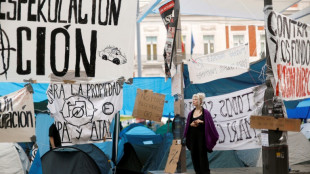 Deal for evicted Spanish pensioner as PM seeks new housing law

 Clippers apologize, warn fans of 'challenges' after Leonard scandal

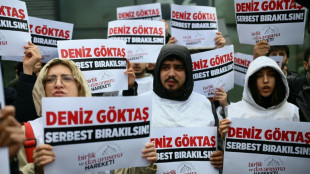 Turkish comedian convicted for Erdogan 'insult' freed pending appeal

 Trump announces 'biggest' US steel plant in battleground Iowa

 Olise wonder strike gives Zidane's France win in Belgium
 US stocks fall, bond yields rise as Middle East war drags on

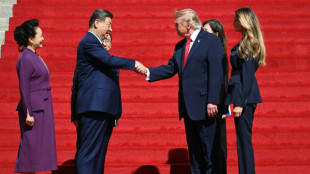 Trump denies offering to sell arms to China's Xi

 Wemby ready for NBA Spurs to move rivals in climb to top

 Ukraine to postpone some spending amid delays in aid: PM
 Tuchel says Czech Republic game 'not yet a must-win'

 MaXhosa puts South Africa on the Paris fashion map
 Rose, Scott among 2027 World Golf Hall of Fame finalists

 Brunson says NBA champion Knicks can't get satisfaction

 France puts out largest wildfire since 1949

 Real Madrid's Perez summoned over Barcelona referee payments comments

 Oil takes off again, Wall Street dips after Trump rejects Iran truce offer

 AlgoQuant Asset Management Selects Liquid Mercury to Enhance Digital Asset Trading Infrastructure
 UK to reopen refugee resettlement scheme to push 'safe' migration
Humanity is 'paying a terrible price' for inaction on global warming, with time running out to correct the course and avoid climate disaster, UN Secretary General Antonio Guterres said Thursday.
A new report by the UN Environment Programme (UNEP) says the next decade is critical in the fight against climate change or any hope of limiting global warming to 1.5 degrees Celsius will be lost.
The current pace of climate action would result in a catastrophic 3.1C of warming this century, UNEP said in its latest Emissions Gap report.
And even if all existing pledges to cut emissions were enacted as promised, global temperatures would soar 2.6C above pre-industrial levels -- a still devastating scenario for humanity.
"Either leaders bridge the emissions gap, or we plunge headlong into climate disaster, with the poorest and most vulnerable suffering the most," said Guterres.
"Around the world, people are paying a terrible price."
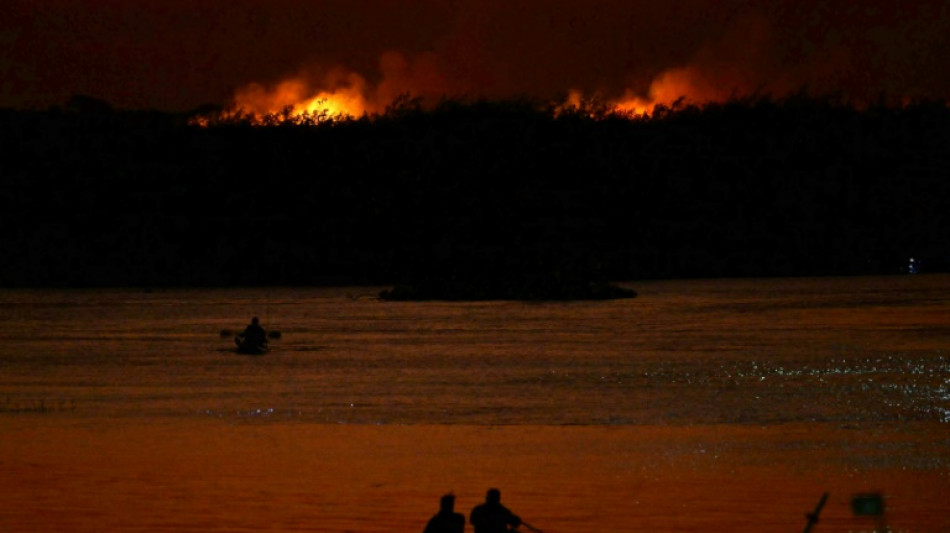
The call to action, just weeks before the UN COP29 climate summit, follows a streak of destructive and deadly extreme weather in a year expected to be the hottest in recorded history.
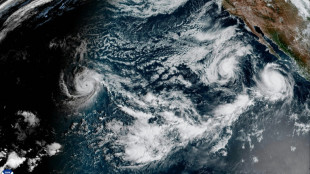
The world's poorest have been particularly hard hit, with typhoons and heatwaves in Asia and the Caribbean, floods in Africa, and droughts and wildfires in Latin America.
- 'Out of time' -
UNEP's latest projections blow well past 1.5C, which nations agreed in Paris in 2015 was the safer bet to minimise the worst consequences of a warming planet.
Guterres said wealthy G20 economies in particular would need to show far more ambition in the next round of climate pledges, known as NDCs, which are due in early 2025.
These commitments, which detail how a country will reduce emissions across their economies, were "our best last chance to change course", said David King of the Climate Crisis Advisory Group.
"To avoid a scenario in which humanity will struggle to survive intact, nations must use the window of opportunity over the coming year," said King, who chairs the expert consortium.
The 1.5C limit was "still technically possible", UNEP said -- but only with enormous reductions by 2035 in heat-trapping gases caused primarily by burning fossil fuels.
Rather than declining, emissions are still rising, hitting a new record high last year.
Guterres said the world was "playing with fire".
"But there can be no more playing for time. We're out of time," he said.
Keeping 1.5C on track would require a collective effort "only ever seen following a global conflict", UNEP said.
Without pulling together "on a scale and pace never seen before... the 1.5C goal will soon be dead," said UNEP executive director Inger Andersen.
To have a hope of meeting that goal, emissions must be slashed 42 percent by 2030 and 57 percent by 2035, UNEP added.
- 'Not too late' -
The world's 20 largest economies were responsible for nearly 80 percent of global emissions in 2023. The bottom 47 countries accounted for three percent.
"These reports are an historical litany of negligence from the world's leaders to tackle the climate crisis with the urgency it demands, but it's not too late to take corrective action," said Tracy Carty from Greenpeace International.
The United States was historically the biggest polluter, accounting for 20 percent of global emissions since 1850, when the burning of fossil fuels for energy began in earnest.
The European Union and China accounted for 12 percent each, UNEP said.
UNEP said advances in solar and wind, two proven and cost-effective technologies, could deliver a steep fall in emissions but investment in such carbon-cutting solutions needed to rise six-fold to meet 1.5C.
The scale of that challenge means a temporary breach of 1.5C is increasingly being seen as inevitable by scientists and policymakers.
But a recent study found that even exceeding 1.5C before bringing warming back down -- a scenario known as an "overshoot" -- could cause irreversible consequences for the planet.
A.AbuSaada--SF-PST