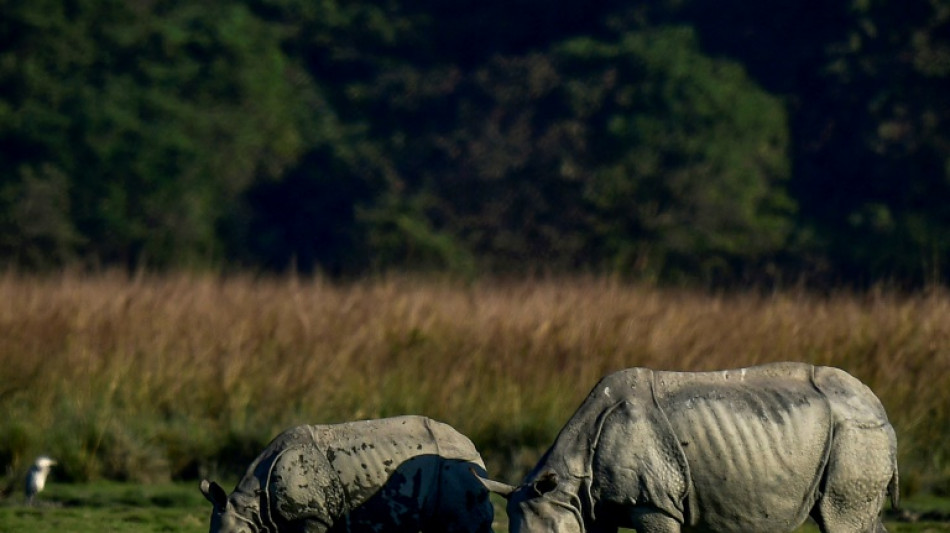
India's one-horned rhino numbers charging ahead, govt says / Photo: Biju BORO - AFP/File

 فلسطين تحصد جائزتي "أفضل أثر عالمي" وريادة الأعمال في مسابقة إنجاز العرب

 Kubayi Warns Residents to Vacate Hijacked Buildings as State Prepares Seizures

 Van Gogh’s ‘Châtaigniers en Fleurs’ Sets $285m Record at Sotheby’s

 محكمة الاحتلال تمدد اعتقال مدير مستشفى كمال عدوان دون تهمة
India's one-horned Asian rhino population has almost tripled in the past four decades thanks to conservation and anti-poaching efforts, according to government figures.
Data released on Sunday -- World Rhino Day -- said the number of the animals, known for their single horn and thick, armour-like skin, had surged from 1,500 four decades ago to more than 4,000 now.
There were just 600 left in India in the 1960s.
"This conservation success story is the result of relentless efforts by the forest department and local communities," a government statement said.
An adult Indian rhino, the largest of the three Asian species, can weigh up to 2,800 kilograms (6,170 pounds) and live for about 50 years.
They are found in grasslands, swamps and riverine forests in India's east and neighbouring Nepal.
Kaziranga conservation park in Assam state in India's remote northeast is home to an estimated 80 percent of the world's one-horned rhinos.
The International Union for Conservation of Nature categorises the Indian rhino as "vulnerable".
Rhino species face a precarious future globally, with populations dwindling drastically from 500,000 in the early 20th century to around 28,000 today, according to the International Rhino Foundation.
"The greater one-horned rhino in India has made a remarkable comeback," the government statement said.
Despite the success of conservation efforts, rhinos remain threatened by poaching, with their horns used in traditional medicine and prized particularly in China and Vietnam.
P.AbuBaker--SF-PST



