Wildfires push Canada into top four CO2 emitters / Photo: Handout - Jasper National Park/AFP

 Rod Wave Files Motion to Suppress Evidence From April 2025 Vehicle Search

 استشهاد 11 مواطنا في غزة جراء اعتداءات الاحتلال المتواصلة

 Mr C on North London’s Pioneering Role in the Global House Music Scene

 Below Deck alumnus João Franco and brother arrested after fatal Turkey fight

 General Hospital actor Randall England dies at 75

 London museum removes Russell Brand hair exhibit after rape conviction

 Yella Beezy sentenced to life for arranging rapper Mo3’s murder

 Toddler Diagnosed With Leukemia After Symptoms Dismissed as Winter Illness

 Davante Adams injury deepens Los Angeles Rams receiver shortage

 João Franco’s earlier post draws attention after arrest over fatal Turkey brawl

 Itlu Arjuna receives U/A certificate ahead of theatrical release
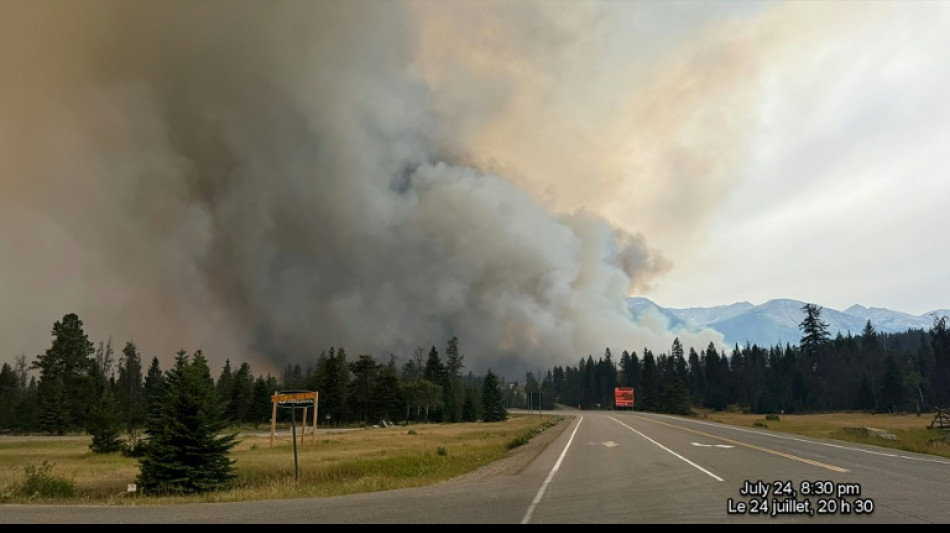
Record wildfires last year bumped Canada into the top four CO2-emitting countries in the world, according to a study Wednesday that also cast doubt on its forests' future ability to capture and store significant amounts of carbon dioxide.
Last year saw a catastrophic number of wildfires across the country, with 15 million hectares -- or about four percent of Canada's total forest area -- burned and more than 200,000 people displaced.
Looking at satellite data of carbon monoxide in smoke plumes from fires that burned from May to September of last year, researchers determined that 2,371 megatonnes of CO2 was released, pushing Canada's ranking up from eleventh to fourth among the world's top CO2 emitters.
It put the country behind only China, the United States and India last year.
The researchers warn that hot, dry weather responsible for those blazes is forecast to become the norm by the 2050s, and is "likely to drive an increase in fire activity."
"This raises concerns about whether potentially more frequent and intense fires in the coming decades will suppress the ability of Canadian forests to continue serving as carbon sinks," Brendan Byrne, lead author of the study, told AFP.
Canada's boreal forest, a vast swath stretching from the Pacific to the Atlantic oceans, holds significant amounts of what is known as "sequestered" CO2.
As scorched forests regrow over decades, the CO2 released by wildfires is usually reabsorbed.
But a jump in the size and number of annual fires, coupled with droughts in some regions, could mean forests take longer to grow back.
That in turn "could suppress carbon uptake by the forests," said the study.
Canada would have to adjust downward its level of allowable fossil fuel emissions in order "to compensate for reduced carbon uptake by forests," it concluded.
Ottawa has agreed under the Paris agreement to reduce carbon emissions by 40 to 45 percent from 2005 levels by 2030.
Canada's total CO2-equivalent emissions from burning fossil fuels in 2022 were 708 megatonnes, according to government data.
As human activity has warmed the planet over the past two decades, the frequency and intensity of extreme wildfires have more than doubled worldwide, according to another study published in June in the journal Nature Ecology & Evolution.
The wildfire situation in Canada this year has been more subdued but still calamitous in some parts, with the beloved tourist town of Jasper in the western part of the country partially destroyed in July.
Q.Najjar--SF-PST