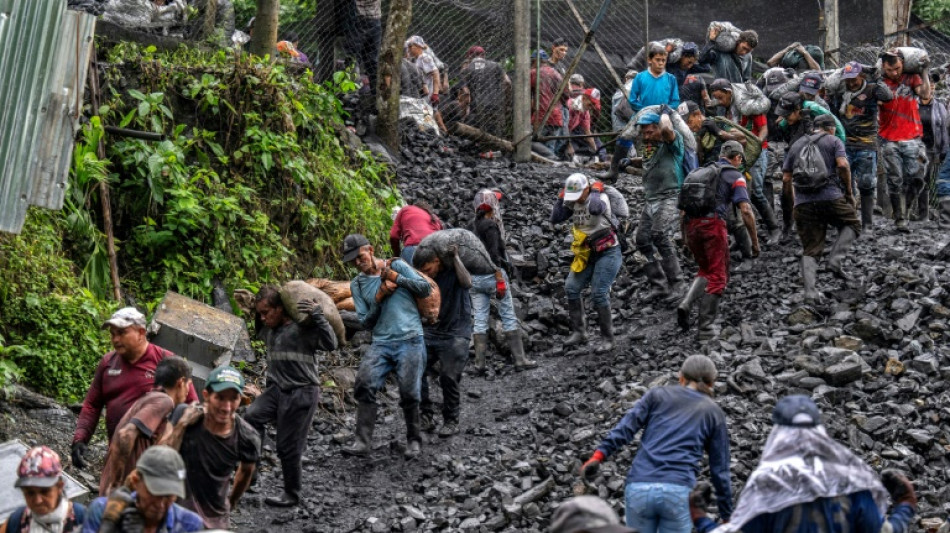
Leftover emeralds: the dream of Colombia's poor miners / Photo: Luis ACOSTA - AFP

 MEXC Unveils "WE SEE YOU" Brand Visual Refresh, Putting People Behind Every Trade in Focus
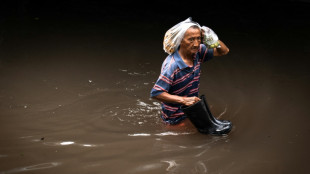 Thai capital cleans up after deadly floods

 NATO, EU allies rally to Estonia after 'sabotage' blamed on Russia
 Families demand justice for Cameroon's 'nightmare' wave of murdered women
 Tebas says Man City should face 'most severe' sanctions if guilty of rule breaches
 Pochettino calls Man City success 'a period of deception'

 Settler attack on West Bank village injures Israeli forces, drawing rare rebuke

 Mystery over UK airbase scare after reports no explosives found

 Spanish govt races to adopt housing law under protest pressure

 Estonia slams Russian 'sabotage' after arson attack on defence company
 Slovenia sees surge in '.si' sites after Trump hypes 'super intelligence'

 'Like a dream' for An as Games organisers 'sorry' for latest mix-up
 Tokyo suffers longest streak of rainy days on record

 Indonesia charges train driver over crash that killed 16 women
 صندوق النقد العربي يواصل دعم الاستقرار المالي والنقدي في المنطقة

 وزارة المالية تدعم توسع الشركات المصرية في السوق التنزانية

 محمد بن زايد يزور السعودية بعد فترة من الفتور في علاقات البلدين

 مخيم البداوي يحيي ذكرى مقتل فتح شريف بفعالية جماهيرية

 تدمير البيوت التراثية يهدد الذاكرة السياسية والعمرانية لجنوب لبنان
 اقتحامات واعتداءات إسرائيلية تسجل في عدة مناطق بالضفة الغربية

 سهم شي إن يتراجع 14% رغم إعلان أول أرباح منذ الطرح

 مجموعة الغندور ترصد 3 مليارات جنيه لتوسعات جديدة حتى 2030

 العربي الأفريقي الدولي يوسع برامج إعداد القيادات المصرفية

 إنفيديا تطلق منصة مفتوحة لضبط صلاحيات وكلاء الذكاء الاصطناعي

 دي بي ورلد تدشن خطاً بحرياً بين الهند والفجيرة وعُمان واليمن

One man's trash can very well become another man's treasure in the Colombian town of Muzo, the emerald capital of the world.
In this small community in the foothills of the eastern Andes mountains, multinational mining company Esmeralda Mining Services (EMS) deposits tons of earth it has processed from its operations into a cage-like enclosure.
A few times a month, EMS allows hundreds of miners -- known as "guaqueros" or treasure hunters -- to search through the detritus and take home any precious stones they find.
Among the miners is Miguel Hernandez, 72, who grips a cane as he waits outside the cage, where some hopefuls have queued since 3:00 am.
"May our Heavenly Father give me a gift so I can buy a new home... it's what I want most," he told AFP.
Many emerald hunters bring their own shovels and sacks.
After filling the bags with as much earth as they can carry, they haul the bags down to a nearby stream and filter through the findings to see if any emeralds are hidden inside.
Several guaquero associations have been authorized by EMS to help coordinate logistics, organizing miners into different groups to try to defuse the chaos.
"I don't go in there because the people are terrible," said Maria Rodriguez, 58, who accompanied her miner husband. "They grab you, throw you, trample you."
The enclosure remains open for about four hours at a time, and by the end, many return home empty-handed more often than not.
- Green Fever -
Emerald hunters come to Muzo, a town of about 9,000 inhabitants about 125 miles (200 kilometers) north of the capital Bogota, from all over South America.
"The mining causes a very delicate problem," Ximena Castaneda, the mayor of Muzo, told AFP. "And it's that folks come with the expectation they will be millionaires one day."
"Some arrive and make money, while others never do," she continued.
A secondary economy has sprung up around the mining craze, with vendors selling food, drinks and tools just outside the mining area, generating up to $5,000 a day, according to the mining associations.
Those who can eke out a living get by on the luck of the draw.
"I have been in the mines here for 30 years and emeralds have come out... but every day it's getting more difficult," said Gilberto Cifuentes, 54.
- Inequality -
Colombia is one of the world's largest producers of emeralds, with exports of the gems totaling $122 million in 2022, according to the National Federation of Emeralds.
However, most of the profits go toward multinational mining corporations or powerful mining families.
The current structures date back to the 1980s when rival emerald miners unleashed a "green war," which killed thousands in this region in central Colombia.
Victor Carranza -- known as "the emerald czar" -- leveraged support from paramilitary groups and drug traffickers to impose a monopoly and further intensifying the conflict, according to intelligence reports.
The aftermath laid bare stark inequality within the mining industry.
EMS, which did not respond to AFP's request for comment, operates a foundation in Muzo which conducts various social programs.
Still, some believe EMS could do more to give back to the impoverished community around the mines.
Steven Ariza, 35, oversees one of the guaquero associations after the group's previous leader was shot and killed in 2022.
He said the group advocates for EMS to hire more workers from Muzo, source supplies locally and generally invest in the region.
Steven Medina, 24, also seeks to bring awareness to the plight of the miners.
Medina leads foreign buyers on regular tours of the mines to show them the reality behind the precious gems, most of which end up in either Europe or the United States.
"People do need a lot of help" in Muzo, he said.
A.AbuSaada--SF-PST