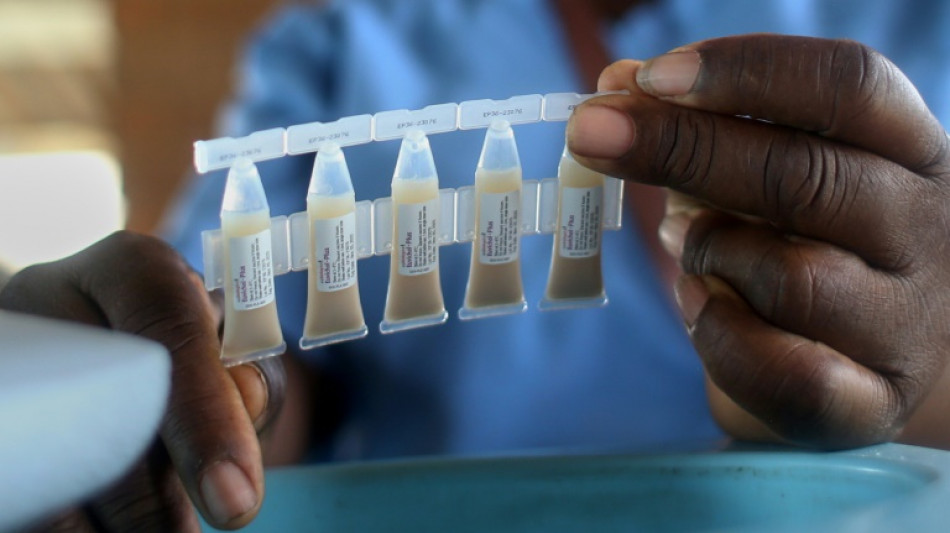
Pressure on cholera vaccine stocks 'decreasing': Gavi alliance / Photo: Jekesai NJIKIZANA - AFP/File

 Amaze Holdings (NYSE: AMZE) Executes Binding LOI to Acquire BullionFX | Alchemy, a Decentralized Gold-Backed Financial Ecosystem for Valued at US$155 Million
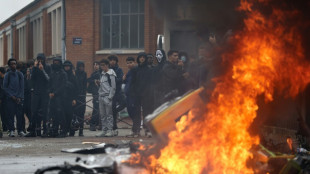 Clashes between French teens, police as school blockades intensify
 Stocks move sideways despite oil moving lower

 African leaders to gather in Egypt for business summit
 UK decides against charging foreign visitors for museums
 Dallaglio to sell England World Cup winners' medal
 Brazil come from behind to beat Australia 4-2 in friendly
 Ruthless An retains Asian Games badminton crown as Kunlavut triumphs

 Alonso to stay with F1 team Aston Martin in 2027
 China badminton 'still strong' despite Asian Games slump
 'Exceptional' Turner painting shown in Rome before sale

 European stocks climb as oil dips
 Spain aims to ban evictions until 2030 amid housing protests

 Kunlavut first Thai man to win Asian Games badminton singles gold
 French far right says antisemitism claims part of 'total war' to derail presidency bid

 'Gift from God': Rain brings relief from Indonesia toxic haze
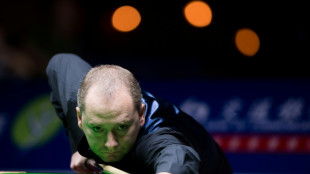 Ex-world snooker champion jailed for 7 years for child sex crimes
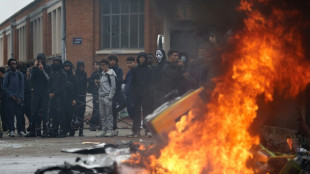 French teens clash with police as school blockades intensify
 FIFA accuses UEFA of 'misinformation campaign' in bid for World Cup papers

 Myanmar airstrike toll hits 50 as families gather dead
 STARTRADER Raises Lloyd's of London Client Fund Insurance to USD 30 Million in Aggregate
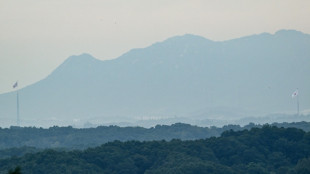 North Korean DMZ landmine blasts 'violation of armistice': Seoul

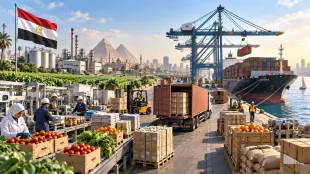 مصر تستهدف زيادة حصة الصادرات السلعية إلى 30% من الناتج المحلي

 العربي الأفريقي الدولي يوسع برامج إعداد القيادات المصرفية

 مجموعة الغندور ترصد 3 مليارات جنيه لتوسعات جديدة حتى 2030

A resurgence of cholera across Africa has driven an urgent need for more vaccine doses, but stock shortages have hampered the fight against the increasing outbreaks of the deadly disease.
But pressure on the supply of doses is now decreasing, said Aurelia Nguyen, chief programme officer of the Gavi vaccine alliance that raises funds to supply vaccines to developing countries.
Ahead of a summit in Paris on Thursday aimed at ramping up vaccine production in Africa, Nguyen told AFP about the current state of play.
- How many doses are there? -
Nguyen: "Cholera outbreaks are becoming more and more frequent, more and more widespread, and are occurring more often in countries that had previously been spared.
"For years, demand for cholera vaccines had been relatively low. From two million in 2013, the supply of doses exploded to 38 million in 2023. Given the current context, the response to these outbreaks follows the World Health Organization's recommendation to administer a single dose, instead of the usual two.
"Due to the number of currently ongoing cholera outbreaks, our supply of vaccines was under pressure at the start of the year. But the pressure is now decreasing and we are once again in a position to immediately respond to new requests.
"The South Korean biopharmaceutical company EuBiologics, the only supplier of oral cholera vaccines, will increase its production by 30 percent this year and next. This increase was made possible in particular by Gavi's purchases over several years.
"Gavi therefore expects to receive 50 million doses in 2024 and around 65 million in 2025.
"Because it is important to diversify suppliers and increase volumes, we are working with a second producer, the Indian company Bharat. The firm will be able to supply more doses in 2025, as will producers in Africa in the future.
"Cholera is part of the 10-year, $1 billion initiative aimed at supporting vaccine production in Africa."
- What is driving new outbreaks? -
"Climate change is a factor that is embedded in our new strategy. This is the first time that global warming has been a criteria for investment in future vaccinations -- for example, against dengue fever.
"As well as diseases transmitted by mosquitoes, Gavi also monitors those related to populations that have been displaced by drought.
"Wherever there is conflict or a displaced population, there is a significant risk of outbreaks which rises the longer the fighting goes on. Whether it is for cholera, yellow fever, meningitis, measles -- we have vaccine reserves ready.
"Gavi works closely with the WHO to keep an eye on new pathogens that may emerge, and we take climate shocks into account in our projections for future vaccine needs.
"We have the money available ($500 million set aside) to finance a rapid response on the day an epidemic or pandemic is declared."
- What about manufacturers? -
"Thanks to our funding, Gavi vaccinates around 60 percent of the children born on Earth every year. We do not ask manufacturers to give us charity, but to sell to us at a reasonable price. The model has to be viable from the view of pharmaceutical firms so they invest in the requested volume.
"That said, given the poor countries we represent and the resources provided by our donors, we do ask for the price to be the lowest available.
"We are not a discount store -- we give the same products to children in Burkina Faso that are available to children in Switzerland. This is essential to retain confidence in the model. We will never give out an expired dose."
D.Khalil--SF-PST