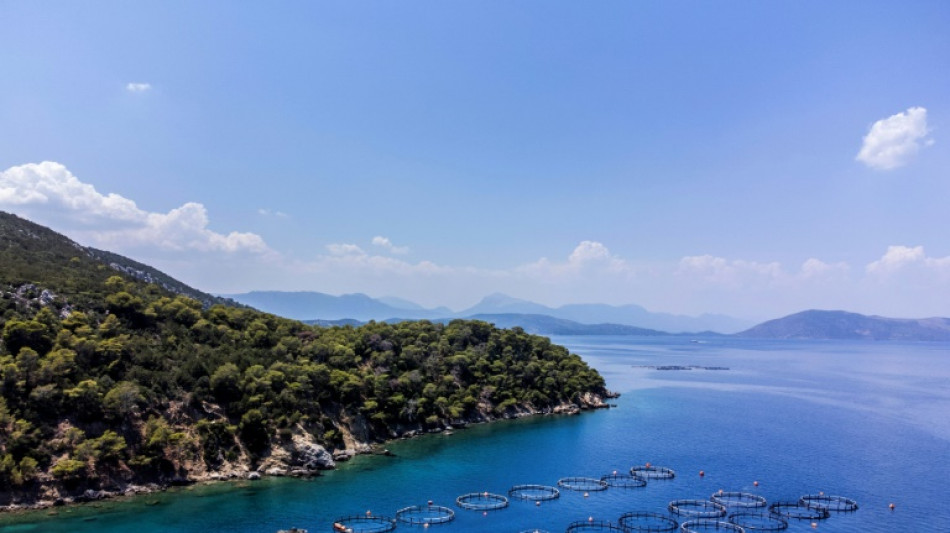
Aquaculture overtakes wild fisheries for first time: UN report / Photo: Angelos Tzortzinis - AFP/File

 Suede and Manic Street Preachers Deliver Electrifying Co-Headline Performance at Motorpoint Arena

 Trump Reduces Public Appearances Amid CIA-Mossad Warnings of Iranian Drone Plot

 Make-A-Wish Announces 2026 Starblazer Award Honorees; Allied World Becomes First Corporate Founder

 فنان من غزة يفوز بجائزة "كاتب الشجاعة" البريطانية

 عصام غالب عواد: الفلسطيني في قفص الاتهام.. حين يُجبر صاحب المأساة على الاعتذار قبل أن يرويها

 Chelsea Transfer News: Real Betis Star Jose Antonio Morante Rejects Move to Stamford Bridge

 إيطاليا تؤكد دعمها الكامل لانضمام ألمانيا لبرنامج المقاتلات العالمية

 الرئيس عباس في ذكرى الاستقلال: حق فلسطين لا يسقط بالتقادم والشباب ركيزة البناء

 Grave of the Fireflies: Takahata Isao’s Lifelong Quest for Realism

Aquaculture is playing an increasingly important role in meeting the world's food needs, surpassing wild fisheries in aquatic animal production for the first time, according to a report published Friday.
With global demand for aquatic foods expected to keep growing, an increase in sustainable production is vital to ensure healthy diets, the United Nations's Food and Agriculture Organization said.
In 2022, aquaculture yielded 94.4 million tonnes of aquatic animal production -- 51 percent of the total, and 57 percent of the production destined for human consumption, it said.
"Aquatic systems are increasingly recognized as vital for food and nutrition security," according to the report, released as experts gathered in Costa Rica for talks on ocean conservation.
"Because of their great diversity and capacity to supply ecosystem services and sustain healthy diets, aquatic food systems represent a viable and effective solution that offers greater opportunities to improve global food security and nutrition," it added.
While wild fisheries production has stayed largely unchanged for decades, aquaculture has increased by 6.6 percent since 2020, the report noted.
The sustainability of wild fishery resources remained a cause for concern, it added.
"Urgent action is needed to accelerate fishery stock conservation and rebuilding."
With the world population projected to reach 8.5 billion by 2030, "providing sufficient food, nutrition and livelihoods for this growing population demands significant investments," it added.
"Aquaculture has a major role to play, particularly in Africa where its great potential is not yet realized."
According to the report, aquatic products remain one of the most traded food commodities, generating a record $195 billion in 2022 -- a 19 percent increase from pre-pandemic levels.
"Despite these significant achievements, the sector still faces major challenges from climate change and disasters, water scarcity, pollution, biodiversity loss" and other man-made impacts, it added.
H.Nasr--SF-PST