World's first wooden satellite built by Japan researchers / Photo: STR - JIJI PRESS/AFP

 Tamil Film 'Arivu' Selected for 57th International Film Festival of India

 أسعار الديزل في الولايات المتحدة تنخفض دون 6 دولارات لأول مرة منذ شهرين

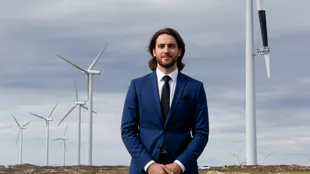 Why Wind Farms Paint One Turbine Blade Black to Protect Birds

 Dianna Russini Seeks Super Bowl Radio Row Credential Amid Media Return

 Clare Luvanga Leads Washington Spirit to Third Straight NWSL Championship with 2-1 Win

 Malta Stuns Sweden with Late Penalty Comeback in Rugby Europe Trophy

 BingX: Major Announcement of Far-Reaching Significance
 أونروا تحذر من أزمة إنسانية في غزة بسبب القيود على الإغاثة

 Big Brother’s Omar El Mayer Addresses Backlash, Confirms Relationship with Rhianna Collins
The world's first wooden satellite has been built by Japanese researchers who said their tiny cuboid craft will be blasted off on a SpaceX rocket in September.
Each side of the experimental satellite developed by scientists at Kyoto University and logging company Sumitomo Forestry measures just 10 centimetres (four inches).
The creators expect the wooden material will burn up completely when the device re-enters the atmosphere -- potentially providing a way to avoid the generation of metal particles when a retired satellite returns to Earth.
These metal particles could have a negative impact on the environment and telecommunications, the developers said as they announced the satellite's completion on Tuesday.
"Satellites that are not made of metal should become mainstream," Takao Doi, an astronaut and special professor at Kyoto University, told a press conference.
The developers plan to hand the satellite, made from magnolia wood and named LignoSat, to space agency JAXA next week.
It will be sent into space on a SpaceX rocket from the Kennedy Space Center in September, bound for the International Space Station (ISS), they said.
From there, the satellite will be released from the Japanese ISS experiment module to test its strength and durability.
"Data will be sent from the satellite to researchers who can check for signs of strain and whether the satellite can withstand huge changes in temperature," a Sumitomo Forestry spokeswoman told AFP on Wednesday.
Also on Tuesday, a rocket carrying a separate sophisticated satellite -- a collaboration between the European Space Agency (ESA) and JAXA -- blasted off from California on a mission to investigate what role clouds could play in the fight against climate change.
The EarthCARE satellite will orbit nearly 400 kilometres (250 miles) above Earth for three years.
V.Said--SF-PST