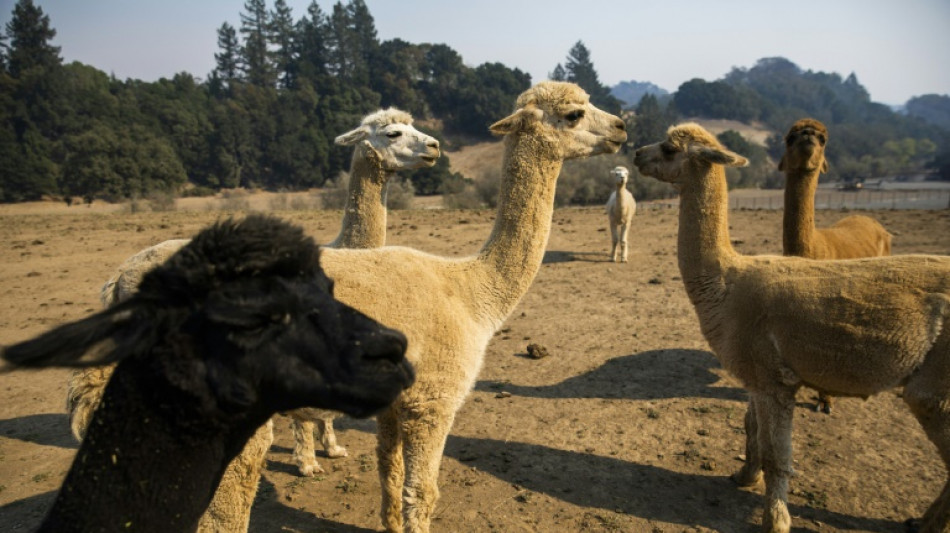
Bird flu detected in alpacas in US for the first time / Photo: Philip Pacheco - AFP/File

 Tamil Film 'Arivu' Selected for 57th International Film Festival of India

 أسعار الديزل في الولايات المتحدة تنخفض دون 6 دولارات لأول مرة منذ شهرين

 Why Wind Farms Paint One Turbine Blade Black to Protect Birds

 Dianna Russini Seeks Super Bowl Radio Row Credential Amid Media Return

 Clare Luvanga Leads Washington Spirit to Third Straight NWSL Championship with 2-1 Win

 Malta Stuns Sweden with Late Penalty Comeback in Rugby Europe Trophy

 BingX: Major Announcement of Far-Reaching Significance

 أونروا تحذر من أزمة إنسانية في غزة بسبب القيود على الإغاثة

 Big Brother’s Omar El Mayer Addresses Backlash, Confirms Relationship with Rhianna Collins
Cases of bird flu have been detected in alpacas at a US farm, authorities said Tuesday, as the disease spreads widely among dairy cattle and has infected two humans.
The National Veterinary Services Laboratories confirmed a highly pathogenic variant of bird flu virus known as H5N1 was detected at an Idaho farm, from which infected poultry were removed this month, the Agriculture Department said.
This detection is not surprising for several reasons, including the earlier infection at the farm, the department said. Still, it is the first time the virus has been found in alpacas -- members of the camel family that are native to the Andes and raised mainly for their fleece.
In recent weeks the H5N1 variant has been detected in more than 50 animal species in the United States, including dairy cows.
Two people working on farms have been found to have bird flu, albeit with only mild symptoms.
Last week the US Centers for Disease Control and Prevention said its risk assessment for the general public remained low but it did suggest it expects more cases.
Experts have said they are worried by the growing number of mammals infected by bird flu even if cases among people remain rare.
There is no evidence of human-to-human transmission at present but health officials fear that if the virus were to eventually spread widely it could mutate into a form that could pass between humans.
S.AbuJamous--SF-PST