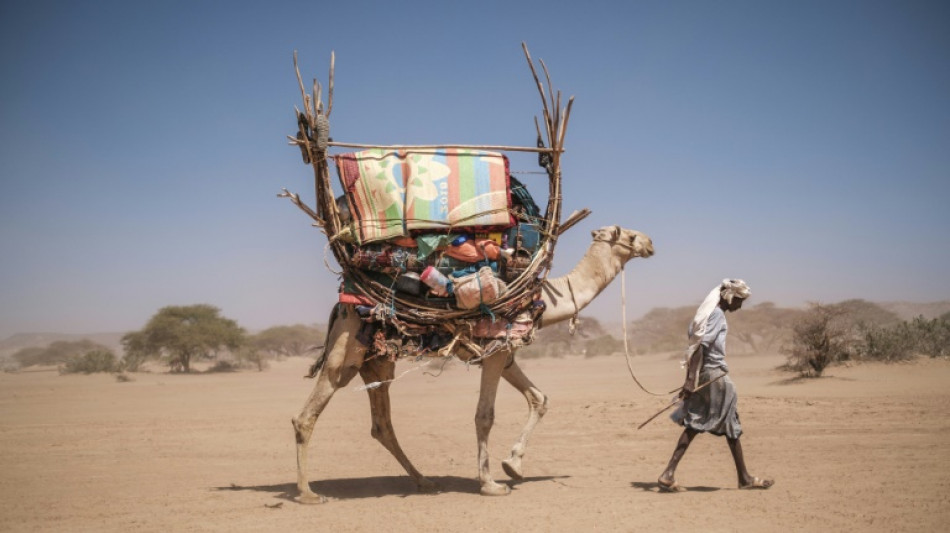
Demise of rangelands 'severely underestimated': report / Photo: EDUARDO SOTERAS - AFP

 Amaze Holdings (NYSE: AMZE) Executes Binding LOI to Acquire BullionFX | Alchemy, a Decentralized Gold-Backed Financial Ecosystem for Valued at US$155 Million
 Clashes between French teens, police as school blockades intensify
 Stocks move sideways despite oil moving lower
 African leaders to gather in Egypt for business summit
 UK decides against charging foreign visitors for museums

 Dallaglio to sell England World Cup winners' medal

 Brazil come from behind to beat Australia 4-2 in friendly

 Ruthless An retains Asian Games badminton crown as Kunlavut triumphs

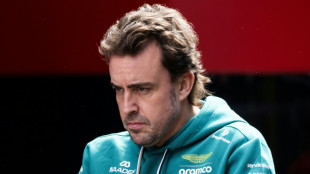 Alonso to stay with F1 team Aston Martin in 2027
 China badminton 'still strong' despite Asian Games slump

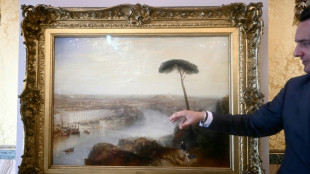 'Exceptional' Turner painting shown in Rome before sale

 European stocks climb as oil dips

 Spain aims to ban evictions until 2030 amid housing protests

 Kunlavut first Thai man to win Asian Games badminton singles gold

 French far right says antisemitism claims part of 'total war' to derail presidency bid
 'Gift from God': Rain brings relief from Indonesia toxic haze
 Ex-world snooker champion jailed for 7 years for child sex crimes

 French teens clash with police as school blockades intensify
 FIFA accuses UEFA of 'misinformation campaign' in bid for World Cup papers

 Myanmar airstrike toll hits 50 as families gather dead

 STARTRADER Raises Lloyd's of London Client Fund Insurance to USD 30 Million in Aggregate
 North Korean DMZ landmine blasts 'violation of armistice': Seoul

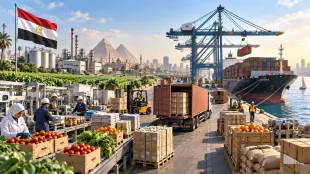 مصر تستهدف زيادة حصة الصادرات السلعية إلى 30% من الناتج المحلي

 العربي الأفريقي الدولي يوسع برامج إعداد القيادات المصرفية

 مجموعة الغندور ترصد 3 مليارات جنيه لتوسعات جديدة حتى 2030

From camel drivers in the Sahara to nomads on the Mongolian steppe, traditional herders the world over rely on earth's wildest open spaces to support an ancient way of life.
But the expansive plains, tundra and savanna they inhabit are in much greater peril than previously thought, researchers said Tuesday in a major reassessment of the health of these crucial environments.
As much as half of all rangelands -- encompassing some of nature's most striking vistas from the Arctic to the tropics, deserts and mountains -- are believed to be degraded, the report said.
Mostly natural grasslands used by livestock and wild animals to graze, they also include scrubland, mountain plateaus, deserts and wetlands.
Climate change, urban expansion, population growth and the conversion of land for farming was fuelling their destruction, said the report by the UN Convention to Combat Desertification (UNCCD).
Rangelands were grossly undervalued and their "silent demise" had passed mostly unnoticed despite what was at stake, said UNCCD executive secretary Ibrahim Thiaw.
"We as humanity have to pay attention to this," he told AFP.
The "persistent loss and deterioration" of rangelands would be felt beyond the pastoralist communities who have adapted to life in these environments over centuries, the report said.
- Climate ally -
Healthy rangelands are an asset in the fight against global warming, locking away carbon in soil and spurring the growth of vegetation that pulls planet-heating CO2 from the atmosphere.
Traditional farming customs -- such as rotating grazing areas and conserving scarce resources in difficult times -- improved soil health and its capacity to store carbon, the report's lead author Pedro Maria Herrera Calvo told AFP.
Poor policy, neglect and large-scale rangeland mismanagement had eroded soils, releasing carbon rather than storing it, and stripped the earth of the nutrients needed to support plant and animal life.
Rangelands are biodiversity hotspots, providing habitats for Africa's most iconic wildlife, and pasture for one billion grazing animals, the report said.
They account for one-sixth of the world's food production, it added, and underpin many national economies.
They are also a cultural bedrock for half a billion pastoralist people in more than 100 countries, mostly poor and marginalised communities such as the Bedouin, Fulani and Saami.
A quarter of the world's languages are spoken among pastoral groups who call these places home.
"It is part of our heritage," said Thiaw. "Losing it would mean not only losing ecosystems and losing the economy, but losing our own culture."
- 'Voiceless and powerless' -
Yet they are barely studied, said Calvo. Rosier outlooks did not reflect reality, and this reassessment by dozens of experts was long overdue, he added.
"We feel that the actual data estimating rangelands degradation around 25 percent is severely underestimated," he said. "We think that almost 35 -– even 50 percent –- of rangelands are already degraded."
Rangelands cover 80 million square kilometres -- more than half the land surface of earth. Protecting them would require policy that better supports the pastoralists who understand them best, the report said.
Instead of having a seat at the table however, nomadic communities were "voiceless and powerless", the report said.
Ignoring their wisdom in sustainably managing these complex environments -- or, worse still, forcing them off the land -- would only condemn these wild places and their custodians to an even bleaker future, Thiaw argued.
"It is important for this to be taken much more seriously."
M.Qasim--SF-PST