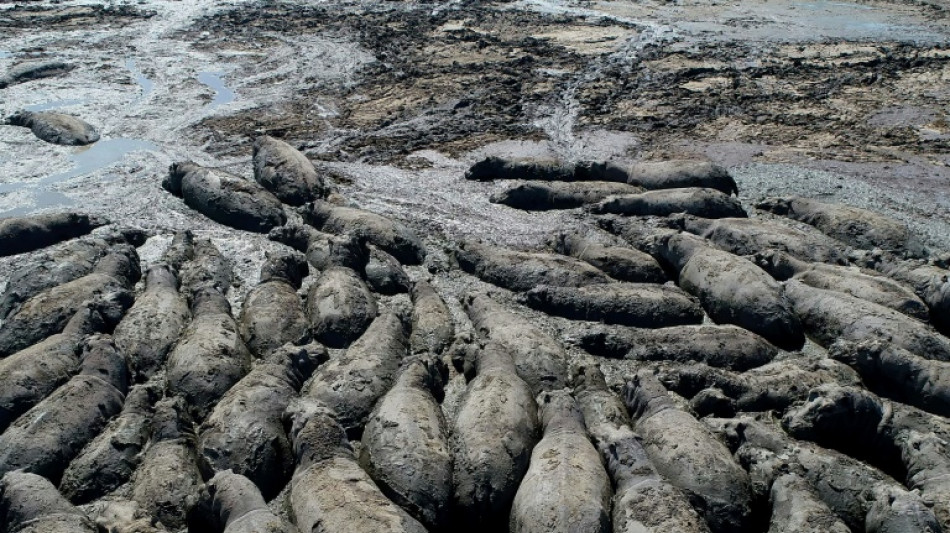
Herds of endangered hippos trapped in mud in drought-hit Botswana / Photo: Monirul Bhuiyan - AFP

 اللواء أبو هارون: توطين التدريب العسكري الفلسطيني بنسبة 100% رغم القيود الإسرائيلية

 Ali Almansoori Claims BTCC Double at Bahrain National Race Day

 حملة طبية مجانية في حزما تخفف الأعباء عن سكان القدس

 بلينكن يحذر من 'مغامرة طائشة' في الحرب على إيران ويؤكد خروجها أقوى

 وكالة الفضاء الأوروبية تطلق بيانات «إقليدس» لرسم خريطة كونية تضم 900 مليون مجرة

 Suede and Manic Street Preachers Deliver Electrifying Co-Headline Performance at Motorpoint Arena

 Trump Reduces Public Appearances Amid CIA-Mossad Warnings of Iranian Drone Plot

 Make-A-Wish Announces 2026 Starblazer Award Honorees; Allied World Becomes First Corporate Founder

 فنان من غزة يفوز بجائزة "كاتب الشجاعة" البريطانية
Herds of endangered hippos stuck in the mud of dried-up ponds are in danger of dying in drought-struck Botswana, conservation authorities told AFP Friday.
Southern Africa has been affected by severe drought, caused by the El Nino weather phenomenon, which has threatened harvests and plunged millions into hunger. Several countries in the region have recently declared a state of national disaster.
Near the vast wetlands of the Okavango Delta in northern Botswana, the dried-up Thamalakane River has forced herds of hippos to head for natural water reserves close to the tourist town of Maun.
"The river system dries up and animals are in a compromised situation," said Lesego Moseki, spokesperson for Department of Wildlife and National Parks (DWNP) in Botswana's capital Gaborone.
Botswana is home to one of the world's largest populations of hippos living in the wild, estimated at between 2,000 and 4,000 by the International Union for Conservation of Nature (IUCN).
"The riverine vegetation is poor and the hippo in Ngamiland (northwestern district) depends on the water flowing through the Okavango Delta systems," Moseki added. They were still looking into the how many hippos had died in the pools, he said.
Hippos have thick but sensitive skin, meaning they need to bathe regularly to avoid sunburn and usually live in humid areas.
Without water, they can become aggressive and approach villages. Local authorities are calling for hippos to be relocated to reserves to avoid conflict with humans.
El Nino is a naturally occurring climate pattern typically associated with increased heat worldwide, leading to drought in some parts of the world and heavy rains elsewhere.
N.AbuHussein--SF-PST


