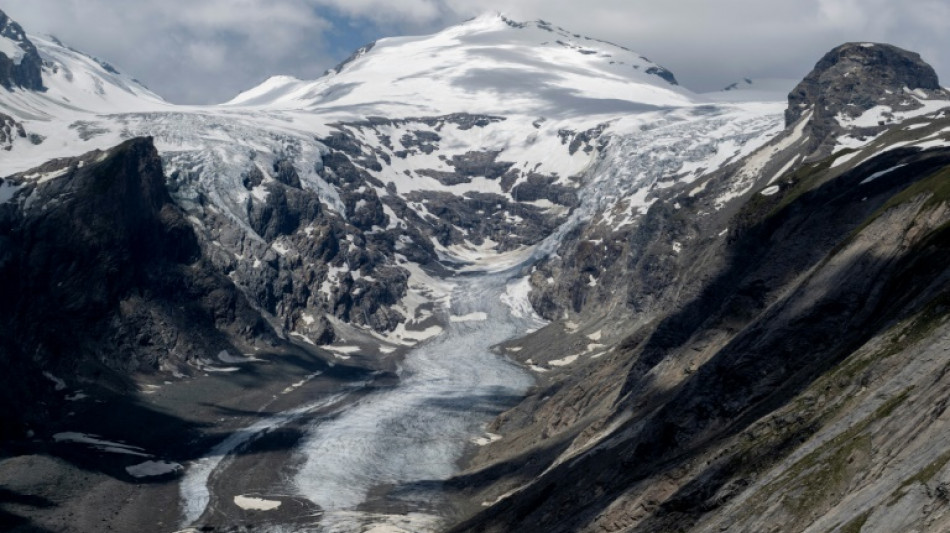
Austria risks becoming largely 'ice-free' in 45 years: Alpine Club / Photo: JOE KLAMAR - AFP

 استقرار أسعار الذهب مع ترقب المستثمرين لقرارات الفائدة الأمريكية

 Kuwait and Egypt Sign Eight Agreements to Expand Strategic Partnership

 تقارير إسرائيلية تكشف عن محاولات نتنياهو وزملائه للتأثير على نتائج الانتخابات عبر استهداف الفلسطينيين

 بنك القدس يتعهد بتأمين احتياجات مرضى السكري خلال أمسية توعوية في رام الله

 AI Job Losses at NAB, Qantas, Canva and Atlassian Signal Market Shift, Not Workforce Collapse

 Owner Review: 2023 Volvo XC60 Recharge Exceeds Expectations for Calgary Driver

 Indiana River Otters Make Comeback After Decades of Conservation Efforts

 Tamil Film 'Arivu' Selected for 57th International Film Festival of India
Austria is set to become largely "ice-free" within 45 years, the country's Alpine Club warned Friday, as two of its glaciers last year melted by more than 100 metres (330 feet).
Amid growing concerns over the effects of extreme warming on glaciers around the world, the latest report by the Austrian Alpine Club (OeAV) showed that rapid glacial retreat over the past seven years had accelerated.
The study found that 93 Austrian glaciers observed by the organisation retreated by 23.9 metres (78.4 feet) on average last year, marking the third-biggest glacier melt since measurements began in 1891.
Two of the glaciers showed especially drastic declines, with the Pasterze shrinking by 203.5 metres and the Rettenbachferner by 127 metres.
The 2023 readings came after the worst year on record for glacier melt in Austria, with glaciers shrinking by 28.7 metres (94.2 feet) on average in 2022.
Faced with extreme warming in the Alps, glacial ice in Austria could largely disappear within 45 years, the Alpine Club warned, adding that restrictive climate protection measures were introduced too late.
"In 40 to 45 years, all of Austria will be pretty much ice-free," Andreas Kellerer-Pirklbauer, head of the Alpine Club's glacier measurement service, told reporters on Friday.
The OeAV urged increased protection of glaciers as part of overall efforts to sustain biodiversity, noting that expansions of ski resorts had put Alpine regions "under constant pressure".
According to the World Meteorological Organization (WMO), major glaciers worldwide suffered the largest loss of ice since records began in 1950, "driven by extreme melt in both western North America and Europe".
In Switzerland, where the WMO is based, Alpine glaciers have lost 10 percent of their volume in the past two years alone.
F.AbuShamala--SF-PST


