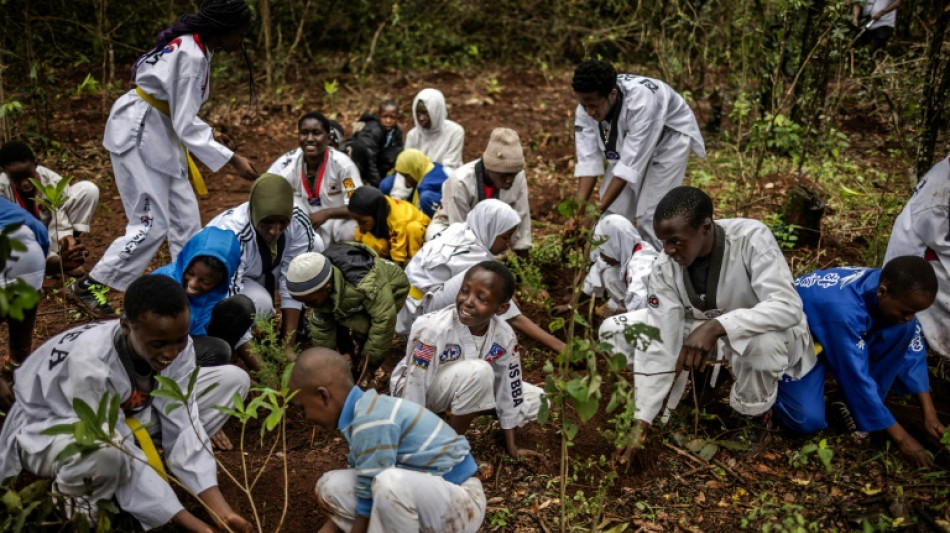
Planting trees in wrong places heats the planet: study / Photo: LUIS TATO - AFP

 Amaze Holdings (NYSE: AMZE) Executes Binding LOI to Acquire BullionFX | Alchemy, a Decentralized Gold-Backed Financial Ecosystem for Valued at US$155 Million

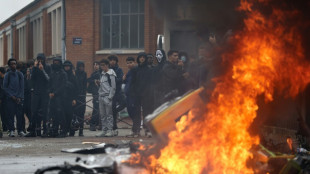 Clashes between French teens, police as school blockades intensify
 Stocks move sideways despite oil moving lower
 African leaders to gather in Egypt for business summit

 UK decides against charging foreign visitors for museums

 Dallaglio to sell England World Cup winners' medal

 Brazil come from behind to beat Australia 4-2 in friendly

 Ruthless An retains Asian Games badminton crown as Kunlavut triumphs

 Alonso to stay with F1 team Aston Martin in 2027
 China badminton 'still strong' despite Asian Games slump

 'Exceptional' Turner painting shown in Rome before sale

 European stocks climb as oil dips

 Spain aims to ban evictions until 2030 amid housing protests

 Kunlavut first Thai man to win Asian Games badminton singles gold

 French far right says antisemitism claims part of 'total war' to derail presidency bid

 'Gift from God': Rain brings relief from Indonesia toxic haze
 Ex-world snooker champion jailed for 7 years for child sex crimes

 French teens clash with police as school blockades intensify

 FIFA accuses UEFA of 'misinformation campaign' in bid for World Cup papers

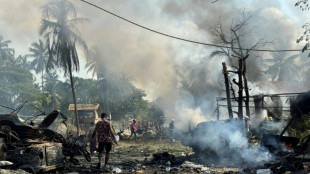 Myanmar airstrike toll hits 50 as families gather dead
 STARTRADER Raises Lloyd's of London Client Fund Insurance to USD 30 Million in Aggregate
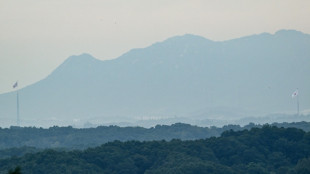 North Korean DMZ landmine blasts 'violation of armistice': Seoul

 مصر تستهدف زيادة حصة الصادرات السلعية إلى 30% من الناتج المحلي

 العربي الأفريقي الدولي يوسع برامج إعداد القيادات المصرفية

 مجموعة الغندور ترصد 3 مليارات جنيه لتوسعات جديدة حتى 2030

Planting trees in the wrong places can actually contribute to global warming, scientists said on Tuesday, but a new map identifies the best locations to regrow forests and cool the planet.
Trees soak up carbon dioxide and restoring areas of degraded woodlands or planting saplings to boost forest cover is one tool in the fight against climate change.
But in some cases, more trees means less sunlight is reflected back from the earth's surface and more heat is absorbed by the planet, according to a study in the journal Nature Communications.
"There are some places where putting trees back leads to net climate negative outcomes," Susan Cook-Patton, one of the study's co-authors, told AFP.
Scientists had already understood that restoring tree cover led to changes in albedo -- the amount of solar radiation bounced back off the planet's surface -- but didn't have the tools to account for it, she said.
Using new maps, researchers were able to consider, for the first time, the cooling effect from trees and the warming caused by decreased albedo.
They found that projects that didn't factor albedo into the equation overestimated the climate benefit of additional trees by between 20 to 80 percent.
But the maps also provide the tools to help policymakers identify where best to funnel scarce resources for maximum climate impact, said Cook-Patton, senior forest restoration scientist at The Nature Conservancy.
"There's also lots of places still where restoring tree cover is a great idea for climate change. We're just trying to help people find those spots," she said.
- Return on investment -
Albedo is highest in the frozen areas of the world, and mirror-like clean snow and ice with high levels of albedo reflect up to 90 percent of the sun's energy.
It is one of Earth's major cooling agents, along with lands and oceans that absorb excess heat and planet-warming greenhouse gas emissions.
Many countries have promised to plant billions of trees as a bulwark against global warming but not all efforts deliver for the planet equally, this study showed.
Moist, tropical environments like the Amazon and Congo Basin boasted high carbon storage and low changes in albedo, making them ideal locations for restoring forest cover.
The opposite was true in temperate grasslands and savanna, Cook-Patton said.
Even projects in the best locations were probably delivering 20 percent less cooling than estimated when changes to albedo were taken into account, she said.
But she stressed that restoring forests delivered undeniable benefits for people and the planet, such as supporting ecosystems and providing clean air and water, among many.
"We really don't want our work to be a critique of the movement writ large," she said.
"(But) we can't put trees everywhere. We don't have enough money or time or resources or people or seedlings.
"And so it's really about making the most of limited investments and getting the greatest climate return per hectare of investment," she added.
H.Darwish--SF-PST