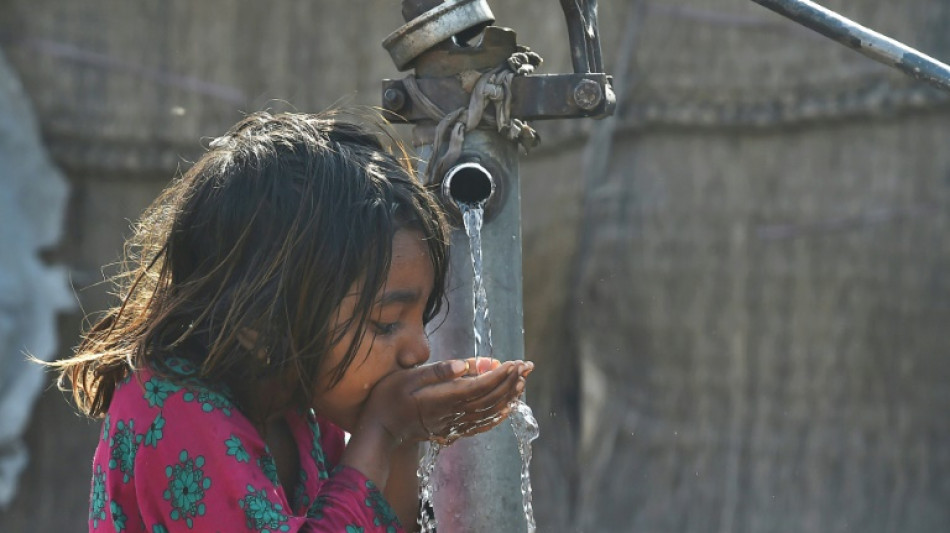
UN warns against thirsty tech to solve water crisis / Photo: ARIF ALI - AFP/File

 Amaze Holdings (NYSE: AMZE) Executes Binding LOI to Acquire BullionFX | Alchemy, a Decentralized Gold-Backed Financial Ecosystem for Valued at US$155 Million

 Clashes between French teens, police as school blockades intensify

 Stocks move sideways despite oil moving lower
 African leaders to gather in Egypt for business summit

 UK decides against charging foreign visitors for museums

 Dallaglio to sell England World Cup winners' medal

 Brazil come from behind to beat Australia 4-2 in friendly

 Ruthless An retains Asian Games badminton crown as Kunlavut triumphs

 Alonso to stay with F1 team Aston Martin in 2027

 China badminton 'still strong' despite Asian Games slump

 'Exceptional' Turner painting shown in Rome before sale

 European stocks climb as oil dips

 Spain aims to ban evictions until 2030 amid housing protests

 Kunlavut first Thai man to win Asian Games badminton singles gold

 French far right says antisemitism claims part of 'total war' to derail presidency bid

 'Gift from God': Rain brings relief from Indonesia toxic haze

 Ex-world snooker champion jailed for 7 years for child sex crimes

 French teens clash with police as school blockades intensify

 FIFA accuses UEFA of 'misinformation campaign' in bid for World Cup papers

 Myanmar airstrike toll hits 50 as families gather dead
 STARTRADER Raises Lloyd's of London Client Fund Insurance to USD 30 Million in Aggregate

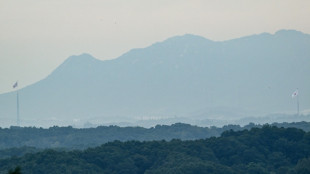 North Korean DMZ landmine blasts 'violation of armistice': Seoul

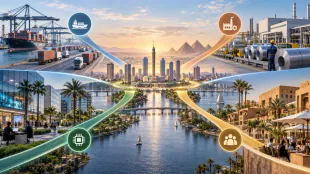
 مصر تستهدف زيادة حصة الصادرات السلعية إلى 30% من الناتج المحلي
 العربي الأفريقي الدولي يوسع برامج إعداد القيادات المصرفية

 مجموعة الغندور ترصد 3 مليارات جنيه لتوسعات جديدة حتى 2030

The world needs to better manage its freshwater resources but thirsty new technologies touted as solutions could lead to "serious problems" if left unchecked, a UN report warned Friday.
Roughly half of the planet's population is facing grave water shortages, with climate change-linked droughts affecting more than 1.4 billion people between 2002 and 2021, the report for the UN cultural agency UNESCO said.
As of 2022, more than 2 billion people were without access to safely managed drinking water, while 3.5 billion people lacked access to decent toilets, it added.
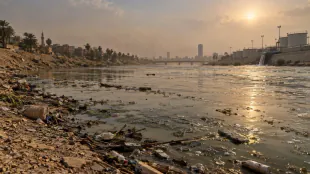
On top of that, pharmaceuticals, hormones and industrial chemicals are seeping into the world's rivers.
The report, titled "Water for prosperity and peace", called for more water education, data collection and investment to address the crisis.
It also highlighted the limits of new computer-led solutions.
"An array of technologies is available to improve both water supply, water use efficiency and the quality and extension of" sanitation services, it said.
But "several rapidly emerging technologies are highly water-intensive and, if left unchecked, could lead to serious problems in the near future."
Artificial intelligence (AI) had "the potential to enhance (river) basin management, emergency response, and the operation and maintenance of water supply and wastewater treatment plants," said the report.
But "AI and related technologies require large volumes of water for computer cooling systems, in addition to the (often water-intensive) energy required to power the equipment."
- Flawed solutions -
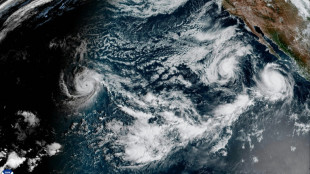
While climate change is projected to intensify patterns of record rainfall and drought in coming years, solutions to tackle that problem were also using up too much water, it added.
One such technique, called carbon capture and storage, syphons off CO2 from the exhaust of fossil fuel-fired power plants and heavy industry such as steel and cement factories in a bid to reduce planet-heating carbon pollution.
But "carbon capture and storage systems... are extremely energy- and water-intensive," the report said.
Energy production accounts for between 10 and 15 percent of global water withdrawals, both to extract fossil fuels and cool thermal and nuclear power stations, it said.
While wind, solar and geothermal energy systems are more water-efficient, they still require lithium batteries for power storage.
Yet the extraction of lithium and other critical minerals for solar panels "is usually highly water-intensive, with significant risks to water quality" especially groundwater, ecosystems and local populations, the report said.
X.Habash--SF-PST