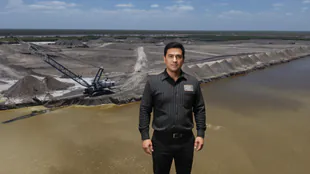
Greenpeace calls for high seas protected area in Galapagos / Photo: Ernesto BENAVIDES - AFP

 US Jobless Claims Rise to 200,000 but Layoffs Remain Historically Low

 Euro-Area Growth Slows to 0.4% While Employment Stalls

 UK Economy Grows 0.7% in Third Quarter as Services Lead Expansion

 India's Retail Inflation Reaches 6.09% as Food Prices Accelerate

 China's October Activity Data Reveal a Weak Start to the Fourth Quarter
 Nobel Laureate Venkatraman Ramakrishnan’s Journey from Academic Setbacks to Scientific Triumph

 استقرار أسعار الذهب مع ترقب المستثمرين لقرارات الفائدة الأمريكية
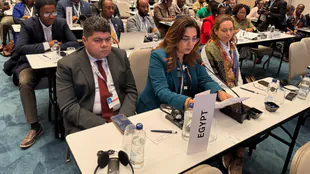
 Kuwait and Egypt Sign Eight Agreements to Expand Strategic Partnership

 تقارير إسرائيلية تكشف عن محاولات نتنياهو وزملائه للتأثير على نتائج الانتخابات عبر استهداف الفلسطينيين

 بنك القدس يتعهد بتأمين احتياجات مرضى السكري خلال أمسية توعوية في رام الله

 AI Job Losses at NAB, Qantas, Canva and Atlassian Signal Market Shift, Not Workforce Collapse

 Owner Review: 2023 Volvo XC60 Recharge Exceeds Expectations for Calgary Driver
Greenpeace on Monday called for the creation of a high seas marine protected zone under a new UN treaty to secure a much wider area around Ecuador's famous Galapagos archipelago.
The islands, whose unique fauna and flora inspired British scientist Charles Darwin's theory of evolution, are home to one of the world's largest marine protected areas, in the eastern Pacific Ocean.
But "just outside the Galapagos protected area, industrial fishing fleets continue to plunder the oceans. We must protect this area," Ruth Ramos of the Greenpeace Protect the Oceans campaign said in a statement.
Greenpeace urged governments to ratify the so-called High Seas Treaty adopted by United Nations member states last June to allow for the creation of an expanded protected area in international waters, outside of any country's jurisdiction.
"This historic treaty, once ratified, will enable us to protect a vast area of international waters near the Galapagos Islands, safeguarding a vital migratory superhighway for marine life such as sharks and turtles," said Ramos.
The environmental activist group is carrying out a scientific expedition in the Galapagos, which is home to some 3,000 marine species like sea turtles, hammerhead sharks, sea lions and marine iguanas, to name a few.
The Galapagos islands, some 1,000 kilometers (600 miles) off the mainland of Ecuador, have flora and fauna found nowhere else in the world.
- 'Historic opportunity' -
The existing Galapagos marine reserve, a UNESCO World Heritage site created in 1998, is "one of the best examples of ocean protection in action. But it is still an exception in a world where only three percent of the ocean is currently fully or highly protected," Ramos said earlier in the expedition.
The High Seas Treaty was adopted after more than 15 years of discussions to extend environmental protections to international waters which make up more than 60 percent of the world's oceans.
It can go into effect 120 days after being ratified by 60 countries -- a goal activists hope to reach by 2025.
So far it has been signed by several dozen states but ratified by only two: Palau and Chile.
Ramos said the governments of Ecuador, Panama, Colombia and Costa Rica have taken "admirable steps" to protect the oceans in their national waters.
Under the treaty, "they now have a historic opportunity to demonstrate global leadership by protecting this key area of the high seas and further safeguarding the beauty and biodiversity of the Galapagos region for future generations."
Greenpeace said this could be the first marine protected area created since the treaty was adopted and "would remove the threat of industrial fishing fleets."
"It would also protect a key area of ocean that many threatened migratory species from Galapagos and adjacent marine regions must cross in order to reach key coastal habitats for pupping, nesting and feeding."
C.Hamad--SF-PST