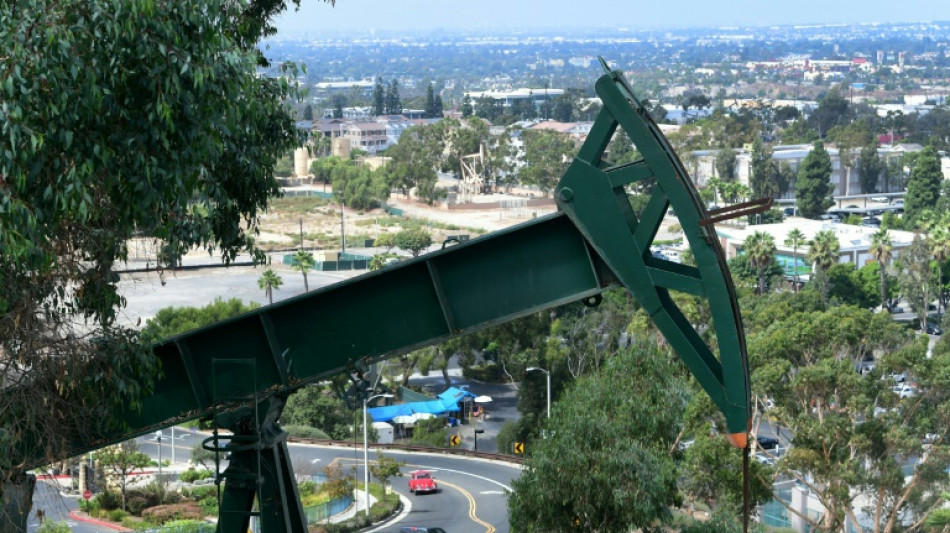
Los Angeles set to ban oil drilling in city

 Kubayi Warns Residents to Vacate Hijacked Buildings as State Prepares Seizures

 Van Gogh’s ‘Châtaigniers en Fleurs’ Sets $285m Record at Sotheby’s

 محكمة الاحتلال تمدد اعتقال مدير مستشفى كمال عدوان دون تهمة

 Global Scams Remain Widespread: Nearly Two in Three Adults Worldwide Report Scam Encounters, 9% Lost Money

 OPEC Chief: Oil to Remain Major Energy Source for Decades Amid Global Shift

 Hyundai Offers £1,000 Deposit Contribution on Black Friday for Tucson, Santa Fe, Kona, Ioniq 9 and Bayon
Los Angeles looks set to ban oil drilling in the city after councillors voted Wednesday to stop the construction of new wells and wind down those already operating.
While Hollywood, palm trees and sunny skies may be the popular image of the second biggest city in the United States, the metropolis is also the largest urban oil field in the country.
Thousands of active wells sit in densely populated and mostly low-income neighborhoods, abutting schools, homes, parks, shopping malls or cemeteries.
Though the heaving pump jacks are a part of the landscape, residents and environmental activists have long campaigned for their removal, saying they are a health risk.
City councillors voted Wednesday to ban new wells and ordered a study on how to phase out existing sites.
"Oil drilling in Los Angeles might have made sense in the early part of the 20th century, but it sure doesn't make a lot of sense now that we've become a megalopolis at the beginning of the 21st century," said Paul Krekorian, chairman of the city's budget committee.
There are 26 oil and gas fields in Los Angeles, and over 5,000 wells, according to the Department of City Planning.
"There are oil and gas facilities in nearly every section of the 503 square miles (1,300 square kilometers) of the city," Vincent Bertoni, the department's director, noted last year.
Ashley Hernandez, who has campaigned for the shuttering of drill sites, said she had been sickened as a child by the facilities, suffering nosebleeds and eye infections.
"I've lived in the front lines of neighborhood oil drilling my entire life and can't begin to express what I'm feeling inside being here in this moment," she told reporters after the vote.
H.Jarrar--SF-PST



