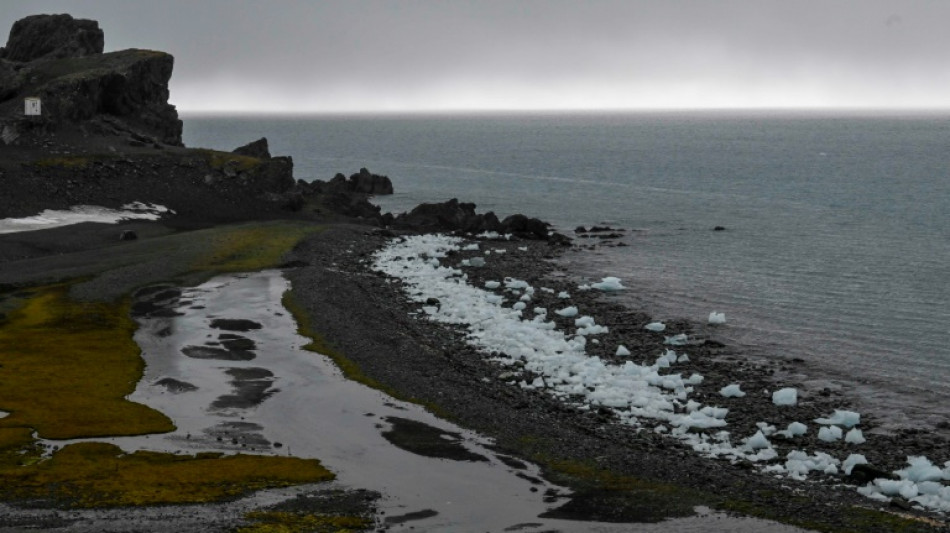
'Very worried': Scientists fret as Antarctic sea ice dwindles / Photo: Juan Barreto - AFP/File

 Amaze Holdings (NYSE: AMZE) Executes Binding LOI to Acquire BullionFX | Alchemy, a Decentralized Gold-Backed Financial Ecosystem for Valued at US$155 Million
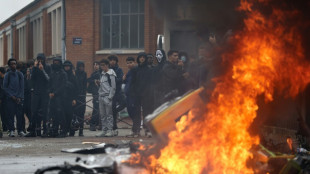 Clashes between French teens, police as school blockades intensify
 Stocks move sideways despite oil moving lower
 African leaders to gather in Egypt for business summit
 UK decides against charging foreign visitors for museums

 Dallaglio to sell England World Cup winners' medal

 Brazil come from behind to beat Australia 4-2 in friendly

 Ruthless An retains Asian Games badminton crown as Kunlavut triumphs

 Alonso to stay with F1 team Aston Martin in 2027
 China badminton 'still strong' despite Asian Games slump
 'Exceptional' Turner painting shown in Rome before sale

 European stocks climb as oil dips

 Spain aims to ban evictions until 2030 amid housing protests

 Kunlavut first Thai man to win Asian Games badminton singles gold

 French far right says antisemitism claims part of 'total war' to derail presidency bid

 'Gift from God': Rain brings relief from Indonesia toxic haze
 Ex-world snooker champion jailed for 7 years for child sex crimes
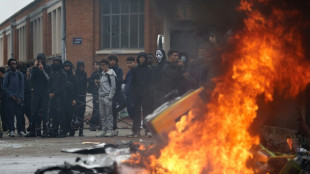 French teens clash with police as school blockades intensify

 FIFA accuses UEFA of 'misinformation campaign' in bid for World Cup papers

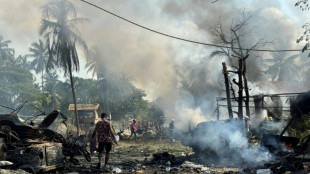 Myanmar airstrike toll hits 50 as families gather dead
 STARTRADER Raises Lloyd's of London Client Fund Insurance to USD 30 Million in Aggregate

 North Korean DMZ landmine blasts 'violation of armistice': Seoul
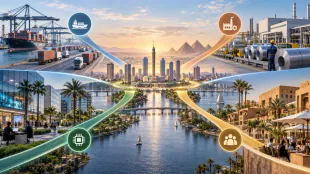
 مصر تستهدف زيادة حصة الصادرات السلعية إلى 30% من الناتج المحلي
 العربي الأفريقي الدولي يوسع برامج إعداد القيادات المصرفية

 مجموعة الغندور ترصد 3 مليارات جنيه لتوسعات جديدة حتى 2030

Sea ice levels in Antarctica have registered historic lows for three consecutive years, portending grave consequences for life on Earth as we know it.
But looking out over the southernmost continent, scientist Miguel Angel de Pablo laments that humanity seems to be oblivious to the warnings.
"We (scientists) are very worried... because we don't see how we can solve it ourselves," the Spanish planetary geologist told AFP on Livingston Island in the South Shetland Antarctic archipelago.
"The more alerts we send out... to make society aware of what is happening, it seems we are not listened to, that we are (perceived as) alarmist" despite the evidence, he said.
The US National Snow & Ice Data Center (NSIDC) reported Wednesday that minimum Antarctic sea ice extent came in at under two million square kilometers (772,000 square miles) for a third consecutive February -- the height of the southern summer thaw season.
Minimum sea ice cover for all three years were the lowest since records began 46 years ago.
Melting sea ice has no immediate impact on ocean levels, as it forms by freezing salt water already in the ocean.
But the white ice reflects more of the sun's rays than darker ocean water, and its loss accentuates global warming while exposing the on-land freshwater ice sheet, which could cause a catastrophic sea level rise if it melts.
"Even though we are far from any inhabited part of the planet, in reality what happens in Antarctica affects everything" in the rest of the world, said De Pablo.
- 'Not easily undone' -
A study last year found that nearly half of Antarctica's ice shelves -- floating sheets attached to the landmass -- have also reduced in volume in the past 25 years, releasing trillions of tons of meltwater into the oceans.
This has implications not only for sea levels but also for ocean salinity and temperature, said De Pablo.
Some scientists say evidence for climate change impact on sea ice melt in Antarctica -- known for significant annual variations in its summer thaws and winter freezes -- is less clear than in the Arctic north pole.
What is not in doubt is that continued global warming caused by human emissions of greenhouse gases will affect these patterns in future.
De Pablo, who has devoted 16 years of his life to studying Antarctic ice, told AFP it may already be too late to stop the trend.
"The problem is that these degradations are not easily undone," he said.
"Even if today we (changed) the rhythms of life that we have in Western societies, tomorrow the glaciers would not cease to degrade nor the frozen soils to be lost," with all that entails.
Scientists estimate global temperatures are already 1.2 degrees Celsius hotter overall than pre-industrial levels. The 2015 Paris Agreement had set out to limit warming to 1.5 C (2.7 Fahrenheit) by curbing planet-warming emissions.
"We have to ask ourselves whether the manner in which we live our daily lives is truly worth it because in the end we will lose our planet," said De Pablo.
"There is no second planet" Earth, he added.
L.AbuTayeh--SF-PST