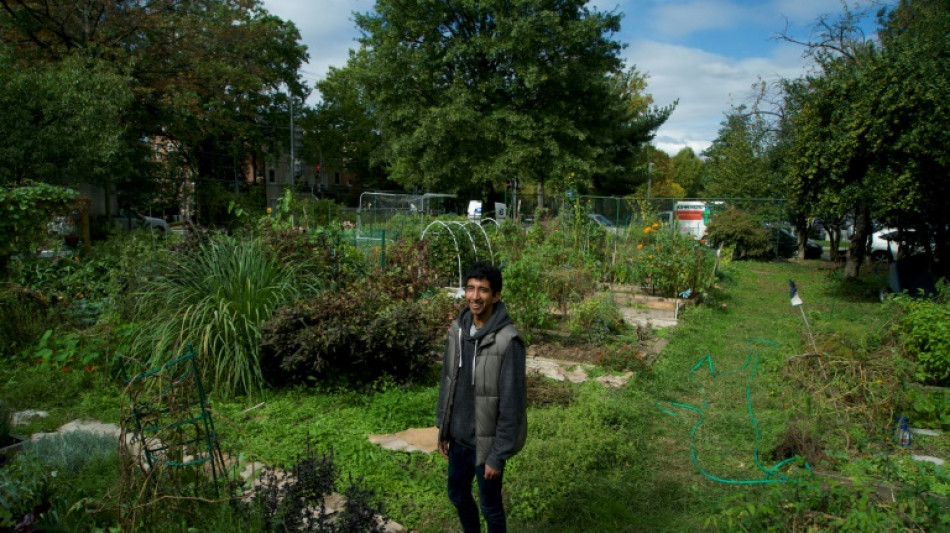
How climate conscious Americans reduce their carbon footprints / Photo: Bastien INZAURRALDE - AFP Photo

 محكمة الاحتلال تمدد اعتقال مدير مستشفى كمال عدوان دون تهمة

 محافظ طولكرم يدعو لمبادرة مجتمعية لخفض تكاليف الأعراس وتعزيز التكافل

 Shinde Clarifies Torn Photo Controversy Amid Sonia Gandhi Book Protest

 AI Hacking Tool Artex Enables Global Cyberattacks by Low-Skill Actors

 BING X: اختفاء 22,624.66 وحدة من عملة SNC على منصة بينغ إكس — ما مدى أمان الرموز المودعة لدى المنصة؟ وهل يُعلَّق ترخيصها بموجب لائحة MiCAR

 BING X: 22,624.66 SNC have disappeared at BingX – how safe are tokens on BingX? Will BingX’s MiCAR licence be suspended?

 Dubai Police Expand Luxury Patrol Fleet with 525-hp Defender

Bala Sivaraman drives an electric car around the US capital Washington, buys used clothes and furniture and cooks his vegan meals on an induction stove he bought after parting ways with his gas oven.
Sim Bilal relies exclusively on public transit -- no easy feat in car-centric Los Angeles -- uses refurbished tech and lives in an apartment with solar panels.
As world leaders prepare to meet for crunch COP28 climate talks in the United Arab Emirates next month, some environmentally-conscious Americans are demonstrating it's possible to rein in their carbon emissions, aligning their actions with their values in a country where such lifestyle choices are rare.
"When we are inundated with a lot of climate doomsday news, it can be really difficult to feel we have something to ground us," Sivaraman told AFP.
"What is so powerful about living a sustainable life or committing ourselves to zero waste living practices is that it gives us that sense of hope, because it reclaims our power."
Living on opposite ends of the country, both young men work as environmental activists and have carbon footprints of three to four tons per year, according to self-reported estimates generated by carbonfootprint.com.
That's well below the average Americans' annual footprint of around 15 tons, which is roughly three times the global average.
On a brisk autumn day, Sivaraman brings his compost to a local community garden, unlocks a sorting bin, and begins placing leftover vegan hotdogs, paper plates and other biodegradables inside.
"This was from a party at my friend's animal refuge the other day," the 28-year-old, who works in communications for the nonprofit Earthjustice, says, covering the pile with the dry brown waste to aid in the decomposition process.
After six months, the nutrient-rich soil is used in the neighboring plots to help tomatoes, cilantro and other vegetables grow.
"Composting diverts organic waste out of landfills," he explains, and because it decomposes in the presence of oxygen, it produces far less climate-impacting methane. It also helps foster a sense of common purpose and community, he adds.
- Thrifting and skating -
Bilal, 21, got his first taste of direct action last year after disrupting the LA mayoral debates, making local news as he led demands for candidates to release their climate action plans.
"This is the number one problem for my generation," he told AFP. He now organizes for the California Green New Deal coalition and Youth Climate strike in Los Angeles.
Though getting a driver's license is a rite of passage for US teens, Bilal decided when he turned 16 the climate cost was too great to bear.
When he's not riding the LA Metro or taking intercity trains, he can be found on his One Wheel: a self-balancing electric skateboard he finds essential for the last mile in a city where public transport can be lacking.
The clothes he's wearing during a video interview are four years old and his iPad is a five-year-old model that he recently had repaired after cracking its screen, instead of buying a new one -- measures that embody his philosophy of buying less, and buying to last.
"It is hard because some things look really cool -- maybe you want to jump on a trend, but for me it's not worth the cost," he adds.
Sivaraman -- who also participates in direct action with the Sunrise Movement and was arrested for the first time in September at the Federal Reserve building in New York -- said his health and wellbeing had only improved since he made more climate-aware choices.
The idea that weaning off fossil fuels would cause people to have "miserable, sad lives" is a "very effective PR tactic" pushed by the industry, he said.
"Across the board -- health, emotional happiness, financially... There's so many benefits to living a zero waste, sustainable life, and I'm living proof that's the case."
N.Shalabi--SF-PST



