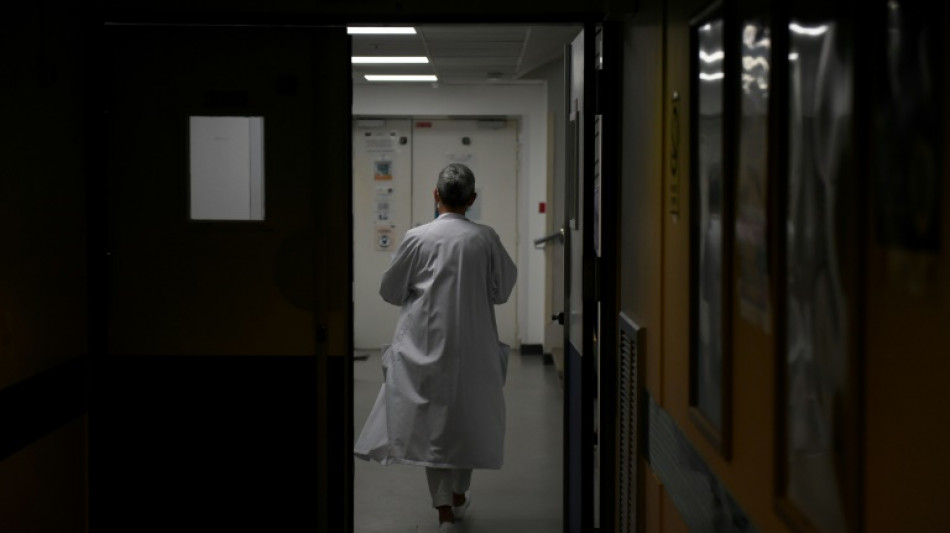
Monkeypox still global health emergency: WHO / Photo: JULIEN DE ROSA - AFP/File

 El Nino’s Weakening Grip on Tamil Nadu Rainfall Hinges on Potential Cyclone

 South Africa Places 36 Hospitals on Standby for Possible Imported Ebola Cases

 Two A1 Crashes Create Kilometres of Rush-Hour Congestion

 Luxembourg City Plans €13 Million Abrigado Centre for 2029

 Luxembourg Housing Petition Passes Threshold for Parliamentary Consideration

 Raheem Sterling Receives Suspended Sentence After Lamborghini Crash

 Tamil Nadu Secures Rs 58,214 Crore in Investments at Vettri Conclave

 فرنسا تدعو لتجريم "الفصل العنصري القائم على الجنس" دولياً

 أزمة الصواريخ الاعتراضية في البنتاغون: استنزاف المخزونات يفرض تعبئة صناعية حتى 2030

 Huawei Found Guilty of Trade Secret Theft in Landmark US Case

 Indian Markets Set for Gain as Foreign Inflows Offset Tariff Fears
The World Health Organization said Tuesday that its emergency committee had determined that monkeypox should continue to be classified as a global health emergency.
Following a meeting on October 20 about the virus that suddenly started spreading across the world in May, the experts "held the consensus view that the event continues to meet the ... criteria for a Public Health Emergency of International Concern," WHO said in a statement.
The UN health agency first declared the so-called PHEIC -- its highest level of alarm -- on July 23, and the experts said that while some progress had been made in reining in the disease, it was too soon to declare the emergency over.
WHO chief Tedros Adhanom Ghebreyesus had accepted and agreed with the experts' advice, the statement said.
Since monkeypox suddenly began spreading beyond the West African countries where it has long been endemic six months ago, it has killed 36 people out of more than 77,000 cases across 109 countries, according to a WHO count.
The outbreak outside of West Africa has primarily affected young men who have sex with men.
But since peaking in July, the number of people infected with the disease that causes fever, muscular aches and large boil-like skin lesions, has consistently fallen, particularly in Europe and North America, the hardest hit areas in the early stages of the global outbreak.
The number of new global cases fell by 41 percent in the seven days up to Monday compared to the previous week, the WHO said.
But WHO's emergency committee stressed that there were a number of lingering causes for concern.
They listed ongoing transmission in some regions, continuing preparedness and response inequity within and between countries, and the potential for greater health impacts if the virus begins spreading more among more vulnerable populations.
They also pointed to the continuing risk of stigma and discrimination, weak health systems in some developing countries leading to under-reporting and the lack of equitable access to diagnostics, antivirals and vaccines.
I.Saadi--SF-PST

