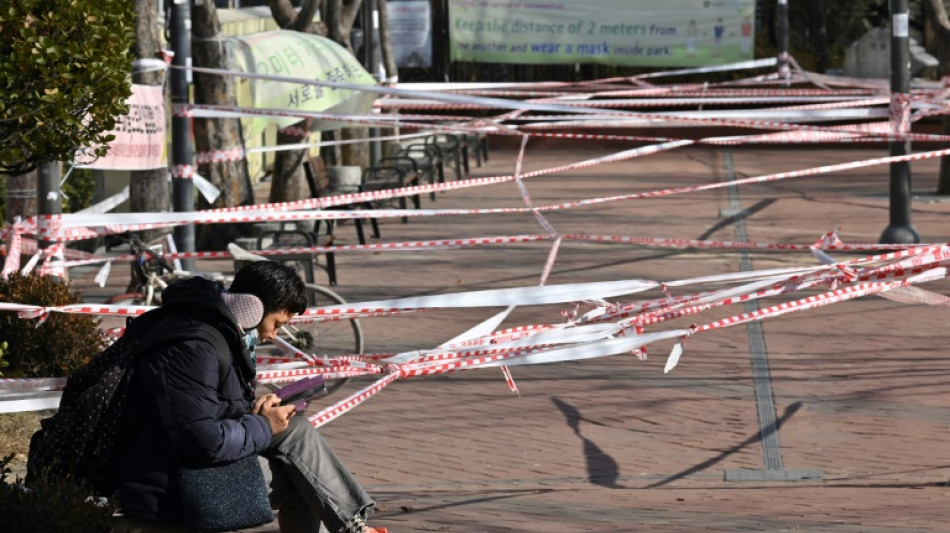
S. Korea drops vaunted 'test and trace' strategy as Omicron surges

 رئيس جامعة القدس يستعرض نموذج الشراكة بين التعليم العالي والصناعة في قمة QS بأبوظبي

 ابتكارات فلسطينية في مسابقة "سيف" العالمية بالرياض

 تحذير أمني من تكثيف إسرائيل إرسال رسائل نصية مستهدفة للفلسطينيين

 Polanski Accuses Sadiq Khan of Undermining Thames Water Nationalisation

 Nigeria Envoy's $61 Billion Claim Faces Scrutiny Amid Diplomatic Tensions

 وزير المالية يبحث مع برنامج الأمم المتحدة الإنمائي توسيع الدعم في غزة والضفة

 المغرب يبلغ محكمة التحكيم الرياضي بشأن اتصال محتمل بين مسؤول سنغالي ومحكم في قضية كأس أفريقيا
South Korea said Wednesday it was dropping its vaunted "trace, test and treat" programme as a surge in Omicron cases threatens to overwhelm the country's healthcare system.
At the start of the pandemic in 2020, South Korea was hit by one of the worst early outbreaks of the disease outside China but brought it under control with mass testing and aggressive contact tracing.
The strategy earned the country widespread praise, but Seoul has now decided to drop the system after surpassing one million infections over the weekend due to the rapid spread of Omicron.
The "trace, test and treat" approach is "difficult to operate due to limited resources" and has "excessively high social and economic costs", said Sohn Young-rae, a senior health official.
South Korea's daily caseload hit a record high of 49,567 on Tuesday, with health authorities saying the number could hit 170,000 later this month.
The figure has more than doubled in less than a week.
A new set of measures to manage the virus is taking effect in stages starting this month, and will refocus resources on the most vulnerable, health officials said.
The aim is to diagnose and treat high-risk groups to "prevent the collapse of the medical system and the deterioration of social and economic functions", Sohn added.
Authorities will be prioritising tests for people aged 60 or older.
Previously, anyone testing positive was sent to a government centre for treatment and quarantine, but now asymptomatic patients are being told to stay at home.
Around 85 percent of the country's 52 million population have been double vaccinated, according to the Korea Disease Control and Prevention Agency.
G.AbuGhazaleh--SF-PST