Why has a Chinese city's lockdown sent aluminium prices surging?

 Hotel Blacklist Launches New Accommodation Industry Risk Assessment Tool

 Bangladesh nuclear plant draws hope -- and worry
 US beat Canada 1-0 to wrap up four-win international break

 Turkey, Australia's joint COP31 leadership raises doubts

 For Turkish NGOs, COP31 offers rare space for action

 Sleep, appetite, gene-editing experts contend for Nobel chemistry prize
 Nobel Peace Prize haunted by the 'spectre' of Trump

 Africa launches own credit agency in bid for cheaper borrowing

 US, China, EU: three paths to regulating AI

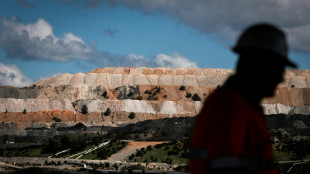 Australia's High Court rules against coal mine in landmark climate case
 Australia touts new funds for Pacific infrastructure at Fiji 'pre-COP'

 Eva Marie Saint, Oscar winner of Hollywood classics, dies at 102

 Australia probes app used in cheap smart glasses over privacy fears

 England needed to 'move on' from World Cup pain, says Tuchel

 O'Neill to stay at Celtic after period of "reflection"

 Kane marks 125th England cap with Wembley Nations League double

 Quebec's incoming separatist leader wants to block Crown from swearing-in

 Emmys gala will now stream its premier television awards

 Paramount completes Warner Bros takeover, creating Skydance
 Trump blames France unrest on Islam, migration

 Apple's Cook praises EU over efforts to protect children online

 Nobel winner Halzen says years of October 'misery' finally over

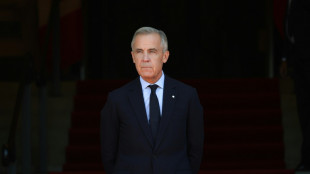 Quebec separatist win rattles Carney's unity push

 'Itching' for change: Shiffrin cuts back slaloms this season

 'Gen Z has risen up': Tens of thousands mass for tense France school protests

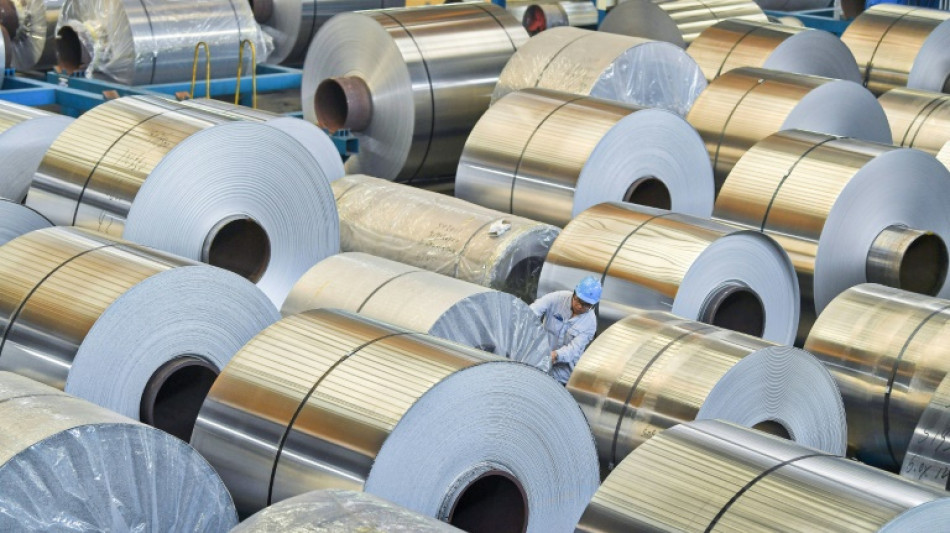
The Covid lockdown this week of a relatively unknown Chinese city sent global prices of aluminium rocketing to a 14-year high.
Why did the outbreak in Baise spark fears around the world about the key metal?
- Where is Baise? -
Located near the border with Vietnam, Baise is nicknamed the "aluminium capital of southern China".
Home to around 3.5 million people, Baise is a hub for aluminium mining and production.
It produces about 2.2 million tonnes of the commodity per year -- more than 80 percent of the output in the resource-rich Guangxi region.
Guangxi is China's main alumina-exporting region, shipping out around 500,000 tonnes of the aluminium component per month.
China is the world's biggest producer of aluminium, a crucial component in major industries including automobiles, construction and consumer goods.
- Why was Baise locked down? -
At just under 190 cases, the Baise coronavirus outbreak is tiny compared with caseloads in other parts of the world.
China, however, has a zero Covid strategy, using strict, targeted lockdowns, travel restrictions and mass testing to eliminate infections.
Baise was locked down Monday, leaving most of its residents under home confinement and others unable to leave rural counties and townships under the city's jurisdiction.
The national Covid strategy has helped maintain some economic growth during the pandemic, but its enforcement has caused frequent disruptions at key manufacturing and shipping hubs in recent months.
- How did it impact aluminium? -
Baise's local industry association said Tuesday that while aluminium production was largely at normal levels, the transportation of ingots and raw materials was seriously impacted by travel restrictions during the lockdown.
That in turn sparked fears about supply that cascaded through China and then around the world.
"The sudden outbreak in our city has exacerbated market expectations of hindered logistics flows, as well as expectations of phased supply tightening caused by an output drop," the association said.
A major industrial park in Baise containing several factories has been sealed, affecting the movement of workers, raw materials and aluminium ingots, it added.
On Wednesday, some aluminium smelters in southwest China resumed production, monitor Shanghai Metals Market (SMM) reported.
But some refineries of the component alumina in Guangxi have stopped production because of the outbreak, it said.
Huayin Aluminium, a major smelter in Baise, slashed production capacity by about 1.2 million tonnes owing to transportation blockages, according to Chinese commodity research firm Antaike.
- Was Baise the only driver of the price surge? -
The global aluminium price surge was sparked by the Baise lockdown but other major factors were already at play too, analysts said.
The timing of the lockdown also played a part.
China's domestic aluminium shortage had already been exacerbated by the Lunar New Year holidays, during which most factories nationwide ground to a halt or reduced output.
The break was followed by the Baise lockdown, meaning inventories could not be replenished normally.
Prices of aluminium were already expected to rise after the holidays, which concluded Monday, because of low domestic inventories and solid demand from manufacturers, according to the SMM.
Furthermore, Antaike said Tuesday that alumina industries in three other provinces have also reduced production.
- What about the rest of the world? -
The global aluminium market is already facing a large production deficit this year, with demand outstripping supply as the world economy recovers from the pandemic.
Further, aluminium production is linked to the stability of other supplies.
Analysts said the ongoing Russia-Ukraine crisis had caused widespread fear that Europe's gas supply from major producer Russia will be hit if the situation escalates.
US President Joe Biden made a categorical vow Monday at a meeting with Germany's Chancellor Olaf Scholz that the massive Nord Stream 2 gas pipeline from Russia to Europe will "end" if Moscow invades Ukraine.
"Aluminium production requires significant amounts of energy and gas is the primary fuel source. Fears that Nord Stream 2 could be halted are pushing prices higher," City Index analyst Fiona Cincotta told AFP.
"Secondly, Russia is a key producer of aluminium... Threats of sanction from the West (are) also driving up prices."
M.AlAhmad--SF-PST